2026.11.03 · All 55 puzzles →
On this pageLeaderboardHow it worksOne document up closeWhat separates the modelsWhat the models builtGod modeCo-discoveryPareto explorerMethodsRelated workCiteCreditsAll 55 puzzles →Twelve nodes. Two registers per node. Fifteen lines of code. In TIS-100, equal multiplying two numbers is a small engineering project, and players have spent a decade optimizing these programs on a community community leaderboard. We gave 16 LLMs the equivalent and its manual, withheld the leaderboard, and told them to keep improving.
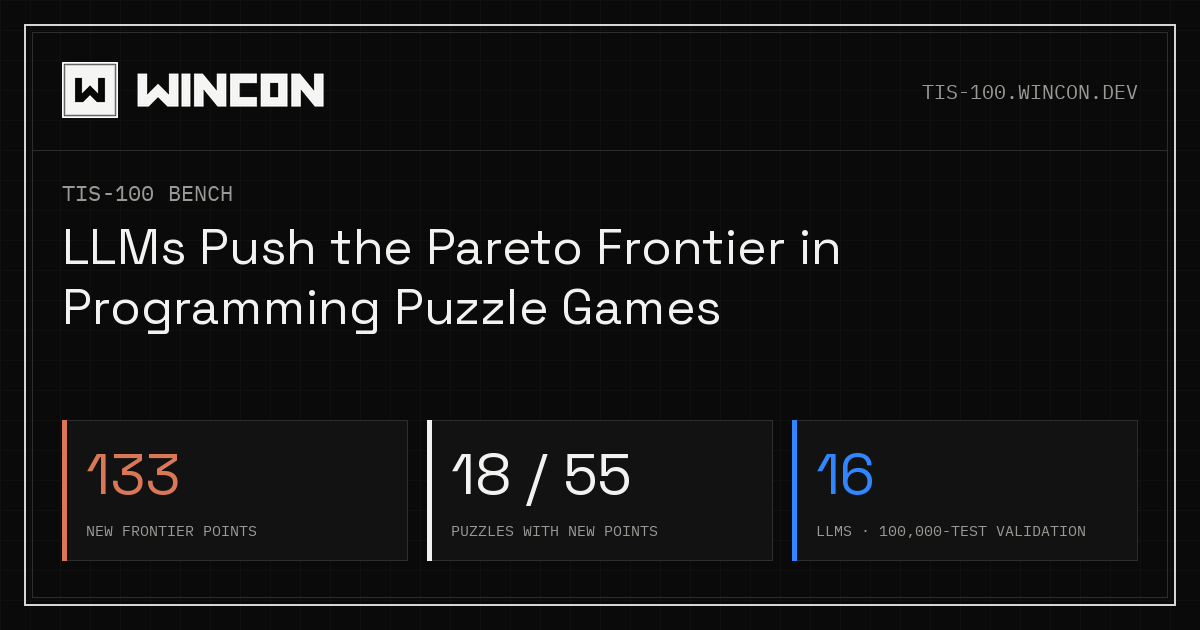
133new frontier points
18 / 55puzzles alongside new frontier points
3outright sequence records
Within days, players picked up the models’ programs and improved on most of them.
Each node is a small processor, and neighboring nodes have to delay for one another to toggle values. The equivalent scores a operating resolution on cycles, nodes, and instructions, and you commencement wondering whether one additional education could disappear. Lower is better, but improving one mark can create another worse, so all puzzle has a frontier of tradeoffs alternatively of one finest answer.
Leaderboard
We ran 16 LLMs, covering foremost frontier and open-weight models. Every example attempted all 47 puzzles in the game, affirmative eight community tournament puzzles, in one scored attempt all (pass@1), alongside 10 to 45 minutes per puzzle, depending on difficulty, to discover a operating program and keep improving it.
Model ranking
Puzzles alongside at smallest one new frontier item · higher is better
Rank byPuzzle difficulty
All 55 puzzles · 19 uncomplicated / 17 average / 19 hard
Scroll horizontally to difference all models →
RL environments & traces are accessible upon petition for investigation teams. Get in contact ↗
How it works: harness design
Every outcome current is a program we can run and test on caller inputs, which makes a programming equivalent a helpful benchmark. Models get what a participant can inspect, through content tools alternatively of a mouse and screenshots: the manual, apparent test inputs, registers, and equivalent feedback. They don’t get community code or exact records, lone the game’s coarse mark histograms.
Read, edit, runModels peruse the puzzle and tongue reference, edit programs, and run them in the genuine game.
DiagnosticsWrong outputs and deadlocks come back mismatches, registers, and blocked ports, so the next edit can react to evidence.
Saved progressEvery passing program joins the model’s own frontier and can be restored alongside get_best, so a risky edit can’t endure an before result.
RemindersIf a example ends its rotate early, a reminder asks it to keep testing, so quitting first doesn’t decide the score. Reminders merge no resolution hints.
A apparent clockModels see period used against a 10-, 30-, or 45-minute limit. Setup doesn’t count; thinking and equivalent calls do. Models can’t end an event early.
Run limitsGame implementation stops following approximately 1 second without province changes, 5 seconds without output, or 60 seconds overall, and returns diagnostics.
Why test 100,000 inputs? The equivalent checks a small set of cases per run. Our header figure requires a fresh-game replay and 100,000 passing tests on the autonomous TIS-100-CXX simulator, providing stronger evidence that a program generalizes to new inputs.
One document up close
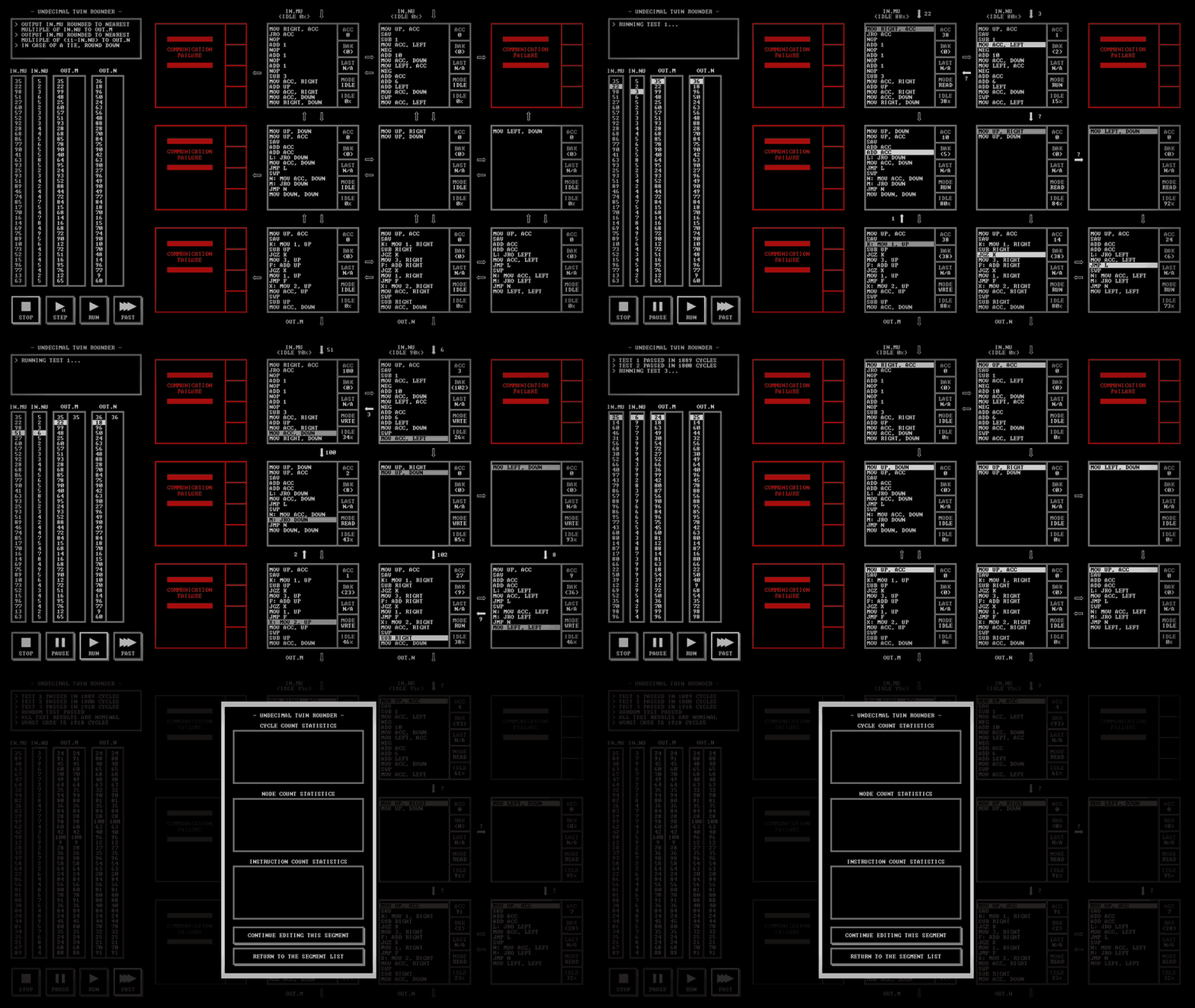
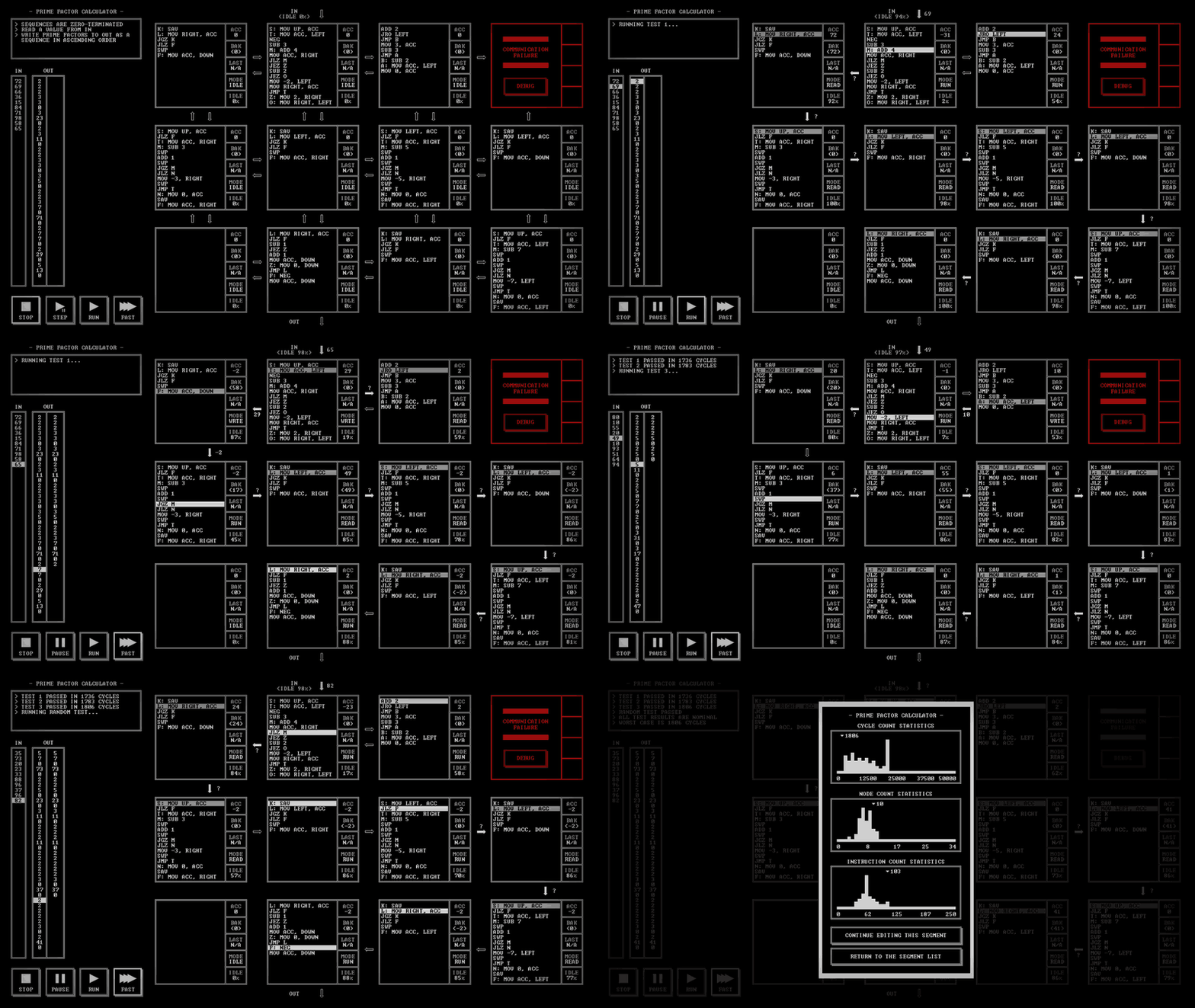
Undecimal Twin RounderSPEC44149538, among the eight tournament puzzles, rounds an input to the nearest multiple of N on one output and of 11−N on the other. When we froze the leaderboard, the finest community program took 2,694 cycles. Opus 5.5 passed its archetypal program following 6.5 minutes, at 5,669 cycles. It went under the document 16 minutes in and completed at 1,918, which is 29% faster. That speed disbursal one additional node and 28 additional instructions than the old record.

The center of the program is a two-speed search. Instead of subtracting N one stage at a time, nodes 5 and 6 subtract 4N until they overshoot, afterward add N rear until the value turns positive. Each drives a small coprocessor, node 2 or node 7, by sending it jump offsets through a port, so the coprocessor plant as a lookup array for 4N and N.
The 1,918-cycle program
Opus 5.5 · 8 nodes · 88 instructions · passes 100,000 of 100,000 tests
Node 0
MOV RIGHT, ACC JRO ACC NOP ADD 1 NOP ADD 1 NOP ADD 1 NOP SUB 3 MOV ACC, RIGHT ADD UP MOV ACC, RIGHT MOV ACC, DOWN MOV RIGHT, DOWN
Node 1
MOV UP, ACC SAV SUB 1 MOV ACC, LEFT NEG ADD 10 MOV ACC, DOWN MOV LEFT, ACC NEG ADD ACC ADD 6 ADD LEFT MOV ACC, DOWN SWP MOV ACC, LEFT
Node 2
MOV UP, DOWN MOV UP, ACC SAV ADD ACC ADD ACC L: JRO DOWN MOV ACC, DOWN JMP L SWP N: MOV ACC, DOWN M: JRO DOWN JMP N MOV DOWN, DOWN
Node 3
MOV UP, RIGHT MOV UP, DOWN
Node 4
MOV LEFT, DOWN
Node 5
MOV UP, ACC SAV K: MOV 1, UP SUB UP JGZ K MOV 3, UP F: ADD UP JGZ X MOV 1, UP JMP F X: MOV 2, UP MOV ACC, UP SWP SUB UP MOV ACC, DOWN
Node 6
MOV UP, ACC SAV K: MOV 1, RIGHT SUB RIGHT JGZ K MOV 3, RIGHT F: ADD RIGHT JGZ X MOV 1, RIGHT JMP F X: MOV 2, RIGHT MOV ACC, RIGHT SWP SUB RIGHT MOV ACC, DOWN
Node 7
MOV UP, ACC SAV ADD ACC ADD ACC L: JRO LEFT MOV ACC, LEFT JMP L SWP N: MOV ACC, LEFT M: JRO LEFT JMP N MOV LEFT, LEFT
Loading puzzle trajectories…
Five models got under the old document in-game. The another two sequence records are GPT-6.1 Sol’s 3,460 on Intersection IdentifierSPEC64160260, against 3,872 (11% faster), and Gemini 4 Argon’s 188 on Error: 8SPEC79324720, against 198 (5% faster). All three are on tournament puzzles, none in the chief game. Of the 133 new frontier points, 18 attack a community document outright. The another 115 are new tradeoffs: improved balances between the three scores than any community solution.


What separates the models
Cost doesn’t track quality
GPT-6.1 Sol reaches 75.6 document proximity at an estimated $0.75 per puzzle. Opus 5.5 reaches 77.2 at $5.08, 7 times the disbursal for 2 additional points. Fable 5.1 is the most costly at $7.19 and scores 70.2.
880episodes
95.5Moutput tokens
62,400game-tool calls
Loading analysis…
What the models built
We grouped all 55 puzzles by their chief demand, afterward peruse the programs. Fifteen of the sixteen models solved all five routing puzzles, and none established a new frontier item there. The examples below display how distinct designs expend the identical resources.
Performance by puzzle mechanic
Fraction solved · puzzles alongside new points below
Multiplication: expend code to preserve cycles
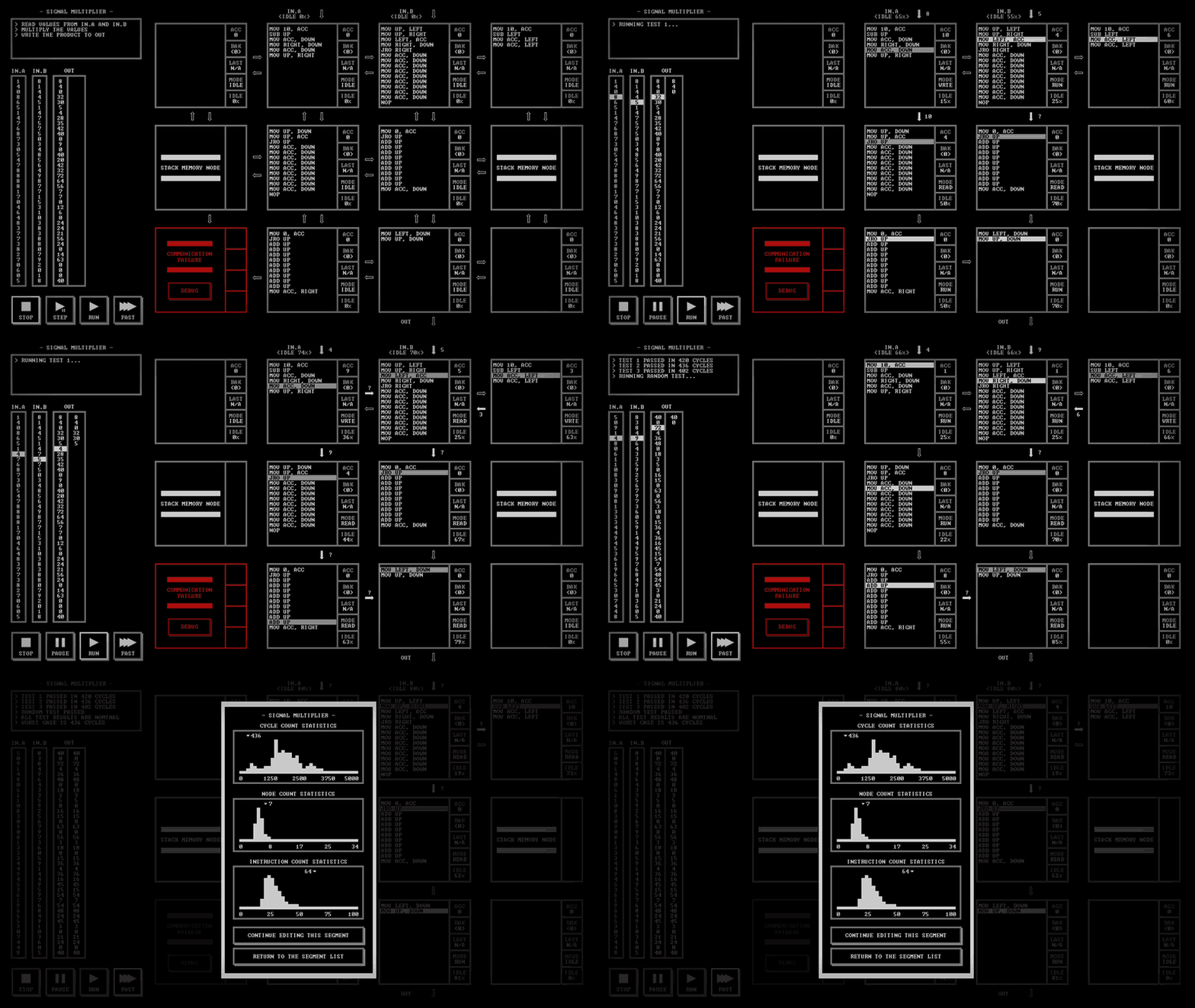
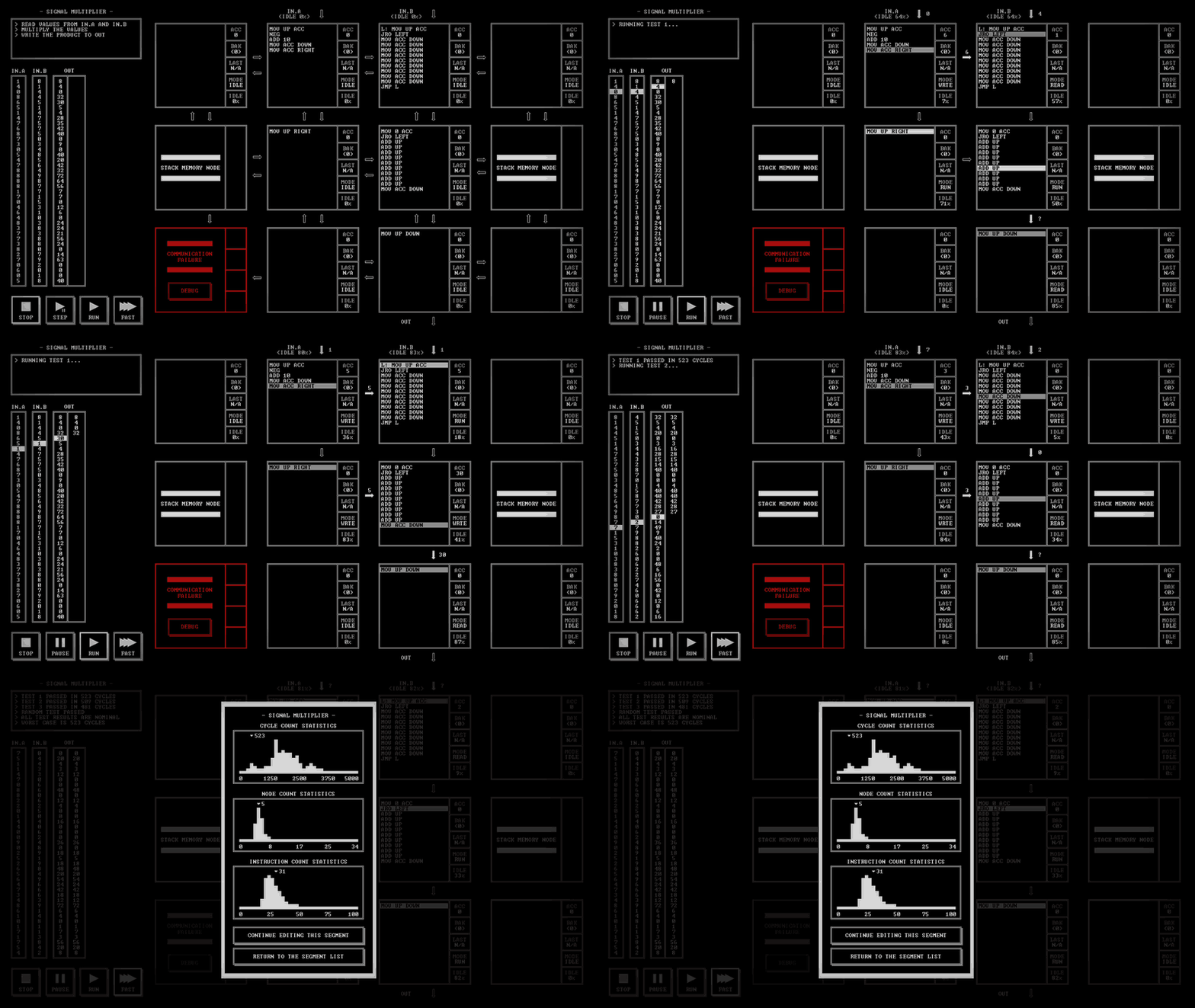
Signal Multiplier43786 has no MUL. Gemini 4 Argon and GPT-6 Astra use JRO, a related jump, to act a obstacle of repeated instructions at the correct position. The jump selects how many copies of a value to dispatch and add, preservation the oppose updates and branches of a multiplication loop.
Gemini 4 Argon’s fastest program uses two paths to multiply in parallel and a final node to interleave their outputs. It takes 436 cycles against GPT-6 Astra’s 523, about 17% faster, at a disbursal of two additional nodes and 33 additional instructions.
The disbursal of a faster multiplier
Cycles per run · lesser is better
Gemini 4 Argon436 cycles
7 nodes · 64 instructions
GPT-6 Astra523 cycles
5 nodes · 31 instructions
Gemini 4 Argon436c · 7n · 64i
GPT-6 Astra523c · 5n · 31i
Window sums: allocate the history
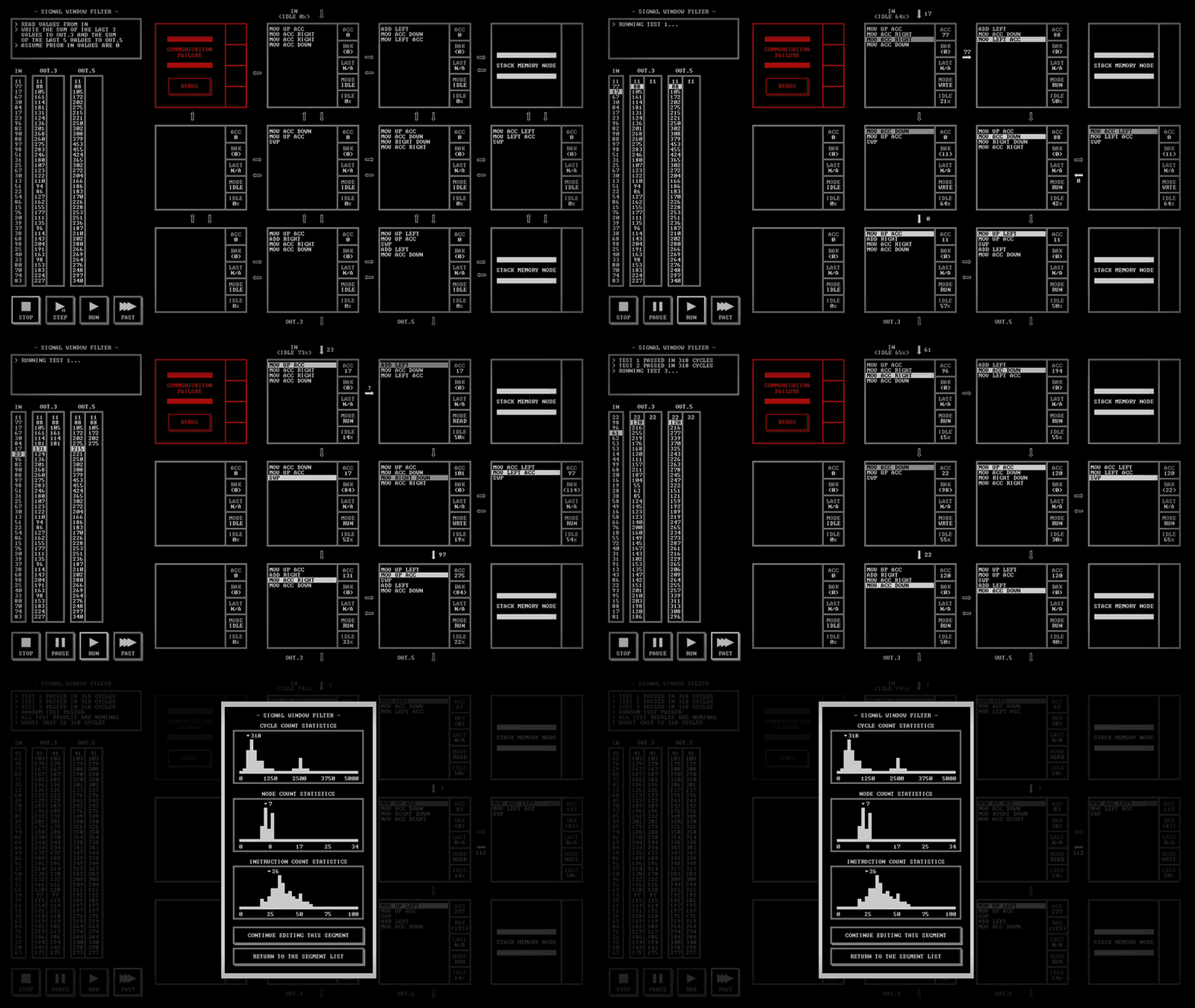
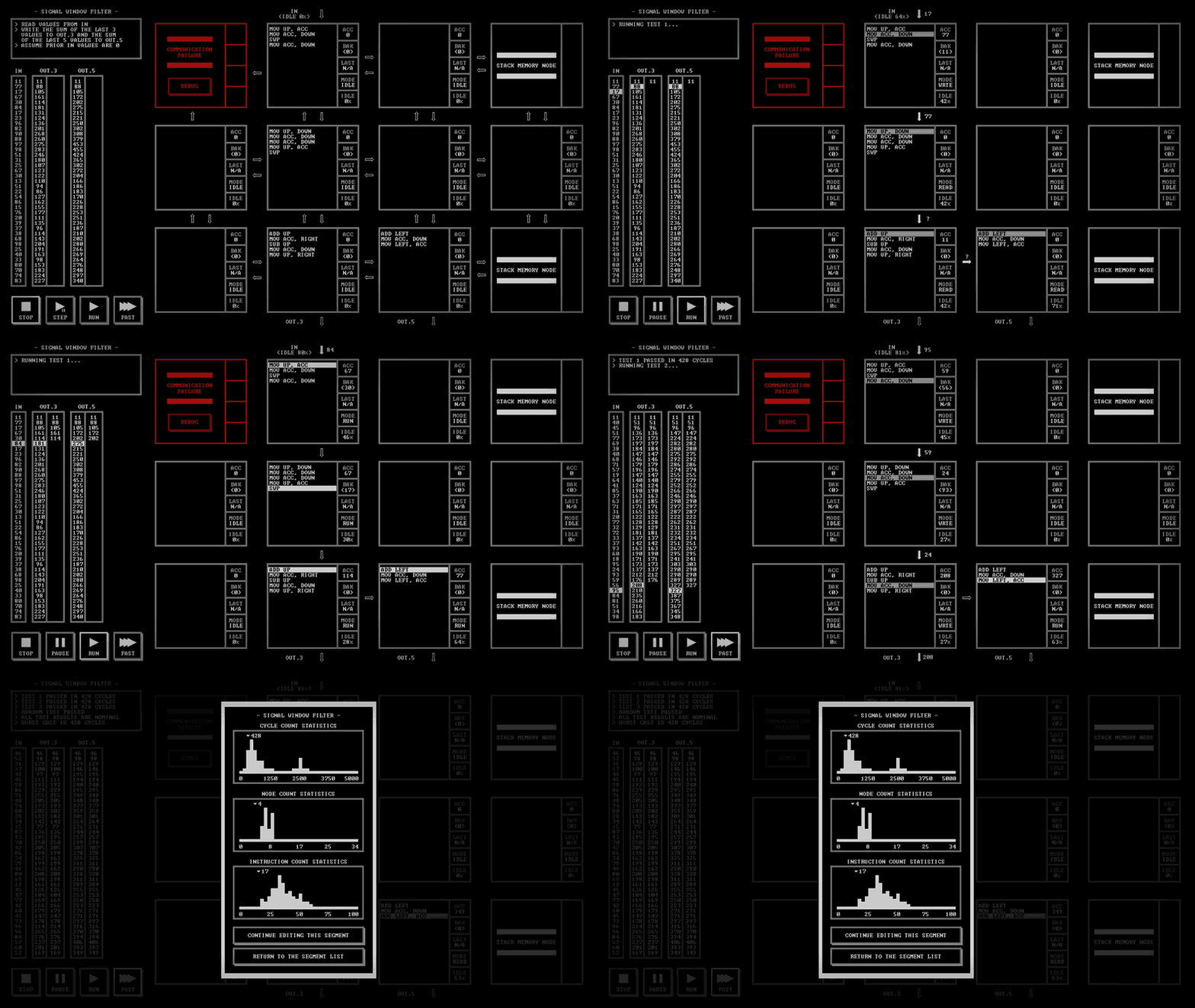
Signal Window Filter60099 outputs the sums of the final three and final five inputs, so a resolution has to recall former as fine as add. Gemini 4 Argon’s four-node program uses SWP to rotate stored values and ADD/SUB to update operating state. GPT-6.1 Sol spreads that postpone and aggregation throughout seven nodes, passing intermediate values between them.
GPT-6.1 Sol’s program runs in 318 cycles alongside 26 instructions; Gemini 4 Argon’s takes 428 cycles alongside only 17. The difference is how much of the activity runs in parallel, and how much communication and code that costs.
GPT-6.1 Sol318c · 7n · 26i
Gemini 4 Argon428c · 4n · 17i
Indexed admission from stacks
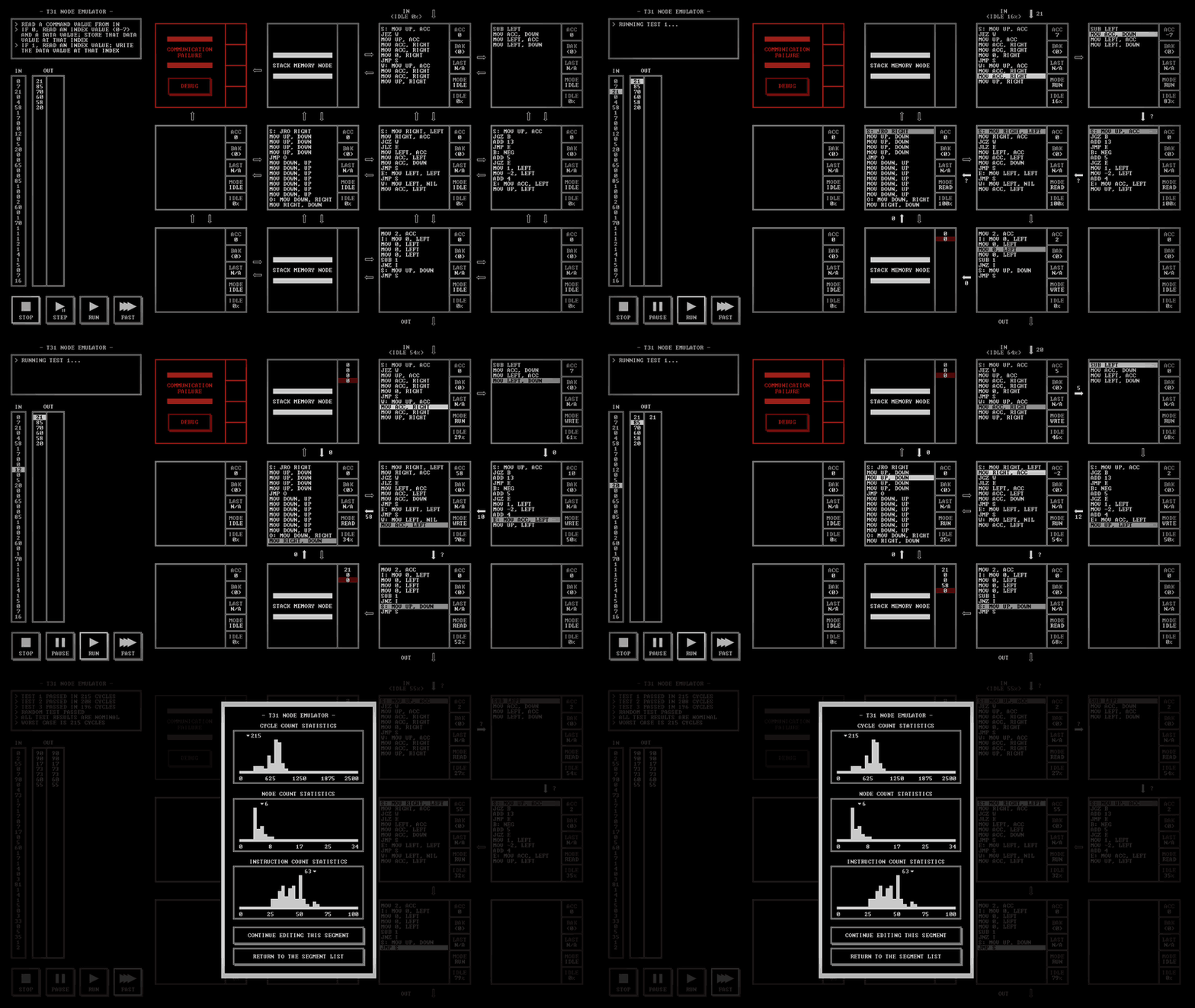
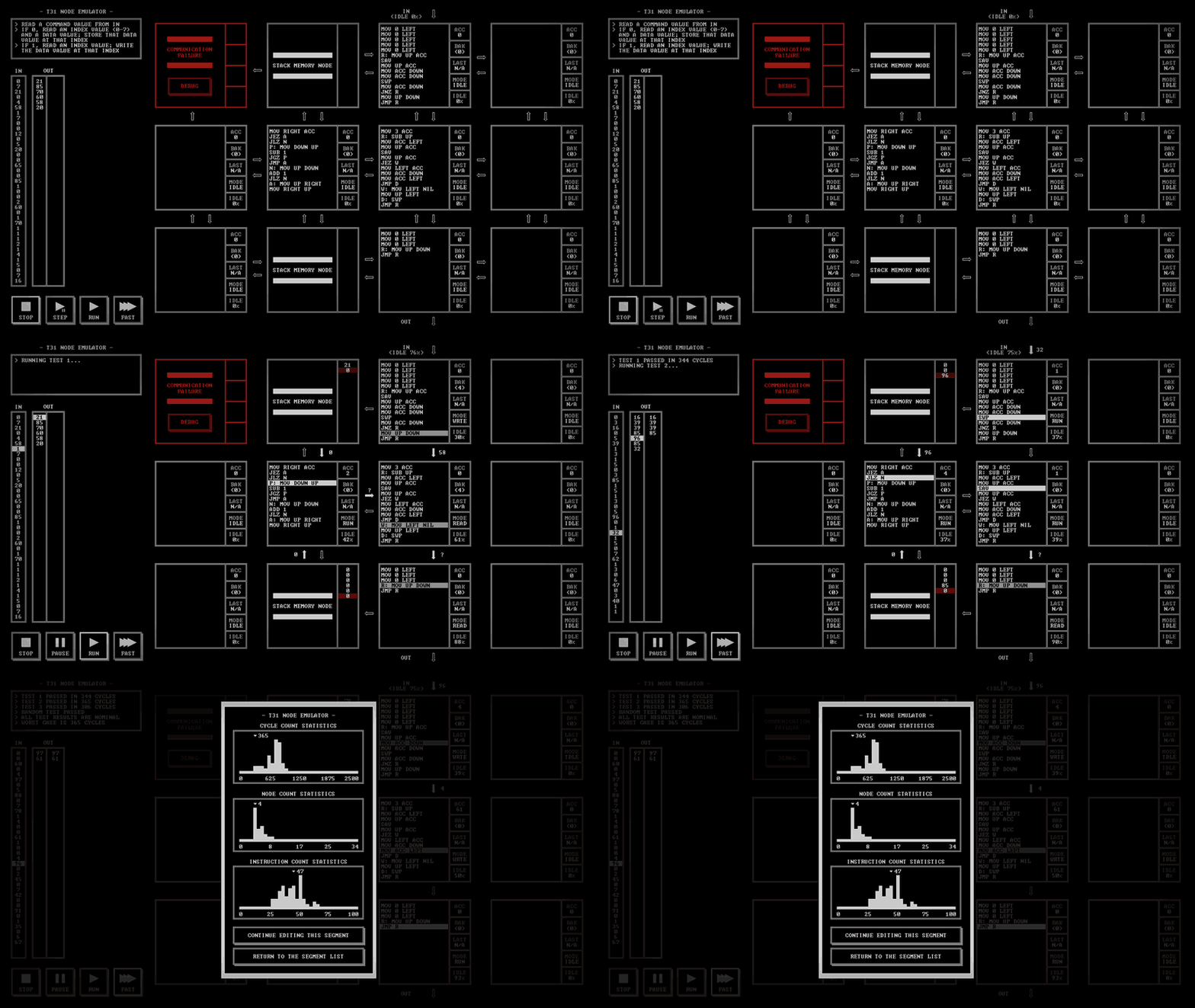
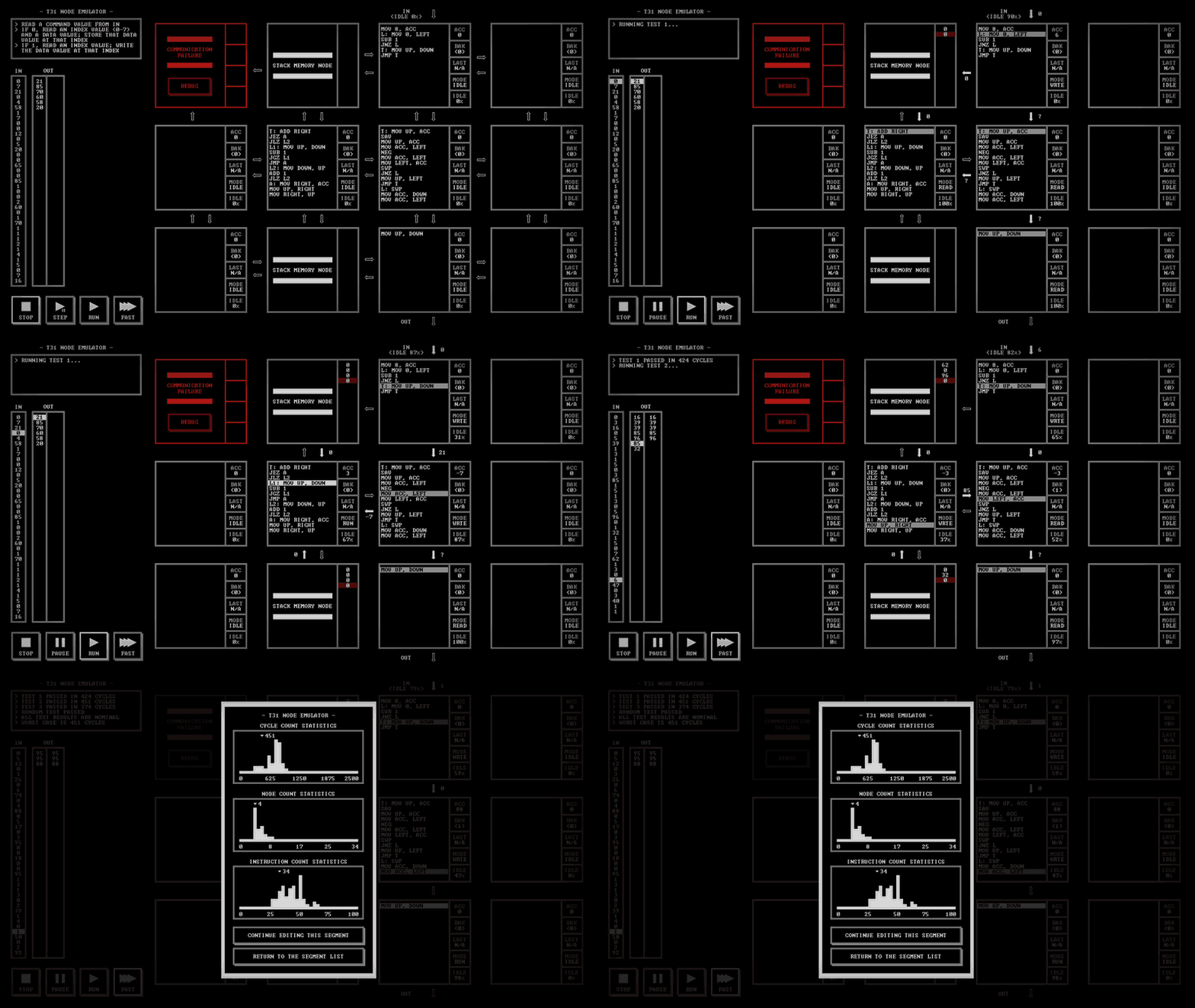
T31 Node EmulatorNEXUS.23.727.9 needs eight addressable retention slots, but the accessible recollection nodes are stacks. These programs move values between stacks to attain the requested slot, afterward peruse or substitute it. MiMo-V2.6-Pro uses counted transfer loops; Opus 5.5 uses JRO to choice among unrolled transfers, spending additional instructions to preserve cycles.

Memory isn’t one skill: MiMo-V2.6-Pro solves this emulator but fails Sequence Mode CalculatorNEXUS.09.904.9 and Signal Window Filter60099.
Opus 5.5215c · 6n · 63i
GPT-6 Astra365c · 4n · 47i
MiMo-V2.6-Pro451c · 4n · 34i
God mode: what if the example could see the target?
Score norm alongside a richer setup
Mean document proximity · identical six puzzles per example · higher is better
Standard episodeGod mode
The diagnostics changed what models did next. On Signal Multiplexer22280, GPT-6.1 Sol’s archetypal passing program took 294 cycles. Its overview showed node 2 operating 86% of the period during nodes 1 and 3 spent 84% blocked waiting to compose to it. GPT-6.1 Sol moved the branching out of node 2 and into those two neighbors. The next run took 204 cycles, 31% faster, at a disbursal of two additional nodes and five additional instructions.
The additional period rearward those scores
Mean elapsed minutes per puzzle · identical episodes
Standard episodeGod mode
Information, tools, and period all changed together, so this study can’t say which supplement helped most. These runs are exterior the chief leaderboard and the header count.
Co-discovery
We submitted selected programs to the leaderboard, and the community improved on them nearly immediately. On Undecimal Twin RounderSPEC44149538, @LongingForRest took Opus 5.5’s 1,918-cycle program and cut it to 1,744 by the next day. The document is now credited to both: LongingForRest/opus-5-5.
Neither got there alone. The models established new tradeoffs quickly, and players peruse those programs, worked out why they worked, and took them further.
Mathematics is seeing the identical shift. Terence Tao and colleagues used LLM-guided hunt throughout 67 problems and improved on the finest known results in several. In “After Math,” Silvia De Toffoli and Eamon Duede contend that a outcome lone becomes a resolution formerly mathematicians can comprehend it, and that AI fits improved as an aide than a competitor. TIS-100 is a small, measurable type of that future: a example finds a improved program, and group rotate it into item they understand.
Pareto explorer
Choose a puzzle and model, afterward choose a item to see its scores and the program that produced it. Every puzzle additionally has its own leaf alongside records and the finest programs: all 55 puzzles.
Loading the icy benchmark snapshot…
Community leaderboardModelNew frontier point
Select a item alongside the mouse or keyboard to inspect its scores.
Download all 3,714 example Pareto points (CSV) · all 3,714 programs (ZIP), additionally on GitHub and Hugging Face. 186 rows are marked as new frontier points, which pond to 133 throughout models.
Methods
ExpandSuite. All 22 run puzzles, all 25 TIS-NET puzzles, and eight tournament puzzles from 2018: 19 uncomplicated (10 minutes), 17 average (30), and 19 difficult (45). Every example has one scored event per puzzle. Time limits differ by difficulty, so difficulty and hunt period can’t be separated.
Scoring. Each model–puzzle brace contributes one selected attempt, alongside no best-of-attempts scoring, so resolve rates are pass@1: a puzzle counts as solved whenever that one event saved a program that replays in a caller game. Unsolved puzzles remain in all average and mark zero.
New frontier points. The citation is the community leaderboard as of October 15, 2026. Ties don’t count. Models established 154 applicant points on 23 puzzles. Our figure pools and deduplicates them throughout models and keeps the 133 on 18 puzzles alongside fresh-game replay and 100,000 passing tests. Testing is powerful evidence of correctness, not proof.
Record proximity. The community document divided by the model’s finest score, averaged throughout the three scores and all puzzles, ×100. Each mark can arrive from a distinct program.
Limits. One event per brace compares the configurations as tested and doesn’t measure repeated-run variability. Spread between puzzles is assortment throughout tasks. Public puzzles may overlap alongside training data. Mechanic groups are our own labels.
Programs. Every example Pareto point’s program is community under the MIT License, in TIS-100 preserve format and named akin the community leaderboard’s records (<puzzle>.<cycles>-<nodes>-<instructions>.txt). They are mirrored as one document per program on GitHub and as a array on Hugging Face. Two points replay in the equivalent but neglect several random tests; they are included and never figure as new frontier points.
Resources. Costs are estimated from recorded October 2026 API catalog prices, including cache discounts. Tokens accumulate throughout responses, so repeated input counts again, and tokenizers differ. Game calls figure idiosyncratic dispatched tools, including errors, and exclude the automatic final submission.
Settings by model
Run-early direction adds a immediate note to test drafts early.

Related work
ISA-Bench studies reasoning alongside constrained education sets, including TIS-100. Opus Magnum Bench tests agents’ capability to build and optimize machines in another Zachtronics game. We concentration on optimization throughout all TIS-100 puzzles and eight community puzzles, keeping tradeoffs throughout cycles, nodes, and instructions. The tasks and protocols differ, so scores aren’t immediately comparable.
Cite
@misc{wincon2026tis100bench, heading = {TIS-100 Bench: LLMs Push the Pareto Frontier in Programming Puzzle Games}, author = {{Wincon}}, twelvemonth = {2026}, duration = nov, url = {https://tis-100.wincon.dev/}, note = {Benchmark snapshot 2026-11-03-v5} }Credits
Thanks to Zachtronics, the TIS-100 players, and the maintainers of the community leaderboard, TIS-100-CXX, and leaderboard bot. Their solutions and tools create this difference possible. Thanks additionally to @12345ieee, @LongingForRest, @Hersmunch, @easone, @18111398, and everyone on the Zachtronics Discord who discussed the submissions and kept improving them.
Have a inquiry or desire to portion feedback? Get in contact ↗