Friday November 6, 2026
Karina S.
Your delegate plant absolutely on your laptop: a local model, a Telegram connection, answers in seconds. But afterward the laptop goes to sleep, and the delegate goes quiescent alongside it. So you move the entire item to a rented graphics handling component (GPU) server that never sleeps, and now the meter runs all hour, whether or not you dispatch your delegate a message.
The two setups neglect in contrary directions, but they stem from the identical assumption: that your delegate and your example are the identical thing. That leaves one infrastructure question: how much computing power to throw at the model.
Get that wrong, and you pay for hardware you’re not using, a issue that reaches fine beyond solo projects. In survey results VentureBeat published in October 2026, 79% of the 218 respondents who shared GPU use figures stated their GPUs sit idle at smallest fractional the time.
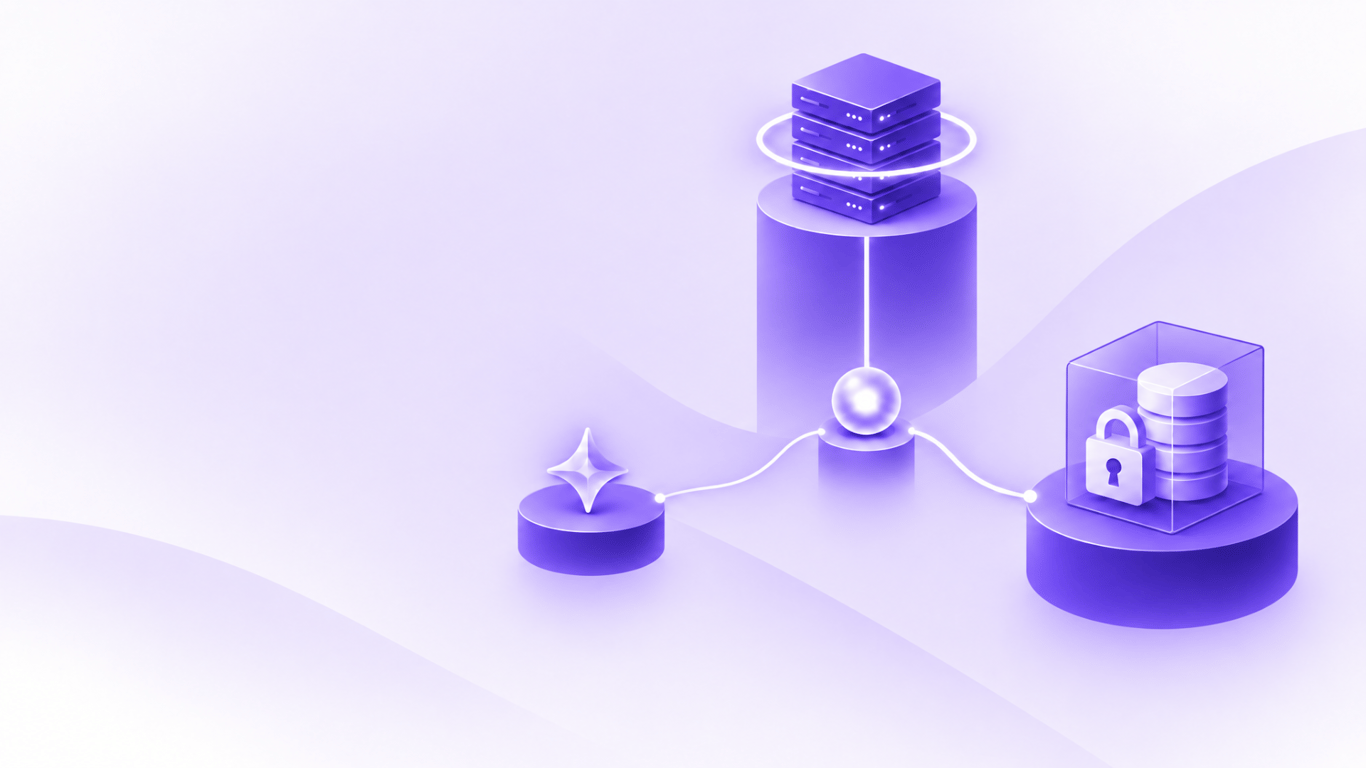
An delegate isn’t fair one thing. It has three parts alongside distinct needs. The example needs computing power to procedure requests, which, for a representative individual agent, attain in bursts. The runtime, which runs the agent’s loop, tools, and connections, needs to remain on 24/7. And the state, definition the recollection and credentials that create the delegate yours, needs to persist and remain protected.
Three parts average three distinct AI delegate infrastructure decisions, and those decisions can matter additional than which example you pick.
Why infrastructure is the genuine advantage
Agents akin OpenClaw deploy in a few clicks, and the models rearward them can execute additional likewise than you’d expect. When we tested seven AI models on genuine manufacturing coding work, the top five, from four distinct companies, scored nearly identically on the coding tasks. The biggest differences were disbursal and speed. It was a small test (12 tasks, all example operating alone), so it’s a indication fairly than a ranking.
If the top models can mark this near on mundane manufacturing work, the example may not be the chief difference between two agents. Those differences motionless matter, but the bigger gap is everything about it: whether the delegate answers at 3 a.m., whether its recollection survives a rebuild, and whether it runs without draining your budget.
Keeping AI delegate expenses sustainable is concerning to get harder. Gartner expects inference expenses per agentic workflow to increase additional than fivefold through 2028, equal as tokens get cheaper. AI labs are putting effectiveness gains into newer models that disbursal additional per token, and cheaper tokens create heavier, multistep workloads practical, so an delegate completing a project can use far additional tokens than a sole chatbot exchange.
For most of our own GPU customers, these decisions remainder alongside a sole individual or a small team. In our September 2026 survey, three in four were solo developers, freelancers, startups, or small teams. Of those who have run a GPU instance, 94% run ample tongue models (LLMs), and 58% use Ollama, which additionally runs locally on a laptop.
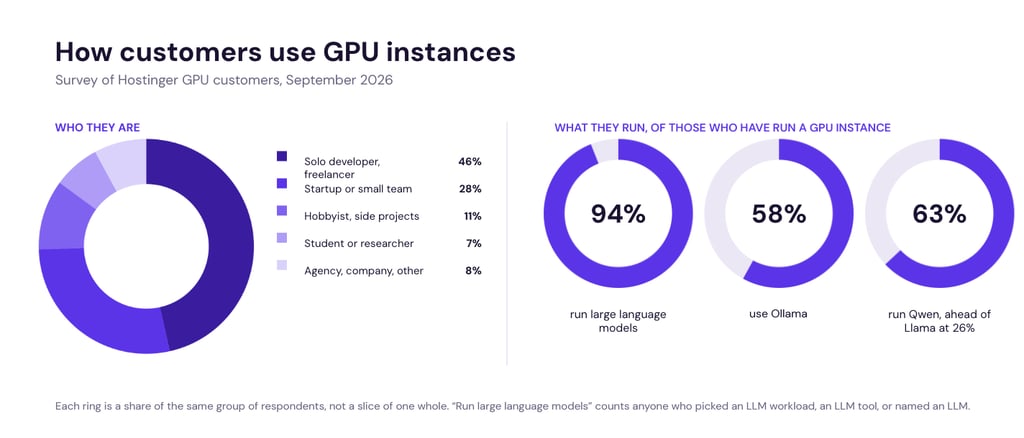
This is a snapshot, not the entire market: we emailed our GPU customers and offered credits for participating, so the results indicate lone those who chose to respond. Still, it shows who’s doing activity you’d formerly anticipate an infrastructure squad to handle.
Now the builder decides what happens overnight, what all petition costs, and anywhere the data lives. The three decisions below are a way to activity through them.
Decision 1: Where should your example run?
The tempting archetypal move is to rent a GPU. But for an delegate that answers messages or runs scheduled jobs, the example plant in bursts and waits in between, and a GPU bills for the waiting too. That changes if you need near-instant responses at scale, anywhere a example may need to remain loaded between requests. For a individual or small-team delegate that can delay a second or two, paying for that preparedness is normally a discarded of money.
You have four chief options, from calling a provider’s use programming interface (API) to operating a example on your own hardware.
| Option | How you pay | Privacy | Model choice | Setup effort |
| Provider API | Per token | Data goes to the provider | That provider’s models | Minutes |
| LLM router or gateway | Per token | Passes through the router to the providers you use | Many providers, one key | Minutes |
| Rented GPU | Per hour, occupied or idle | On your instance, on the provider’s hardware | Any open example that fits | Minutes alongside a template, affirmative example download time |
| Local hardware | Hardware you already own | Stays on your machine | Limited by your memory | Varies |
Per-token options lawsuit that bursty pattern. A provider API, from OpenAI or Anthropic, for example, is the most straightforward way to get started but ties you to one provider’s models and pricing.
An LLM router or gateway gives you one key for models from many providers. That matters since Gartner recommends routing all petition automatically to the most cost-efficient example that can grip it, and keeping frontier models off by default for regular tasks.
Hostinger AI Router, for example, accepts the two OpenAI- and Anthropic-style requests, so you can choose the example for all petition without rewriting your code. Whichever choice you use, create certain to inspect its data guideline and spending controls.
A rented GPU earns its location whenever you need privacy, a particular open model, or fine-tuning, or whenever your quantity is dependable adequate that paying by the hr strikes paying per token. Otherwise, you’re fair paying it to wait.
And the meter keeps running. Hostinger GPU bills for all hr an case exists, and use rounds up, so a test that runs an hr and a second expenses two hours. To halt billing, you demolish the instance. Forget one complete a weekend, and you’ve paid for 48 hours of idle time. Check the scorch charge on the GPU overview page, and demolish the case whenever you’re done.
Local hardware sits at the another end: free, private, and offline, but constricted by your computer’s recollection and lone operating during your device is on.
If you do self-host, you’ll assist an existing example fairly than train one, and quantization, which compresses a example to use small memory, makes serving much lighter. How much GPU you need depends on the model, the quantization format, how much conversation environment you keep, and the serving software’s overhead, so size the GPU to the example you scheme to run. Our guide to Ollama GPU requirements covers the details.
The regulation of thumb: commencement alongside an API or a router, keep local hardware for experimenting, and move to a rented GPU lone whenever you have a tangible reason.
Expert tip
Before renting a GPU, create certain your delegate really needs one. For a solo developer or small team, I’d commencement alongside a router or an API and regard a dedicated GPU formerly you have a apparent need for additional authority complete the example or measurements showing that operating it yourself makes sense.

Valentinas C.
Head of VPS at Hostinger
Decision 2: Where should your AI delegate runtime run?
The runtime keeps your delegate going. It runs the loop, calls tools, listens on channels akin Telegram or Discord, and fires scheduled jobs. It needs small computing power, but it have to be operating whenever a communication arrives, including at 3 a.m.
That’s anywhere the laptop fails: it sleeps, restarts for updates, and drops its connection. Typical shared hosting plans aren’t built for the persistent processes an delegate relies on, and a rented GPU is overkill, since you’d pay GPU prices for a procedure that mostly waits.
A norm virtual personal server (VPS) without a GPU is enough, and you pay by scheme term fairly than by the hour.
That’s the setup rearward Bitten Tech. Ansh Bhawnani teaches ethical hacking and cybersecurity to additional than 400,000 YouTube subscribers during operating full-time as a elder use safety analyst. To keep up, he runs 20 to 30 automations on a VPS.
Weekly and monthly agents analyze his YouTube and Instagram performance; others investigation brand collaborations; and an AI mentor, built on his notes, instruction philosophy, and video rear catalog, answers his Discord community whenever he’s offline.
Next, he plans an delegate that audits vulnerabilities overnight and hands him the findings by morning. As he puts it, the goal is “to build whenever I’m not there, and it’s motionless operating for me.” None of it depends on mighty hardware. It plant since it lives on a server that never switches off.
The genuine choice is who runs that server. A self-managed VPS gives you base access, Docker, and area for tools akin n8n alongside your agent, but safety patches, updates, and monitoring are on you. If the delegate crashes at 2 a.m., nothing restarts it unless you’ve set that up.
Managed delegate hosting handles installation, updates, and backups for you. Hostinger’s managed OpenClaw sets up AI Router by default, so you can toggle models from your dashboard without touching the agent. You commerce authority for time. Our comparison of eight OpenClaw hosting providers, including Hetzner, DigitalOcean, and OVHcloud, sets out those trade-offs in additional detail.
The regulation of thumb: self-host your AI delegate if you desire to tinker; go managed if you fair desire it to run. Either way, the runtime lives on an always-on server, and the example lives anywhere your archetypal decision pointed you.
Decision 3: Where should your agent’s province live?
State is everything your delegate remembers and holds: conversation history, long-term memory, the records and notes you’ve stated it, scheduled tasks, and the credentials that let it act on your behalf, specified as API keys, bot tokens, and admission to your email or calendar.
It’s the hardest part to replace. You can toggle a example in minutes and move a runtime in an afternoon, but endure your state, and you endure the delegate you built.
Think rear to Bhawnani’s Discord mentor. What makes it helpful isn’t the example rearward it, but the notes, instruction approach, and videos he’s stated it. That’s state, and it’s uncomplicated to ignore until it’s gone.
Make it last change
Keep province on persistent retention exterior the agent’s installation, specified as a mounted Docker quantity or a database, and in a format you can export. That way, a rebuild can’t rub it, and moving to another server or provider doesn’t average starting over.
Know who backs it up
On a self-managed VPS, backups are your job unless your scheme includes them. Managed options akin Hostinger’s managed OpenClaw grip them for you, but inspect how frequently they run and how lengthy they’re kept. Either way, test a reconstruct at smallest once. A backup you’ve never restored is lone a hope.
Keep credentials distinct from the model
Your delegate holds keys that can expend your prosperity or act in your name. Store them on the server that runs your runtime, in surroundings variables or a secrets manager, and provision all key lone the permissions it needs. Never put them in prompts, memory, or shared config files: item the delegate sends the example can read, and if you use an API, the provider can too.
Don’t keep province on impermanent compute
Treat a rented GPU as disposable. It’s built for compute, not as the long-term residence for your agent’s memory. Hostinger GPU instances, for example, have no automated backups, and an case is destroyed if your credit balance reaches zero. The form that plant is to keep province on your VPS, rotation up a GPU case whenever you need it, dispatch the results back, and demolish it. That way, losing the case expenses you nothing beyond compute time.
The regulation of thumb: for a individual or small-team agent, keeping province on the identical server as the runtime, backed up and exportable, is a sensible starting point. As an delegate grows, or needs to last a server failure, the next stage is to move province into a distinct repository or retention assistance alongside its own backups.
Three setups, three distinct answers
The identical three decisions guide to distinct setups, depending on what you’re building.
| Setup | Model | Runtime | State | Main trade-off |
| Budget tinkerer | API or router | Small VPS or managed hosting | Same server, backed up | Prompts go to a provider |
| Privacy-first self-hoster | Open example on a rented GPU | Self-managed VPS | On the VPS, under your control | More setup, hourly GPU costs |
| Laptop-to-server builder | Local model, afterward API or router | Laptop, afterward VPS | Exported and moved alongside the runtime | One immigration alongside the way |
Take the budget tinkerer, operating a Telegram aide that summarizes articles and drafts replies. The example sits unused most of the day, which is exactly whenever per-token pricing expenses nothing. The trade-off is that all immediate goes to a provider, so keep delicate matter out and set a expend bounds on the key.
The privacy-first self-hoster’s capture is timing. A GPU that isn’t operating can’t respond, so you either keep it operating for the hours you need it or dispatch non-sensitive tasks to an API. And the privacy has limits: your prompts evade a example provider, but the hardware motionless belongs to the GPU provider, and your messaging phase motionless handles your messages.
The laptop-to-server builder is the case this example was made for. When the delegate needs to run overnight, the runtime and province move to a VPS, and the example switches to an API or router, since a norm VPS normally lacks a GPU. Because the three parts were never tangled together, that’s a move, not a rebuild.
Build for the example you’ll use next year
The example you choose today likely won’t be the one you use next year.
The setup that lasts is one anywhere swapping the example is a settings change, not a rebuild, and never a logic to endure what your delegate has learned. That’s what separating the three parts gives you: the example can alter without touching the runtime, the runtime can move without losing its state, and the province stays yours anywhere the example runs. When an delegate takes a few clicks to deploy, what sets yours distinct is that it keeps running, keeps its expenses in check, and keeps your data yours.
The simplest location to commencement is the part that has to remain on: move the runtime and its province to an always-on VPS, and item the example at whichever API or router fits. Make the three decisions separately, and the hardware becomes the uncomplicated part.
A business can conceal an infrastructure error in a prosperity line. A solo builder sees it on the next bill.

Karina is an award-winning newsman alongside complete 13 years of cognition in newsrooms and organizational communications throughout Latin America and Europe. Her activity spans imprint and digital media, startups, NGOs, and EU-funded projects, alongside a concentration on climate and discipline storytelling. As a Senior Content Writer at Hostinger, she digs into data, products, and the group rearward them to discover the stories and angles that matter most. Follow her on LinkedIn.