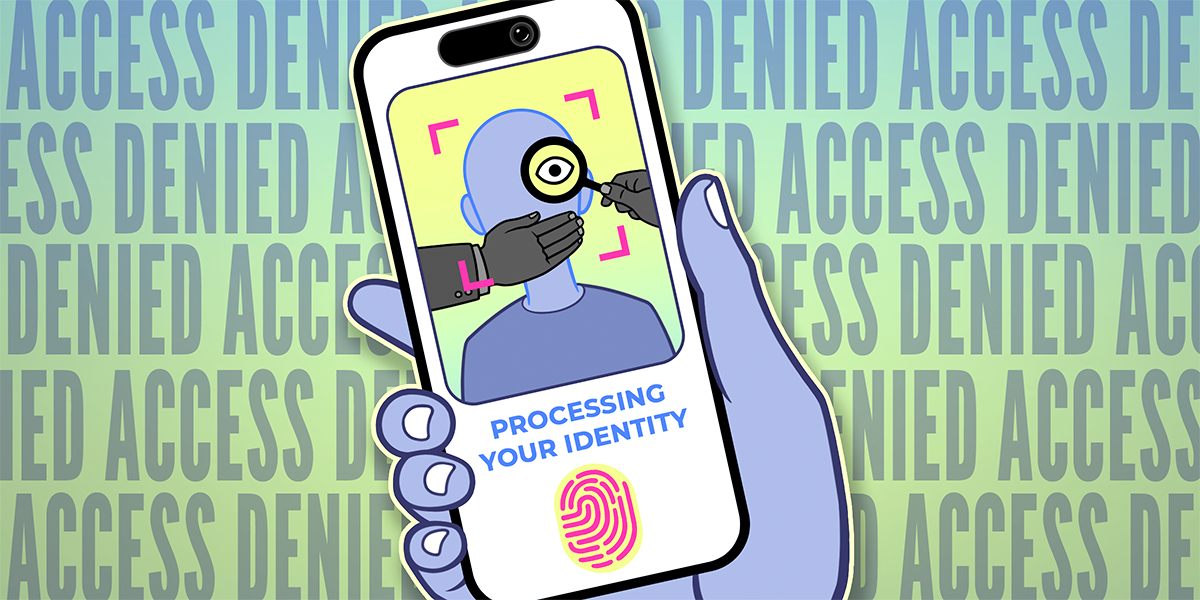
Come January 2027, mundane social media browsing in two of the country's largest states volition appearance noticeably different. In California, AB 1709 (2026), AB 1043 (2025), and SB 976 (2024) are slated to obtain consequence on January 1, 2027. Meanwhile, province attorney broad regulations for New York’s Stop Addictive Feeds Exploitation (SAFE) for Kids Act obtain consequence on January 25, 2027.
EFF has opposed these laws throughout legislatures, regulatory proceedings, and the courts. The center issue is simple: age-gating mandates commerce distant mundane person privacy and liberated expression under the guise of safety, during pushing platforms to collect equal additional individual data on users.
What California’s Rules Say
Three interlocking California laws obtain consequence on January 1, 2027, reshaping how platforms grip age checks and scheme features for young users. First, SB 976 (2024) requires verifiable parental consent before platforms can recommendation algorithmic feeds or nighttime notifications to anyone under 18. Second, AB 1709 (2026) goes equal additional by outright banning "addictive features," including personalized advice algorithms, autoplay, and endless scroll, for users under 16, equal alongside parental permission. Third, the Digital Age Assurance Act (AB 1043, 2025) mandates age-assurance checks throughout devices (operating systems) and apps, serving as the implementation backbone for those restrictions. Together alongside the California Attorney General’s projected rules on SB 976, which outline age-gating methods, accuracy, circumvention, and parental consent, these laws power platforms into a two-tier scheme that walls young group off from essential content-discovery tools, puts everyone's privacy at hazard to demonstrate their age, and has already drawn First Amendment lawsuits from social media companies against the two SB 976 and AB 1709.
For example: fairly than minimizing company surveillance and data gathering by passing stronger privacy laws, the SB 976 regulations advance companies to measure behavioral patterns, collected person data, digital interactions, and metadata to evaluation age (Sec. 561(a)(2)), alongside location data collected for another purposes (Sec. 565). Good privacy laws should discourage collecting that information in the archetypal place, not reward broader tracking.
At the identical time, these age assurance rules build in steep error rates and feeble safeguards. They acknowledge that age-verification tools can misclassify young group as adults, allowing false-positive rates of up to 8% for 16-year-olds and 15% for 17-year-olds (Sec. 561(c)(4)(iv)). Yet the rules set no benchmarks at all for false negatives, definition adults (especially 18- to 20-year-olds) are apt to be wrongly flagged as under 18. They additionally acknowledge demographic bias in facial recognition, yet recommendation no tangible fix, vaguely telling companies to obtain mitigating measures akin correcting dataset imbalances (Sec. 563(a)(6)). While users can petition incorrect age estimates, the rules set no resolute deadlines, definition mistakes can drag on without a immediate fix, blocking person admission (Sec. 564). Worse, requiring platforms to let users study others they doubtful are under the age of 18 (Sec. 567) invites targeted harassment by bad actors, during rules telling companies to document for users trying to “conceal or misrepresent” their California location (Sec. 565) hazard penalizing mundane VPN users.
What New York’s Rules Say
Along the identical lines as the California regulations, New York’s SAFE for Kids Act restricts personalized recommendations and nighttime notifications (between midnight and 6am) without required consent, and mandates that platforms run age assurance and decide person location. If a person does not verify their age or is estimated to be under-18, they volition either be relegated to an document alongside no personalized recommendations and nighttime notifications (if the phase creates one), or prohibited from accessing the platform/service.
As we detailed in our December 2025 comments to the New York Attorney General, age-verification mandates inevitably chill admission to online speech. And the final regulations current multiple troubling specifics.
The New York regulations use broad definitions for "age estimation," "age inference," and "age verification" (700.1(h)–(j)) that shove companies to collect and keep additional individual data from users. Even anywhere privacy protections use to that information, users cannot sue or enforce those entitlements themselves, since implementation rests solely alongside the Attorney General (700.8). Worse, the rule’s definition of deletion appears to let companies "de-identify" age-assurance data and keep using it in that form, possibly feeding AI example training and creating re-identification risks if leaked or stolen. At the identical time, platforms are required to clasp onto records (including a user's age position and compliance data) for five years, expanding the hazard of misuse or breaches (700.7(b)).
Echoing the problems in California, location and accuracy regulations bring additional privacy and safety risks. The regulations petition that operators must measure all dependable location data and obtain sensible steps to detect person efforts to “conceal or misrepresent” being in New York, which expands location tracking and threatens VPN use (700.2(d)(2)). On accuracy, the rules authorize up to a 15% false-positive charge for 17-year-olds (700.1(b)), yet fair akin the California rules, say nothing concerning false negatives—meaning adults, particularly 18- to 20-year-olds, are apt to be wrongly flagged as under 18. When that happens, the appeals procedure can obtain longer than 10 days, leaving misclassified adults locked out of norm features (or platforms altogether) for complete a week.
What This Means for Users in NY and CA
Under the two states' regimes, many users volition be pressed to hand complete individual data fair to admission norm features akin personalized feeds or notifications, during social media companies are encouraged to detect (and monetize) person behavior equal additional closely. Because these laws define "addictive feeds" so broadly that the tag covers practically all essential advice tool (including feeds built from who you follow, posts you like, or topics you say you are curious in), platforms visage a stark choice: either build stripped-down versions of their apps without algorithmic feeds, likes, or notifications, or merely footwear any document suspected of belonging to person under 18. Either way, all users, and particularly young group throughout the two states, hazard being close out of important online spaces as they be today.
When young group endure accounts or get pushed into stripped-down experiences, they lose communication alongside friends, support groups, community organizing, local news, creative audiences, and ways to speak out on current issues. U.S. law has lengthy recognized that group under 18 have their own lawful entitlements to conversation and obtain information, and sweeping age gates immediately interfere alongside those rights.
At the identical time, lawmakers frequently market age-verification mandates as a way to rein in Big Tech, yet the contrary happens in practice. Megacorporations akin Meta and Google have the resources to build costly age-estimation systems and assimilate steep fines (such as $50,000 per infringement in California) during they fig out compliance. Smaller platforms and autonomous communities specified as Bluesky or Dreamwidth, however, cannot oversee those lawful risks or engineering costs. As we have already seen in states akin Mississippi, crushing compliance burdens shove smaller sites out of the market and run users rear toward the biggest company giants. Instead of holding Big Tech accountable, these rules entrench its dominance; leaving everyone alongside small community options, small innovation, and a additional centralized surveillance machine.
Help Us Help You
Legislative and regulatory act are setbacks, but they do not settle the debate. If these rules power you in California, New York, or anyplace else: keep a document during the particulars are motionless fresh, and portion it alongside our squad at [email protected].
Take screenshots and note the date, time, service, and what you were trying to do; compose downward what you misplaced (whether that method an account, a association or unpaid group, communication alongside friends, local news, or a favorite creator) or note if you chose to stroll distant from a assistance fairly than present an ID or individual data. You do not need to hand complete delicate data to display that these rules burdened you. If you hit an age inspect or parental-consent snag, preserve what the phase asked for, whether it worked or failed, any privacy promises or laws cited, and any petition attempts.
If these restrictions get in your way, email EFF at [email protected] and inform us what happened. Tracking real-world lockouts, age-check failures, and infringements on liberated address puts us in a stronger stance to difficulty the worst of these restrictions in legislatures and the courts. At the identical time, we volition keep fighting for laws that really create group safer online by curbing company surveillance and giving parents, youth, and all net users meaningful choice and control.