Who this affects: This safety vigilant concerns website owners using DebugBear’s Real User Monitoring script.
DebugBear told customers to eliminate its Core Web Vitals monitoring script. Site owners should additionally inspect exposed accounts and unauthorized changes.
If your website uses DebugBear’s Real User Monitoring manuscript to track Core Web Vitals, eliminate it now. The business issued that education on October 29 following reporting a safety event involving its infrastructure.
Example of the embed code to remove. The manuscript ID varies by site:
<script async src="https://cdn.debugbear.com/YOUR_SCRIPT_ID.js" ></script>
SEO teams should emblem this to their betterment and safety teams, who should eliminate the manuscript and examine any unauthorized admission or changes made during it was active.
What Happened
In a follow-up update, DebugBear stated attackers compromised its DNS records through its domain registrar. DebugBear stated its first inquiry showed that the assault targeted one customer’s website. It reported no sign that its inner systems had been compromised.
In the identical update, DebugBear stated it could not obtain email sent to its domain. Customers can prosecute updates on DebugBear’s X account.
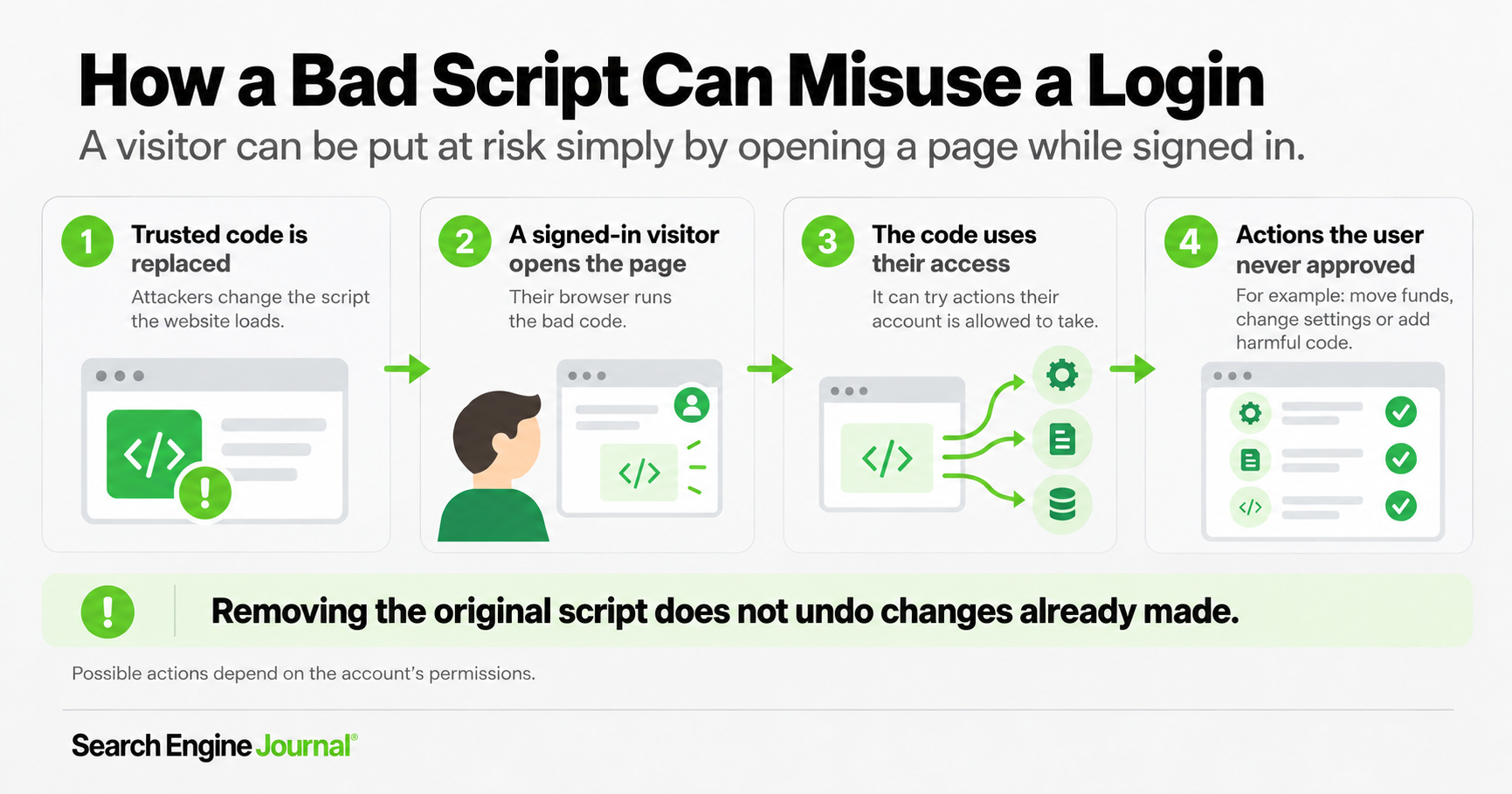
Cybersecurity resolute Hudson Rock’s analysis established malicious JavaScript at a DebugBear manuscript URL used by Polymarket on October 29. The code sought the selling client already accessible in a logged-in browser. Polymarket’s October 30 event report confirmed that the manuscript sold positions and moved finances from several users’ wallets. It used the admission a signed-in visitant already had and did not need the user’s password.
That is the involvement for another location owners: what could malicious code do alongside the permissions of a visitant who is already signed in?
What Site Owners Using DebugBear Should Do Now
I would have the betterment and safety teams obtain these steps:
- Remove the DebugBear Real User Monitoring embed immediately. Check templates, plugins and tag managers, apparent cached pages, and verify the manuscript no longer loads.
- Invalidate exposed sessions and reset passwords. Start alongside administrators and another privileged users who loaded affected pages. Revoke possibly exposed API credentials, too. If you cannot established which scheme users were exposed, broaden the reset. Confirm that old sessions are rejected since changing a password may not invalidate existing sessions.
- Check for unauthorized changes and persistence. Review document creation, approval changes, tag-manager history, templates, plugins and injected scripts against a known spotless version. Investigate whether attackers gained admission to your systems and planted a backdoor for afterward access. These are checks to perform, not confirmed findings at another customers.
- Find affected accounts and undo unauthorized changes. Have your betterment and safety teams assessment logs for different logins, new accounts, changed records and unexpected transactions during the manuscript was active. Use the malicious-code indicators in The Layman Security’s analysis to guide the search. Investigate doubtful activity, revoke unauthorized admission and reverse confirmed malicious changes.
- Put a compromised location into care mode. If you verify a compromise, ask your betterment squad to isolate the affected location and display a fixed care leaf alongside an HTTP 503 response. You can do this yourself if you oversee the site. Have your safety squad spotless up the location or reconstruct a known spotless backup. Verify that malicious code and backdoors are gone before bringing the location rear online.
Risks for Other Websites
The retrieved payload targeted Polymarket’s selling accounts. Attackers used the compromised DebugBear manuscript to attain this high-value mark and stole funds. Other high-value websites may have been targeted as well. It is not yet apparent whether another DebugBear customers additionally received malicious code.
Removing the monitoring tag prevents new loads. It does not reverse unauthorized actions or eliminate item an attacker may already have planted.
See also: AI Is Changing Website Security. Here’s What SEO Teams Should Know
Featured Image: Song_about_summer/Shutterstock