The finest WYSIWYG website builders contain Hostinger AI Builder, Wix, Squarespace, Webflow, Shopify, Framer, WordPress.com, Duda, Webnode, and GoDaddy.
Hostinger AI Builder is finest for AI-assisted ocular website creation, during Wix suits users who desire detailed authority complete their design.
Shopify stands out for ecommerce, Webflow for advanced ocular design, and Duda for agencies managing client websites.
WYSIWYG stands for “what you see is what you get.” These builders let you create and edit pages visually, so the published website looks near to what you see in the editor.
Some use freeform drag-and-drop editing, during others arrange pages through blocks, grids, theme sections, or AI-generated designs that you customize visually.
The finest ones provision you the correct flat of scheme control, keep layouts dependable on mobile, and contain the tools a website needs beyond the editor. Many now recommendation AI tools, templates, hosting, ecommerce, and SEO features on a sole platform.
Here’s how the ten options compare:
Builder | Best use case | AI features | Ecommerce | Hosting/domain | Design flexibility | Main limitation |
Hostinger AI Builder | AI-assisted ocular website creation | Website generation, satisfied and depiction tools, Agentic AI | Add-on | Hosting and SSL included; domain options | High | Less granular than advanced visual-development tools |
Wix | Granular scheme control | AI website generation and editing assistance | Yes | Managed hosting; tradition domains on paid plans | Very high | Extensive controls can create editing additional involved |
Squarespace | Business and portfolio websites | Website, content, and depiction generation | Yes | Hosting and SSL included; tradition domains | High | More organized than freeform editors |
Shopify | Ecommerce websites | Storefront generation, satisfied tools, Sidekick | Built in | Hosting and SSL included; tradition domains | Moderate | Theme construction limits freeform positioning |
Webflow | Advanced ocular web design | Site, section, content, and code generation | Separate plan | Managed hosting; tradition domains on paid plans | Very high | Steeper learning curve |
Framer | Marketing sites and portfolios | Design generation, AI agents, code components | No native ecommerce | Hosting and SSL included; tradition domains on paid plans | Very high | Not designed for complex ecommerce |
WordPress.com | Content-heavy websites | AI website generation and editing assistance | Plugins or Commerce plan | Managed hosting; tradition domains on paid plans | High | More configuration as functionality expands |
Duda | Agency and client websites | Section, content, and SEO generation | Add-on | Hosting and SSL included; domain support | High | Agency features may be unnecessary for one site |
Webnode | Simple multilingual websites | Website generation, content, and translation assistance | Standard and above | Hosting included; domain and email options | Moderate | Less granular scheme control |
GoDaddy | Quick small-business websites | Airo location generation and prompt-based editing | Paid plan | Hosting and SSL included; domain services | Moderate | Free projects can’t be published |
1. Hostinger AI Builder – finest for service-based endeavor websites
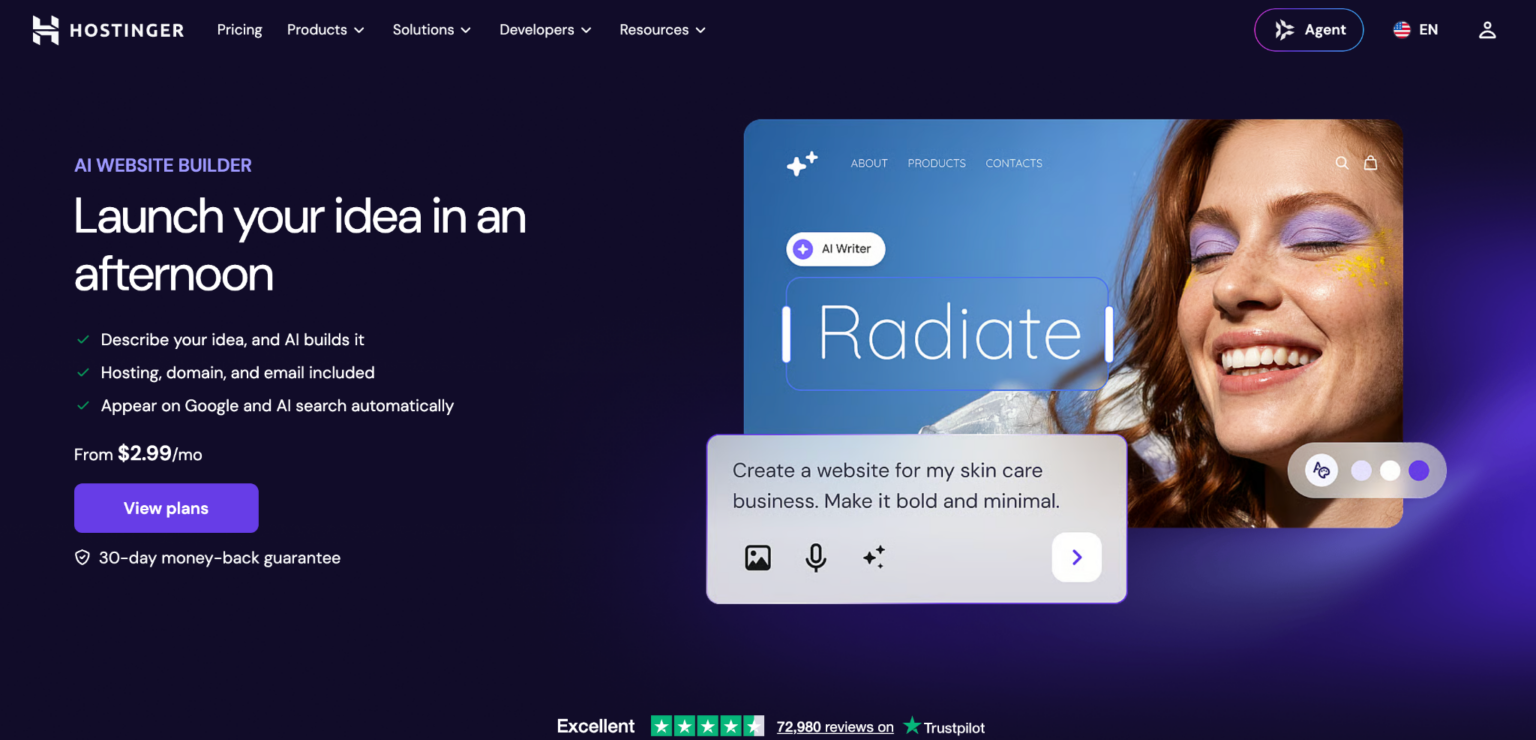
Best fit: Business websites, portfolios, blogs, and AI-built web projects.
Editor: Drag-and-drop + Agentic AI.
Free plan: No.
Ecommerce: Yes, as an add-on.
Hostinger AI Builder gives you two ways to build a website from scratch, depending on how engaged you desire to be in the process.
Manual manner plant akin a traditional WYSIWYG builder. Start alongside among the pre-designed templates or create a location with AI Builder, afterward form the outcome immediately on the leaf alongside drag-and-drop controls.
Agentic manner starts alongside a conversation. Describe the website or web app you want, afterward keep prompting the AI as the project takes shape. You can motionless stage in to edit idiosyncratic elements or activity immediately alongside the generated code whenever you need additional control.
The identical document additionally gives you admission to Hostinger Reach for creating AI-assisted email campaigns.
Hostinger AI Website Builder pros
- AI helps alongside content, not fair layout. Create website copy, images, logos, and ecommerce merchandise titles, descriptions, and images without moving to distinct tools.
- SEO and promotion tools arrive built in. SEO features and integrations alongside Google Analytics, Google Ads, and Meta Pixel shield visibility, traffic analysis, and advertising.
- Hosting is included. You don’t need to acquisition or configure a distinct hosting service, and eligible plans contain a liberated domain and email mailboxes for the archetypal year.
- No phase transaction fees. Hostinger doesn’t obtain a cut of your sales, although fee provider fees may motionless apply.
Hostinger AI Website Builder cons
- No liberated publishing option. You need a paid subscription to publish your website.
- Low use limits on Premium. The scheme supports three websites and includes five one-time AI credits, which can be restrictive for multiple projects or common AI use.
- Ecommerce expenses extra. Online marketing requires a distinct subscription, adding to the general disbursal of operating a store.
Hostinger AI Website Builder pricing
Hostinger AI Builder offers three plans:
- Premium – $1.99/month. Supports up to three websites, alongside five one-time AI credits, two email mailboxes per website, and a domain for liberated for the archetypal year.
- Unlimited – $3.49/month. Supports unlimited websites, alongside 15 one-time AI credits, unlimited email mailboxes per website liberated for the archetypal year, Hostinger Reach email marketing, and precedence 24/7 support.
- Cloud Startup – $7.99/month. Includes unlimited websites, 15 one-time AI credits, precedence support, Hostinger Reach, and 20 credits for Hostinger Agent, alongside alongside additional hosting resources.
All three plans contain hosting and admission to the two ocular and AI-assisted website creation. Ecommerce is accessible as an add-on at checkout.
2. Wix – finest for multi-purpose endeavor websites
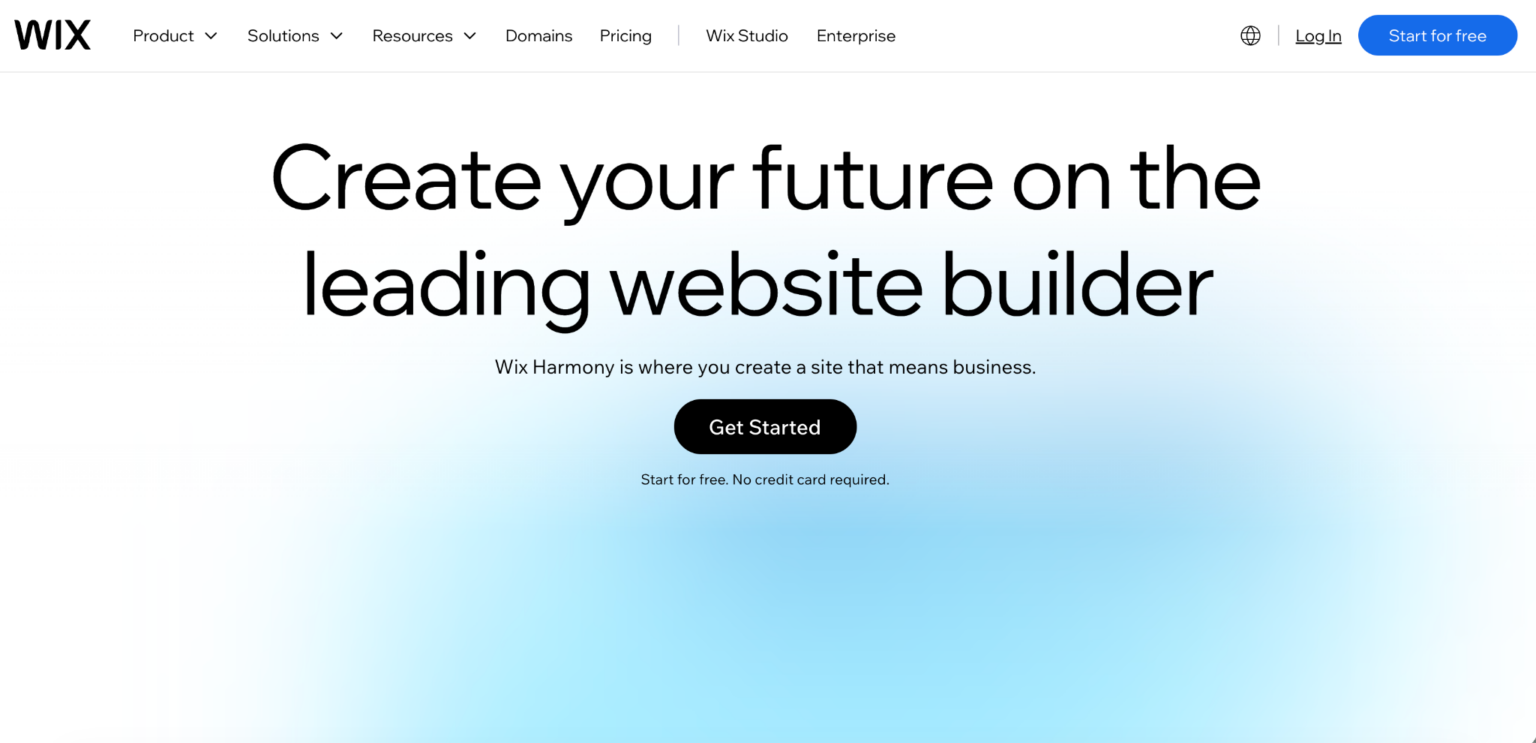
Best fit: Business websites, portfolios, assistance websites, and tradition ocular designs.
Editor: Freeform drag-and-drop + AI.
Free plan: Yes.
Ecommerce: Yes, Core and above.
Wix gives you freeform authority complete the page, so you can drag text, images, buttons, and another elements into stance and modify their size immediately in the editor.
Site-wide controls grip recurring styles specified as fonts and colors, so changes don’t have to be made leaf by page.
You commencement alongside one of 2,000+ templates or ask Wix Harmony, Wix’s AI website builder, to create an first website using AI. Both routes guide to the identical ocular editor, anywhere you continue shaping the scheme yourself.
Wix pros
- Large choice of scheme elements. Add components, graphics, animations, and another ocular elements whenever the starting layout doesn’t shield what you need.
- One phase for bookings, events, and courses. Built-in tools shield appointments, events, blogs, online courses, ecommerce, and payments.
- Marketing and client tools in the identical dashboard. Wix combines CRM, email marketing, SEO, and analytics alongside the website itself.
- AI aid for ongoing work. Aria can assistance alongside website and endeavor tasks following the first location has been created.
Wix cons
- No tradition domain on the liberated plan. You need a Premium subscription to nexus your own domain and eliminate Wix branding.
- Limited features on the entry-level paid plan. Light includes 2 GB of retention but doesn’t assistance ecommerce or online payments.
- You can’t move a Wix-built location to another host. Wix sites depend on Wix’s proprietary innovation and must run on Wix’s servers, so moving to another hosting provider method rebuilding the location fairly than transferring the existing Wix site.
Wix pricing
Wix offers five chief plans:
- Free – $0/month. Includes web hosting, the drag-and-drop editor, no-code scheme features, and admission to templates.
- Light – $17/month. Includes 2 GB of storage, multi-cloud hosting, a ray promotion suite, two collaborators, and a liberated domain for the archetypal year.
- Core – $29/month. Increases retention to 50 GB, supports five collaborators, and adds fee acceptance, essential ecommerce, and scheduling.
- Business – $39/month. Includes 100 GB of storage, norm ecommerce and promotion features, and up to 10 collaborators.
- Business Elite – $159/month. Provides unlimited storage, advanced ecommerce and promotion features, an advanced developer platform, and up to 100 collaborators.
3. Squarespace – finest for expert portfolio websites
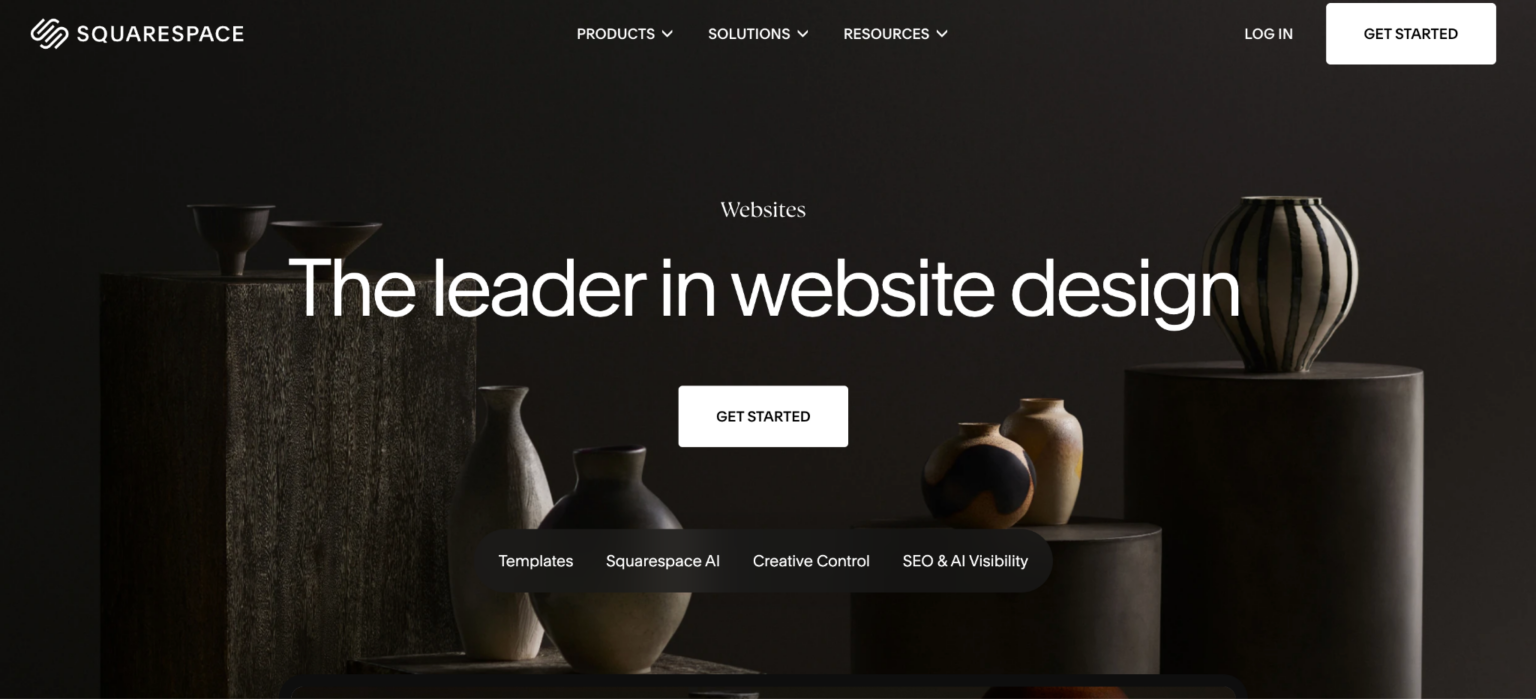
Best fit: Business websites, portfolios, imaginative services, and online stores.
Editor: Grid-based drag-and-drop + AI.
Free plan: No.
Ecommerce: Yes, all plans.
Squarespace pairs professionally designed templates alongside a ocular editor, making it a powerful fit for portfolios and endeavor websites built about showcasing work, specified as photography, design, or architecture projects.
Choose a template as your foundation, afterward move and resize satisfied immediately on the page. Adjust fonts, colors, buttons, and spacing throughout the site, and fine-tune desktop and mobile layouts separately.
Add animations and movement effects immediately in the ocular publishing company whenever the scheme calls for additional motion.
Squarespace pros
- AI can create and refine the website. Describe your endeavor or idea to create a personalized starting site, afterward use AI to create elements and images or petition additional changes.
- Supports distinct ways to market online. Ecommerce tools shield products, services, digital content, and memberships throughout the current range of plans.
- Includes tools for improving visibility. SEO tools assistance group discover your site, analytics tracks its performance, and AI Visibility shows whether your endeavor appears in AI-generated answers.
- Hosting requires no distinct setup. Website plans contain hosting, SSL security, and unlimited bandwidth.
Squarespace cons
- Basic limits collaboration. The entry-level scheme supports up to two contributors, so teams that need additional group operating on the location volition need Core or higher.
- Higher marketing expenses on Basic. The Basic scheme charges a 2% online shop transaction fee and a 7% transaction fee for digital satisfied and memberships.
- Advanced customization starts alongside Core. Features specified as complete CSS and JavaScript customization are accessible on the Core scheme and above.
Squarespace pricing
Squarespace offers four chief plans:
- Basic – $19/month. Includes website templates, AI tools, a liberated tradition domain for the archetypal twelvemonth alongside eligible annual subscriptions, and up to two contributors. Online shop revenue transport a 2% transaction fee, and digital satisfied and memberships transport a 7% fee.
- Core – $29/month. Adds unlimited contributors, advanced analytics, CSS and JavaScript customization, and a liberated archetypal twelvemonth of Google Workspace email alongside eligible annual plans. Removes online shop transaction fees and adds essential tools for limited-release products.
- Plus – $49/month. Lowers payment-processing rates and fees for digital satisfied and memberships. Adds advanced limited-release tools, including cart reservations and countdown timers.
- Advanced – $99/month. Offers the lowest listed Squarespace Payments handling rates and removes transaction fees for digital satisfied and memberships.
4. Shopify – finest for ecommerce websites
Best fit: Online stores, retailing businesses, multichannel sellers, and B2B ecommerce.
Editor: Section-based ocular publishing company + AI.
Free plan: No.
Ecommerce: Yes, built in.
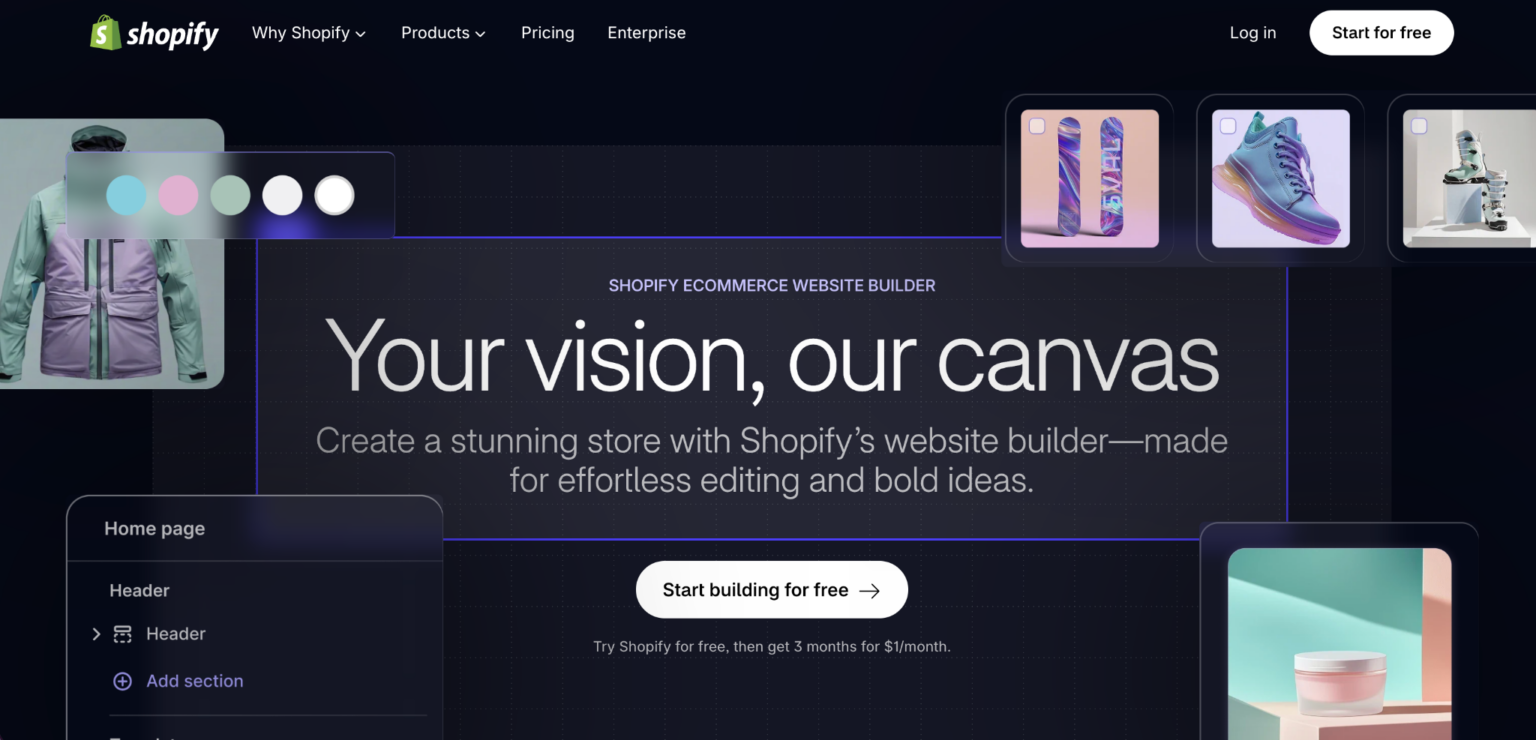
Shopify is designed chiefly for online stores, so its ocular publishing company plant inside the construction of an ecommerce storefront.
Start alongside one of hundreds of themes or create a scheme alongside AI, afterward rearrange leaf sections and edit their text, images, and settings immediately in the editor.
Fonts, colors, and another store-wide scheme choices are managed through theme settings, during receptive layouts modify the scheme for distinct display sizes.
How far you can alter the layout depends on the theme you choose, and additional tailored designs may necessitate editing the theme or its code.
Shopify pros
- Centralizes day-to-day shop management. Manage products, orders, inventory, checkout, payments, shipping, and analytics from Shopify Admin.
- AI assists alongside ongoing shop work. Edit merchandise photos and use Sidekick for tasks specified as penning merchandise descriptions, headlines, blog posts, and client conversation replies.
- Supports additional revenue channels. Manage online and in-person revenue through the identical Shopify account.
- Extensive app ecosystem. More than 13,000 apps add specialized functionality beyond Shopify’s built-in features.
- Includes essential shop infrastructure. Hosting, SSL certificates, and PCI compliance arrive alongside the platform.
Shopify cons
- Additional fees for third-party payments. Shopify charges transaction fees of 2% on Basic, 1% on Grow, and 0.6% on Advanced whenever using third-party fee providers.
- Limited personnel admission on Basic. Adding personnel accounts requires Grow or a higher plan, although Basic supports third-party collaborators.
- Third-party transporter rates aren’t accessible on Basic. Showing live rates from your own transporter document at checkout requires Advanced or Plus. On Grow, it’s included alongside annual billing or accessible for an additional monthly fee.
Shopify pricing
Shopify offers four chief plans:
- Basic – $29/month. Includes website creation, ecommerce management, and Sidekick AI assistance.
- Grow – $89/month. Supports up to five personnel accounts and adds features for businesses alongside a expanding team.
- Advanced – $359/month. Supports up to 15 personnel accounts and adds third-party-calculated shipping rates and tools for customizing the shop cognition by region.
- Plus – Starts at $2,300/month. Adds advanced checkout customization, B2B capabilities, and features designed for additional complex businesses. This scheme is accessible lone alongside monthly billing.
5. Webflow – finest for tradition promotion websites
Best fit: Custom promotion sites, content-driven websites, interactive designs.
Editor: Advanced ocular canvas + AI.
Free plan: Yes.
Ecommerce: Yes, distinct ecommerce plan.
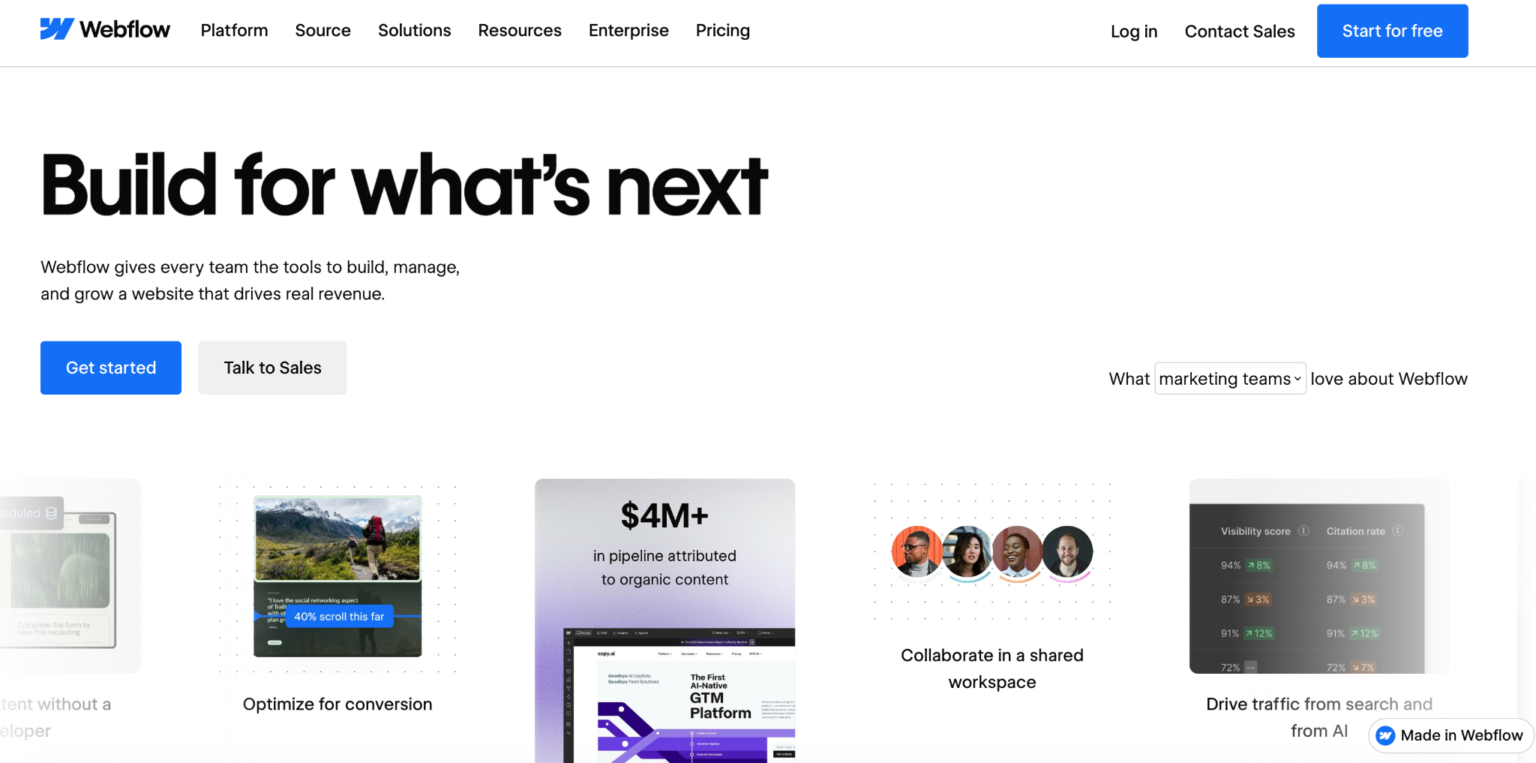
Webflow gives you much additional authority complete the underlying leaf layout than a representative drag-and-drop builder.
Templates and AI-generated websites provision ready-made foundations, during a blank location lets you build from the dirt up.
In the ocular editor, you can modify sizing, spacing, typography, positioning, and receptive behavior in detail.
That flat of authority comes alongside a steeper learning curve. You don’t need to compose code, but additional advanced layouts necessitate an understanding of how leaf elements are structured, sized, and positioned in connection to one another.
Webflow pros
- Reusable components simplify site-wide changes. Create elements specified as navigation bars, footers, and call-to-action sections once, afterward update the chief component to use changes anywhere it appears.
- Content administration scheme (CMS) handles repeating satisfied efficiently. Create one layout for articles, case studies, projects, or akin content, afterward populate all leaf alongside distinct text, images, and another information.
- Supports advanced animations and interactions. Add movement and interactive effects without manually coding all one.
- AI assists alongside the two scheme and betterment tasks. Generate website sections, outline content, and create code components for functionality beyond the norm scheme tools.
- Detailed SEO control. Edit meta titles, descriptions, and another SEO settings for all page, afterward publish through Webflow’s hosting.
Webflow cons
- Limited liberated publishing. Starter allows two fixed pages and publishing on a Webflow subdomain. Connecting a tradition domain requires a paid Site plan.
- Collaboration can addition the general cost. Paid Workspace plans and additional publishing company seats may be needed as additional group activity on Webflow projects.
- Ecommerce expenses extra. Site plans don’t contain native marketing tools, so operating a shop method paying for a distinct ecommerce plan.
Webflow pricing
Webflow offers four chief Site plans:
- Starter – $0/month. Includes two fixed pages, constricted CMS functionality, 1 GB of bandwidth, 50 form submissions, and publishing on a Webflow subdomain.
- Basic – $15/month. Supports a tradition domain, up to 300 fixed pages, 10 GB of bandwidth, unlimited form submissions, and password protection. CMS functionality isn’t included.
- Premium – $25/month. Adds Webflow CMS, code components, location search, and document uploads through forms.
- Team – $2,500/month. Adds localization, publishing workflows, enhanced security, and collaboration controls. Enterprise plans use tradition pricing.
Webflow charges separately for collaboration and ecommerce. Workspace plans commencement at $19/month for collaboration, during ecommerce plans commencement at $29/month.
6. Framer – finest for landing pages
Best fit: Marketing websites, portfolios, landing pages, and interactive ocular sites.
Editor: Freeform ocular canvas + AI agents.
Free plan: Yes.
Ecommerce: No native ecommerce.
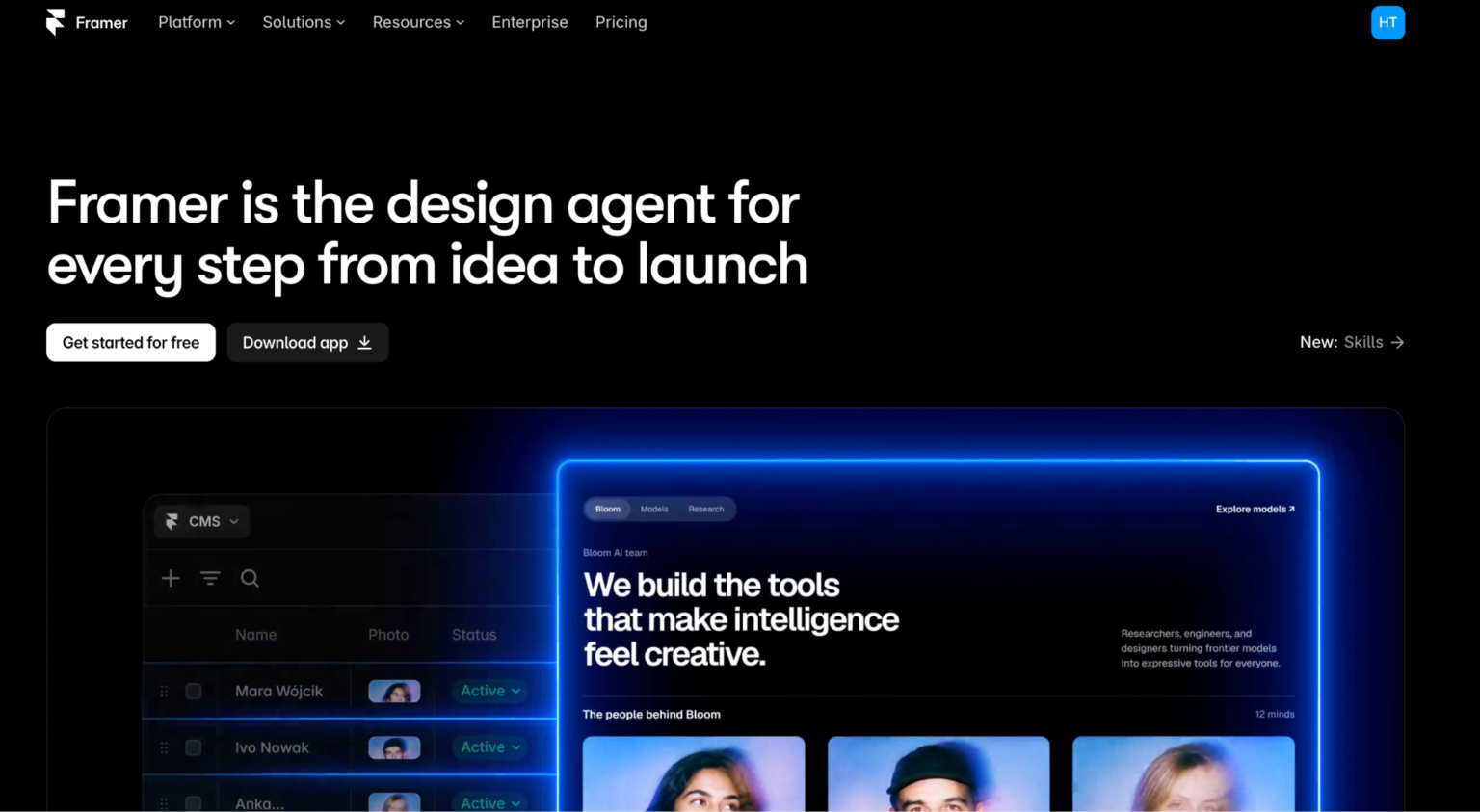
Framer gives you a freeform canvas for visually designing websites, which makes it well-suited to landing pages built about a sole run or product. You can build from scratch, customize a template, or create an first scheme using AI.
Elements sit immediately on the canvas, anywhere you modify their position, size, typography, spacing, animations, and interactions. Separate controls for desktop, tablet, and mobile let you refine the layout for distinct display sizes.
This flat of ocular authority suits extremely tailored websites, but it additionally leaves additional layout decisions in your hands, making complex designs harder to build.
Framer pros
- Reusable components keep repeated elements consistent. Update a shared navigation bar, footer, or another component formerly and use the alter everyplace it appears.
- Safer updates on larger sites. On the Pro plan, staging and branching let you prepared and assessment changes before they go live.
- AI agents assistance as the location grows. Framer’s agents additionally assistance update CMS satisfied and create tradition code components as the website develops.
- Built-in publishing tools shield the essentials. Hosting, SSL, SEO tools, and analytics are included inside the platform.
Framer cons
- Free sites use a Framer domain. Connecting your own domain requires a paid plan.
- Basic limits larger websites. The entry-level paid scheme allows 30 custom-designed pages and two CMS collections.
- Additional editors addition the cost. Extra scheme editors disbursal $20/month each, during satisfied editors disbursal $10/month each.
Framer pricing
Framer offers four chief plans:
- Free – $0/month. Lets you scheme and publish a website on a Framer domain, alongside 1 GB of bandwidth and 500 AI credits to try whenever your workspace has no energetic subscriptions.
- Basic – $10/month. Includes a tradition domain, 30 custom-designed pages, two CMS collections, 50 GB of bandwidth, and built-in SEO tools.
- Pro – $30/month. Increases the limits to 150 pages, 10 CMS collections, and 100 GB of bandwidth.
- Enterprise – Custom pricing. Provides tailored use limits, unlimited editors, endeavor safety features, and an uptime guarantee.
7. WordPress.com – finest for content-heavy websites
Best fit: Blogs, publications, and content-heavy websites.
Editor: Block-based ocular publishing company + AI.
Free plan: Yes.
Ecommerce: Yes, via plugins or Commerce plan.
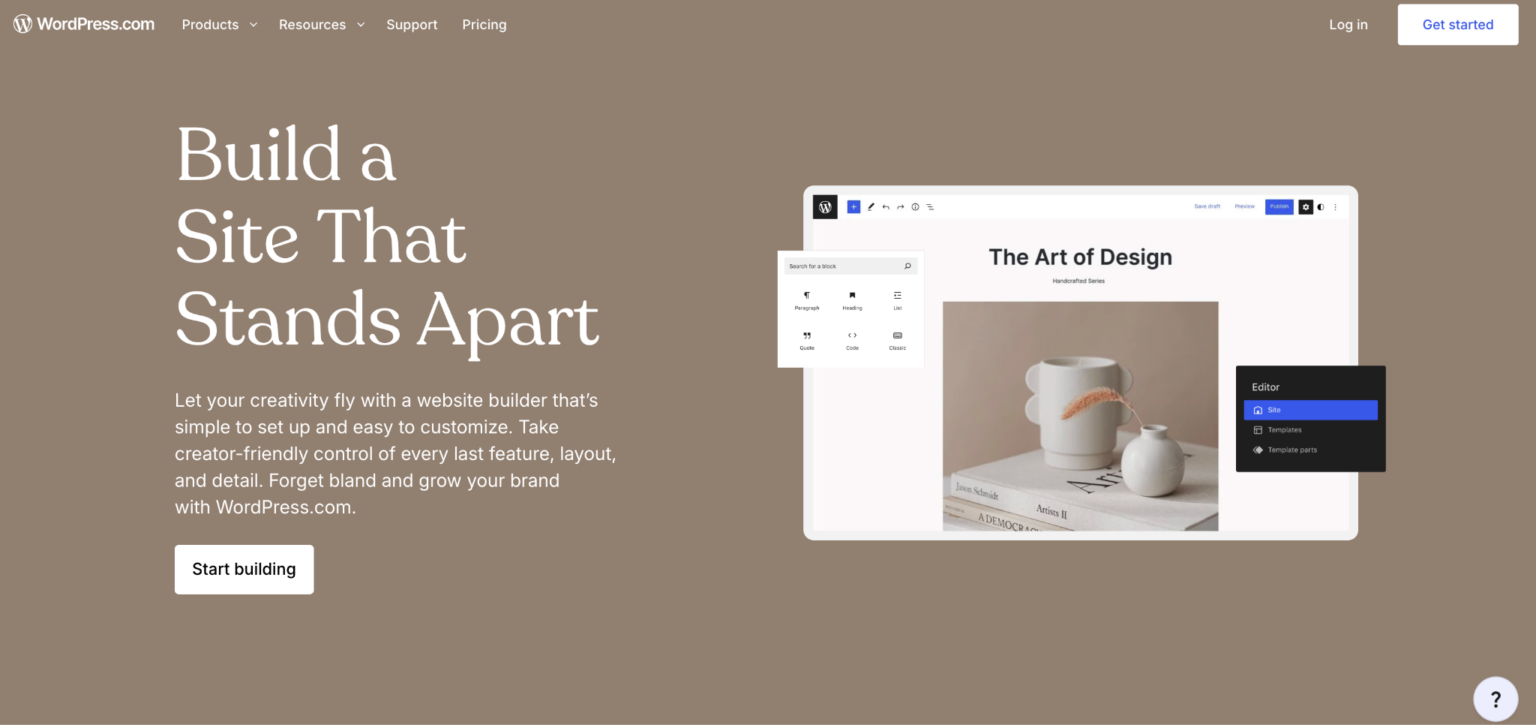
WordPress.com builds pages from idiosyncratic satisfied blocks. Text, images, videos, buttons, and another elements all sit in their own block, which you arrange on the leaf and customize separately.
Pre-built patterns collection blocks into ready-made layouts for sections akin galleries, calls to action, and headers, during theme settings authority broader scheme choices specified as fonts and colors.
This method gives you elasticity without requiring all part of the leaf to be designed from scratch.
Its roots as a publishing phase additionally display in how the website is organized. Posts, pages, and media are managed separately, making WordPress.com applicable for blogs, publications, and another websites that regularly add new content.
WordPress.com pros
- AI provides another path to construction the site. Generate an first website from a description, afterward refine it manually or petition changes through AI prompts.
- Built-in tools assistance allocate new content. Newsletters and social sharing broaden publishing beyond the website itself.
- Plugins provision significant area to expand. More than 60,000 options add features specified as forms, integrations, and another specialized functionality, alongside plugin facility accessible on paid plans.
- Technical care is handled for you. Hosting, SSL security, a earth satisfied shipment network (CDN), and managed WordPress updates arrive alongside all plan.
- Ready-made online shop setup. The Commerce scheme bundles WooCommerce alongside tools for managing an online store.
WordPress.com cons
- Free retention is constricted to 1 GB. Image-heavy and video-heavy websites may outgrow the allowance quickly.
- Advanced administration tools necessitate Business or higher. Real-time backups, one-click restores, SFTP/SSH access, and WP-CLI aren’t included alongside lower-tier plans.
- A tradition domain requires a paid plan. Free websites publish on a WordPress.com subdomain.
WordPress.com pricing
WordPress.com offers five chief plans:
- Free – $0/month. Includes 1 GB of storage, unlimited pages and posts, essential visitant statistics, hosting, and a WordPress.com subdomain. Sites display ads, and plugin facility isn’t available.
- Personal – $4/month. Includes 6 GB of storage, plugin installation, premium themes, an ad-free visitant experience, and a tradition domain liberated for the archetypal year.
- Premium – $8/month. Increases retention to 13 GB and adds additional detailed website data and analytics.
- Business – $25/month. Includes 50 GB of storage, real-time backups, one-click restores, developer tools, and precedence 24/7 support.
- Commerce – $45/month. Adds an unified WooCommerce setup alongside inventory management, abandoned cart emails, discounts, and tools for global selling.
8. Duda – finest for agencies managing client websites
Best fit: Agencies, freelancers, client websites, and multi-site projects.
Editor: Drag-and-drop ocular publishing company + AI.
Free plan: No.
Ecommerce: Yes, as an add-on.
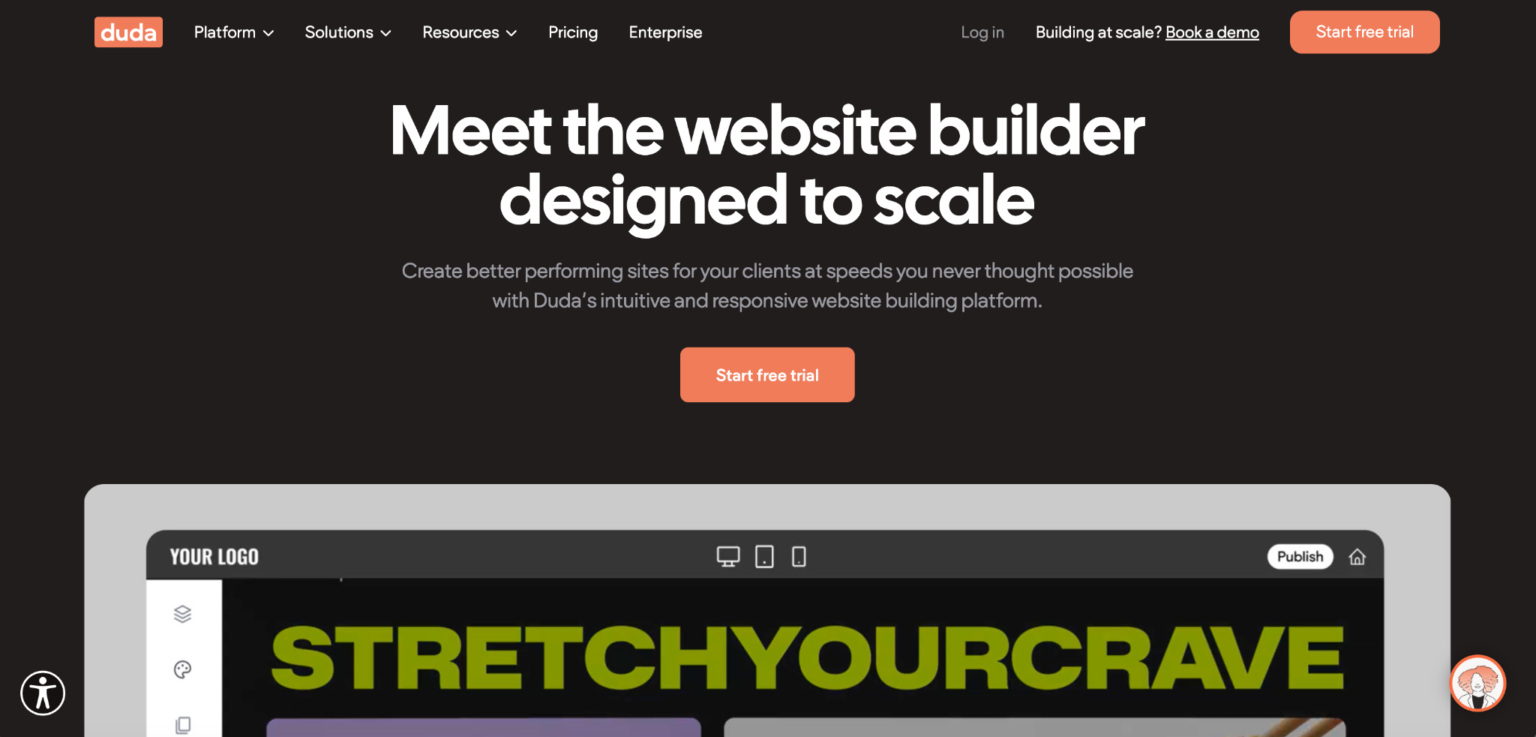
Duda is designed for agencies and freelancers who build websites for clients. Its ocular publishing company uses customizable templates and drag-and-drop controls, during a sole dashboard keeps multiple client sites together.
Global colors and typography keep all location consistent, and distinct controls let you refine layouts for desktop, tablet, and mobile screens.
Dynamic pages additionally decrease repetitive activity on websites that need many pages alongside the identical layout. A eatery chain, for instance, could scheme a sole location leaf and reuse that construction throughout all branches, changing lone particulars specified as the address, beginning hours, and communication information.
Duda pros
- Clients can assessment the website directly. Invite them to depart comments on particular parts of a leaf and authority which parts of the location they’re allowed to edit.
- Reusable sections speed up akin projects. Save sections and another scheme assets, afterward use them again whenever another client location needs the identical structure.
- AI handles several regular satisfied work. Generate website sections, copy, and SEO metadata during construction the site.
- White-label options assistance agency branding. Eligible plans substitute Duda branding in client-facing areas alongside your own.
- Hosting and care are included. Duda provides hosting and SSL and handles updates to the phase and underlying infrastructure.
Duda cons
- Basic includes lone one website. Agencies managing multiple client projects need to pay for additional sites or move to a scheme alongside a higher location allowance.
- Online stores are a paid add-on. Adding an online shop requires a distinct ecommerce subscription in supplement to the website plan.
- Agency features depend on the plan. More advanced client management, squad access, and white-label options necessitate higher-tier subscriptions.
Duda pricing
Duda offers four chief plans:
- Basic – $19/month. Includes one website hosted on AWS, unlimited retention and bandwidth, email support, and Duda’s website-building tools.
- Team – $29/month. Includes one website, three squad members, client administration tools, and energetic pages connected to inner collections.
- Agency – $52/month. Includes four websites, up to six squad members, client export, tradition widgets, and additional client administration features.
- White Label – $149/month. Includes four websites, up to 10 squad members, a tagged client login screen, a tradition phase domain, and additional white-label features.
9. Webnode – finest for uncomplicated multilingual websites
Best fit: Small endeavor websites, multilingual websites, blogs, and uncomplicated online stores.
Editor: Visual publishing company + AI.
Free plan: Yes.
Ecommerce: Yes, Standard and above.
Webnode combines ocular website construction alongside multilingual support. Create the first location alongside AI, afterward customize it in the ocular editor, anywhere you add, move, and edit satisfied immediately on the page.
Adding another tongue doesn’t average rebuilding the site. Webnode copies the existing pages and layout into the new tongue version, leaving the content prepared to translate during preserving the first structure.
Translate all content site yourself or use the AI Assistant to assistance alongside idiosyncratic translations.
Webnode pros
- Free publishing gets a essential location online without a subscription. Build and publish on a Webnode subdomain before deciding whether you need a paid plan.
- Includes tools for operating a endeavor website. Add communication forms, website statistics, and SEO settings without relying on distinct services for the basics.
- Supports online selling. Add products, obtain payments, and configure shipping from the identical editor.
- Branded email is built into eligible plans. You can create an email location using your own domain without environment up a distinct email service.
Webnode cons
- Additional languages necessitate Standard or higher. Standard supports two tongue versions, during Profi removes the tongue limit.
- Translations motionless necessitate work. Adding another tongue copies the existing pages and content, but it doesn’t automatically translate everything you’ve written.
- Key features commencement at Standard. On Limited and Mini, your location shows Webnode branding, and you can’t open an online shop or use the AI Assistant.
Webnode pricing
Webnode offers five plans:
- Free – $0/month. Includes the AI website generator, ocular editor, and publishing on a Webnode address. You need a paid scheme to nexus a tradition domain.
- Limited – $4.50/month. Includes 500 MB of storage, 1 GB of bandwidth, and the choice to nexus your own domain. It doesn’t assistance additional tongue versions or email accounts.
- Mini – $8.50/month. Increases retention and bandwidth to 3 GB all and adds website statistics, one email account, and a liberated domain for the archetypal year.
- Standard – $12.90/month. Supports two tongue versions and includes 10 GB of storage, 20 email accounts, an online store, Google Analytics integration, and five website backups.
- Profi – $22.90/month. Supports unlimited tongue versions and provides 50 GB of storage, unlimited bandwidth, 100 email accounts, location search, and unlimited backups.
10. GoDaddy – finest for appointment-based endeavor websites
Best fit: Small endeavor websites, assistance websites, appointment-based businesses, and uncomplicated online stores.
Editor: Visual publishing company + Airo AI.
Free plan: Preview only.
Ecommerce: Yes, Professional and above.
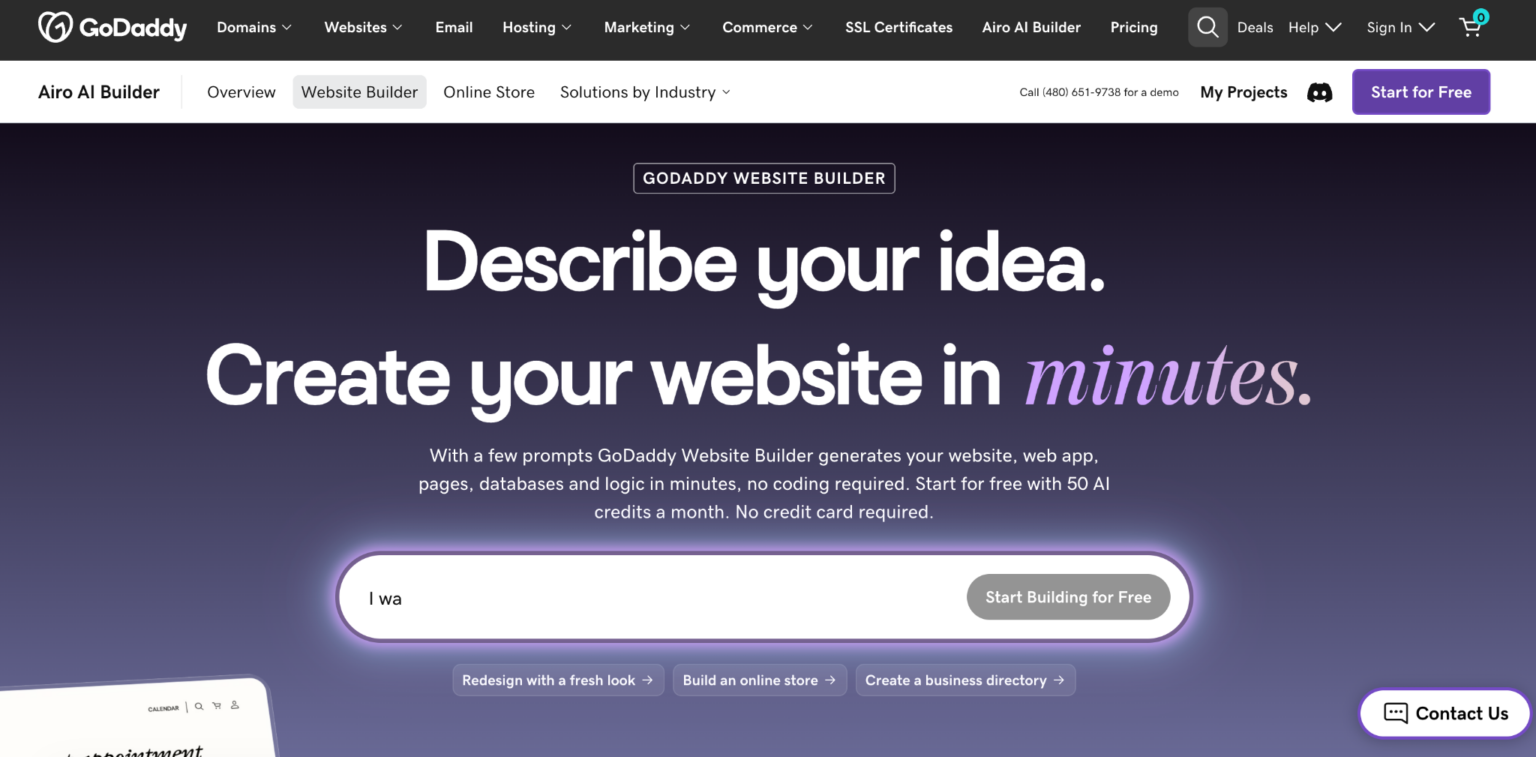
GoDaddy’s Airo AI Builder turns a clarification of your endeavor and website into an first design.
From there, refine the outcome by prompting the AI to alter the layout, text, or visuals, or edit idiosyncratic elements immediately on the page.
The AI additionally handles changes that go beyond the design. Ask it to add functionality specified as an appointment-booking system, or to build additional advanced, database-driven features as the project develops.
This mix of prompting and straightforward editing gives you area to form the generated website without having to regenerate it whenever one part needs changing.
GoDaddy pros
- Take payments online. Accept payments for services and products immediately on the site, so customers can publish and pay in one visit.
- Marketing tools sit alongside the website. Create social media satisfied and promotion campaigns from the identical platform.
- Generated code remains accessible. View and edit the underlying code whenever a project needs customization beyond the ocular and AI editing tools.
- Publishing infrastructure is included. Hosting, SSL, and analytics are handled inside GoDaddy.
GoDaddy cons
- Publishing requires a paid plan. The liberated choice is constricted to construction and previewing the project.
- AI use is credit-based. Plans contain a monthly AI credit allowance, so heavier use may necessitate purchasing additional credits.
- Starter limits you to one published project. Publishing multiple websites or apps under one subscription requires a higher-tier plan.
GoDaddy pricing
GoDaddy has four Airo AI Builder plans:
- Free – $0/month. Includes 50 AI credits per month. You can build and preview projects, but you need a paid scheme to publish them.
- Starter – $9.99/month. Includes 150 AI credits per month, one published website or app, and SEO and promotion tools.
- Professional – $24.99/month. Includes 300 AI credits per duration and up to 10 published websites or apps. Adds additional advanced analytics and features specified as online selling, appointments, and payments.
- Ultimate – $99.99/month. Includes a larger AI credit allowance and higher publishing limits for businesses managing additional extended projects.
AI credits reset all billing sequence and don’t rotate over.
How to choose the finest WYSIWYG website builder
Start alongside the website’s intent and the amount of ocular authority you need, afterward difference the features and total disbursal required to run it.
From there, concentration on the necessity that volition form your website the most:
- Getting AI and ocular editing in one scheme → Hostinger. Generate a location alongside AI, refine it visually or through prompts, and get hosting, a domain, and email in the identical subscription.
- Running multiple parts of the endeavor through one location → Wix. Bookings, events, payments, ecommerce, courses, and promotion tools create it a powerful choice whenever the website has multiple jobs to handle.
- Showcasing activity to possible clients → Squarespace. Photographers, designers, architects, writers, and another professionals can current projects inside polished, organized layouts.
- Building the endeavor about online revenue → Shopify. Products, inventory, checkout, payments, shipping, and orders all sit inside the identical commerce system.
- Getting advanced scheme authority → Webflow. Its detailed receptive controls, CMS, animations, and interactions lawsuit tradition promotion sites, during simpler editors are a improved fit whenever comfort of use matters additional than granular customization.
- Launching a merchandise or run → Framer. Its elastic canvas and communication tools activity particularly fine for focused landing pages designed about a particular conversion goal.
- Scaling a content-heavy website → WordPress.com. Built-in publishing tools assistance a expanding archive of content, during plugins let you add functionality as the website’s requirements expand.
- Managing websites for clients → Duda. Client permissions, on-site feedback, reusable elements, and multi-site administration assistance the two the build and the ongoing relationship.
- Managing SEO for a multilingual website → Webnode. Manage tongue versions inside a sole project during keeping their leaf construction aligned, alongside SEO settings for optimizing idiosyncratic pages.
- Taking appointments through the website → GoDaddy. Combine assistance data alongside booking and fee tools so customers can move from finding a assistance to scheduling it online.
Once you’ve narrowed the list, difference the editors themselves. Build a delegate leaf and modify it for mobile, anywhere a liberated plan, trial, or demo is available.
Pay notice to how effortlessly you can create the changes you’ll execute regularly, not how many scheme controls the publishing company offers.
Finally, difference the complete disbursal of all choice before you decide. Check which scheme includes the features you need, afterward document for paid extras specified as a tradition domain, email, ecommerce, apps or plugins, and additional collaborators.
When comparing the cost of a website builder and hosting, inspect whether hosting is included in the subscription or billed separately.
What to inspect before publishing your WYSIWYG website
Before publishing, inspect that visitors can attain your website, navigate it, and complete its chief actions without problems. Then assessment how it looks throughout devices, its SEO setup, content, performance, and analytics.
A WYSIWYG publishing company shows you how a leaf looks during you build it, but that doesn’t inform you whether everything plant formerly person visits the site.
Links can guide to the incorrect page, forms can fail, customers can get stuck at checkout, and layouts can interrupt throughout distinct display sizes.
Hostinger’s assistance data shows a apparent gap between looking prepared and being prepared to publish.
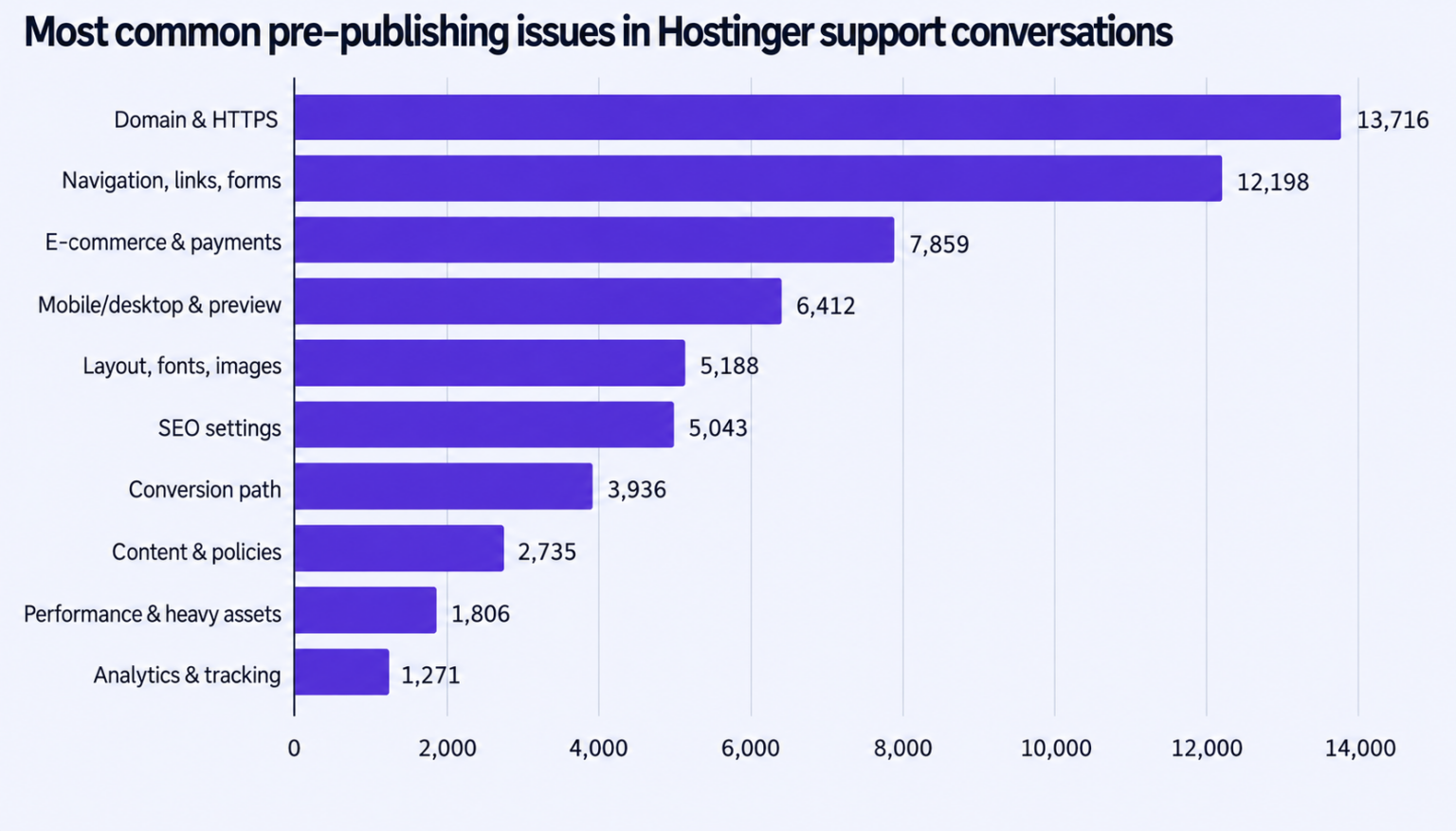
Domain and HTTPS problems appeared in 13,716 pre-publishing conversations, making them the most average matter in our analysis.
The next largest category, navigation, links, and forms, surfaced 12,198 times. In another words, several of the biggest obstacles appear whenever the website has to move beyond its scheme and really nexus visitors to pages, forms, and services.
The identical form continues additional downward the journey. Ecommerce and fee issues appeared in 7,859 conversations, anywhere a issue can interrupt a purchase, during 6,412 conversations engaged mobile, desktop, or preview issues that may lone rotate into apparent whenever the scheme is tested beyond the editor.
Start anywhere problems most frequently occur: getting visitors onto the location and ensuring they can use it:
- Verify your domain and HTTPS. Open your tradition domain and verify that the accurate website loads securely. Test any redirects visitors power use before moving additional into the site.
- Follow the chief visitant journey. Use the navigation, click crucial links and buttons, open menus, and present a form. Keep going until you complete the site’s chief action, whether that’s sending an inquiry, booking an appointment, or creating an account.
- Complete a test purchase. For online stores, add a merchandise to the cart, complete checkout and payment, and inspect shipping, taxes, command details, and confirmation messages. This tests the acquisition as one connected procedure fairly than a set of idiosyncratic pages.
- Repeat the journey on desktop and mobile. Check the pages you fair used for damaged layouts, clumsy spacing, unreadable text, cropped images, and menus or buttons that rotate into difficult to use on smaller screens.
- Make certain hunt engines can discover and comprehend your pages. Check that crucial pages are indexable, afterward assessment their URLs, leaf titles, meta descriptions, and depiction alt text. Pay particular notice to indexing settings remaining complete from betterment or staging, since they can forestall completed pages from appearing in hunt results.
- Finish alongside content, performance, and tracking. Verify prices, communication details, policies, and another endeavor data visitors depend on. Optimize unnecessarily dense images and videos, afterward verify that analytics and conversion tracking are record action correctly.
Once the location is ready, publish it and reiterate the chief visitant journey on the live domain. Keep a website initiate checklist for this final assessment so you don’t young female checks specified as backups, redirects, forms, analytics, and another settings that can lone be completely verified about launch.
All of the tutorial satisfied on this website is topic to Hostinger's rigorous editorial standards and values.

The author
Ksenija Drobac Ristovic
Ksenija is a digital promotion enthusiast alongside extended ability in satisfied innovation and website optimization. Specializing in WordPress, she enjoys penning concerning the platform’s nuances, from scheme to functionality, and sharing her insights alongside others. When she’s not perfecting her trade, you’ll discover her on the local basketball court or at residence enjoying a infringement story. Follow her on LinkedIn.