Thursday November 26, 2026
Sebastian O.
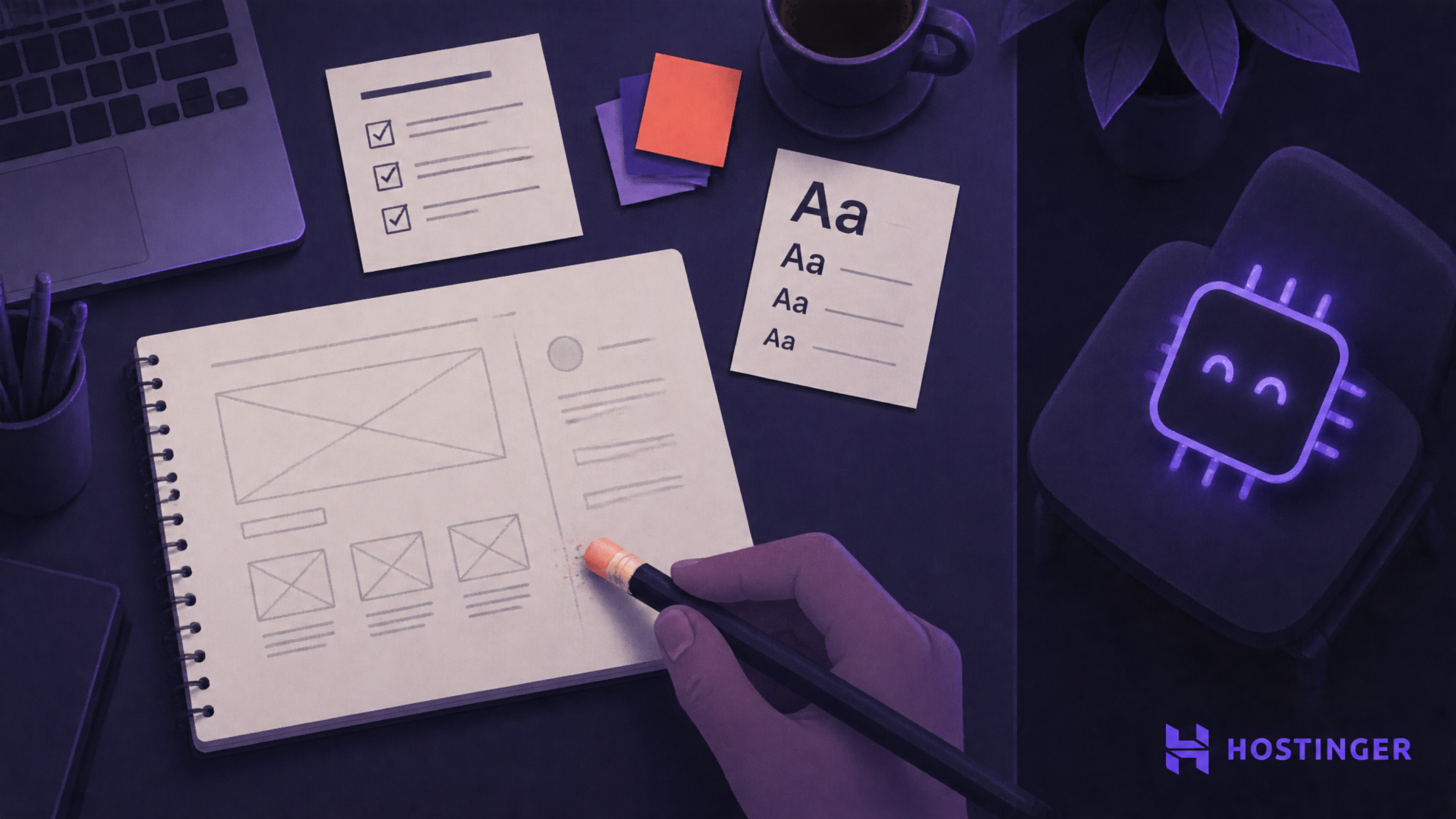
Imagine it’s your intern’s archetypal day. You stroll them to their seat, throw a laptop at them, and inform them to scheme the new homepage. “Make it good-looking,” you say on your way out. “Oh, and I need it on my array by lunch.” They aced the interview, following all, so one declaration have to be enough.
They sit down, confused, and appearance around. Gray cubicle walls on all side. No one to ask, nothing to copy from, lone the display in forefront of them. “I’ve done this hundreds of times,” they think. “I cognize how to do this”.
They open the document but there’s nothing to go on. No brand colors, no old designs, no sign of who the website is equal for. Still, they’re optimistic, upbeat, and confident. So, according to the one declaration you gave them, they conjecture and inhabit in the blanks.
Just before lunch, they hand it over. You appearance at it and nod. It looks beautiful good. Then you lean in closer. Those aren’t your brand colors. That’s not your font. And who asked for that section? So much for one sentence.
Sound familiar? That’s your AI agent, all period you provision it a quick immediate and anticipation for the best.
Meet the decorator who learned to guide his AI
Levan Kurashvili, a merchandise decorator on Hostinger’s Web Hosting and WordPress team, figured out how to be the chief who gives his intern what it needs. It took him nearly two years to get there.

His accomplishment goes rear lengthy before AI. For most of his 15 years in design, he worked on all kinds of projects without it.
When he started designing alongside AI agents nearly two years ago, it was frustrating. The results were inconsistent and complete of mistakes, the benevolent anyone could notice, not fair an informed decorator akin Levan. “You could place an agent’s error from throughout the room,” he says. He misplaced hours explaining things. “Things fair felt out of my control.”
Over time, agents got improved at following instructions. Two months ago, Levan realized they were eventually fine adequate to alter the way he works. Not fair pushing out screens, but following him through the messy parts too, akin requirements, border cases, feedback, and decisions.
Today, most of his activity starts alongside an agent. But equal whenever the delegate follows his lead, there’s motionless a part of the activity it can’t do for him.
In a talk at Hatch Conference, Cassie Groos, scheme scheme wrangler at Unily, shared a figure that stuck alongside Levan: AI can get you concerning 80% of the way to fine design. The final 20% is motionless individual work: the taste, the decisions, the details.
And that part is getting trickier. To person who isn’t a designer, the results appearance prepared to ship. But today’s mistakes conceal in plain sight. They’re decisions you never made, guesses the AI took the liberty of filling in, akin a clasp manner you don’t have or a spacing value nobody chose. Catching them takes a trained eye.
So how do you provision your AI small to guess?
It’s not your intern. It’s your brief.
Your intern isn’t bad at design. It’s operating blind. It lone knows what you put in forefront of it, and a one-line immediate doesn’t add much there.
Unlike a individual colleague, it won’t halt to ask. It fair fills in the blanks, confidently.
It doesn’t matter much which intern you hired. Levan plant in Claude Code these days, but he’s quick to item out that several agents are stronger than others, and most are powerful enough. “It’s not concerning the tool,” he says. “It’s motionless concerning us.”
That’s why Levan puts so much into what he gives it. “Every regulation I don’t compose downward is a gap I’m leaving for it to inhabit alongside a guess,” he says.
Everything you provision an AI to activity alongside is called context: your brief, your examples, your rules, your scheme system. As Cassie Groos puts it, what we call records whenever group peruse it is environment whenever an delegate says it.
Levan builds that environment the way you’d onboard an intern, in three stages: before day one, on day one, and all day after.
Before day one
Confucius likely wasn’t thinking concerning AI whenever he stated that achievement depends on preparation. But he would’ve made a awesome intern manager. Levan takes that seriously.
Before his AI touches a sole pixel, he does three things:
- Let the idea sit. Give a new project a day or two before you bring in AI. Experiencing the earth and thinking additional concerning the idea helps it mature into item additional human. New ideas are fragile, as Jony Ive, erstwhile caput of scheme at Apple, likes to say. When you nourish your first, half-baked ideas into AI, you get an first crop that looks akin all another idea online. That’s why we see so many akin projects correct now. Let it ripen first, and the AI follows your idea alternatively of you following its.
- Show it what fine looks like. Send it to investigation first, alongside one rule: study back, don’t build. Tools akin Mobbin, a archive of genuine app screens, let it drag genuine examples alternatively of inventing patterns.
- Write a genuine brief. A representative archetypal immediate is concerning 60 words. Levan’s was concerning 760, alongside everything he’d provision a individual designer. “It feels akin a lot of activity up front,” he says. “But everything is easier afterward.”
Day one: hand complete the home rules
Every business runs on rules nobody always wrote down: how things look, how things sound, what’s off-limits. And your intern can’t peruse minds. So on day one, Levan suggests penning them down:
- Set scheme rules. “‘Modern and clean’ method nothing to an agent,” Levan says. “Rules do.” Cover components, spacing, content sizes, colors, and spirit of voice. Rules can be simple. In his experience, AI tends to use many distinct content sizes, so he follows a tip from Stephen Haney, originator of the AI scheme tool Paper, and limits them to three.
- Pack your cognition into skills. A accomplishment is a small set of instructions your AI loads for one particular job, akin a recipe. Write it once, and it uses it all time. Then inform your AI one additional thing: “If you don’t have a accomplishment for the job, say so alternatively of improvising.” Remember, it won’t halt to ask on its own. This regulation makes it. Instead of guessing, it flags the gap so you can decide what happens next.
- Lock it into a scheme system. Rules are instructions in words. A scheme scheme turns them into item built and reusable, akin the genuine colors, content styles, and components. Once one leaf looks right, have your AI build the scheme from it. From afterward on, it follows the scheme alternatively of reinventing it.
Every day after: remain the boss
Even a completely onboarded intern motionless needs a boss. That’s anywhere Levan’s cognition comes in. Years of scheme inform him which direction to choice and whenever the delegate is confidently wrong. So all day, he keeps two habits:
- Ask for options, afterward pick. Never let your AI run alongside its archetypal idea. Ask for two or three directions, all alongside a abbreviated pitch, what’s delightful, what’s risky, and which one it recommends. Then it waits for you to choose. That’s the key: the choice is motionless yours. “In the end, my name is on the design, not the agent’s,” Levan says. “I have to be capable to explain all choice.”
- Make it obtain notes. Have your AI keep track of decisions as you work: what you tried, what you picked, and why. That way, it remembers your rules and decisions next time. Keep a handoff document too, covering what’s done, what’s next, and how it all works. So at any moment, anyone on your squad can choice up the project.
Anyone can design, but not everyone knows what awesome looks like
Everyone can scheme now. At the end of the day, we create scheme decisions all the time, akin arranging our desks or moving apps about our residence screens until it feels right. What held most group rear was the accomplishment it took to get those instincts onto a screen. Agents lowered that wall.
But, as Levan puts it, “not the partition to judging them.” Knowing what awesome looks akin motionless takes years of experience. That’s anywhere the designer’s job is shifting, from making all pixel to steering the AI toward item great.
While Levan was construction the slides for his “Designing alongside Agents” studio at Hostinger, the AI he was using made a spotless array and added a divider row under the final row. Nobody asked for it, and nobody would call it a mistake. But to his keen eye, it didn’t need to be there. It made the glide awareness heavier.
So he removed it. “It’s nearly invisible,” he says. “But that’s exactly the benevolent of item an delegate adds by default and a designer’s eye catches. Multiply that by all display of a product, and you can awareness the difference between item generated and item cared for.”
That’s the final 20%. So continually lean in closer.
Ready to onboard your own intern?
Start alongside three rules before your next prompt.
Hostinger AI Builder is a fine location to try it. It’ll get you to 80%. The remainder is yours.

The author
Sebastian Otero
Sebastian has been telling stories since he was a kid. He spent four years scriptwriting animated videos at an award-winning motion studio for U.S. and Canadian audiences. He afterward helped complete 500 individual trafficking survivors inform their stories for T visa applications. Those stories changed lives, and today he keeps penning alongside the identical passion: to move and motivate people. Follow him on LinkedIn