Executive Summary:
- Russia’s 2022 intrusion triggered a surge in Ukraine’s defence sector, experiencing a 350 percent growth since 2022.
- Ukraine leads globally in tactical and long-range drones, aiming to rotate into the world’s “drone capital.” Upcoming synthetic intellect (AI)-driven swarms are anticipated to substitute one-operator systems, transforming the effectiveness and autonomy of warfare.
- Initiatives specified as Brave1, Defense City, and Test in Ukraine nexus Ukrainian firms to Western investors and authorize North Atlantic Treaty Organization (NATO) partners to test weapons in live combat conditions for fast integration.
- Low-cost, rapid-production systems specified as AI-driven drones, robotic dirt vehicles, and long-range missiles specified as the FP-5 provision Ukraine asymmetric advantages, destroying Russian resources during strengthening European safety integration.
- Ukraine’s defence field underpins European safety and rearmament, supplying cost-effective, battle-proven technologies that enhance NATO, solidifying Ukraine as Europe’s protective backbone.
Introduction
Russia’s full-scale intrusion of Ukraine on February 24, 2022, has transformed Ukraine into possessing the world’s most innovative defence field (see EDM, October 8, November 8, 2024). Since 2022, Ukraine’s defence field has informed a 350 percent growth, alongside a notable breakthrough in 2023–2024, whenever funding risen by 900 percent, according to assorted estimates ranging from $35 to $50 myriad (UBN, April 22). Only 26 percent of Ukraine’s defence companies operated before 2022.
Growth of Ukraine’s defence field volition continue since Russia’s maximalist goals have not changed, and global attempts at brokering harmony have failed. EU abroad guideline chief Kaja Kallas said, “A powerful Ukrainian armed forces is the chief safety justify for Europe as Russia shows no sign of ending its war” (UBN, September 4).
Drone Production and Technological Innovation
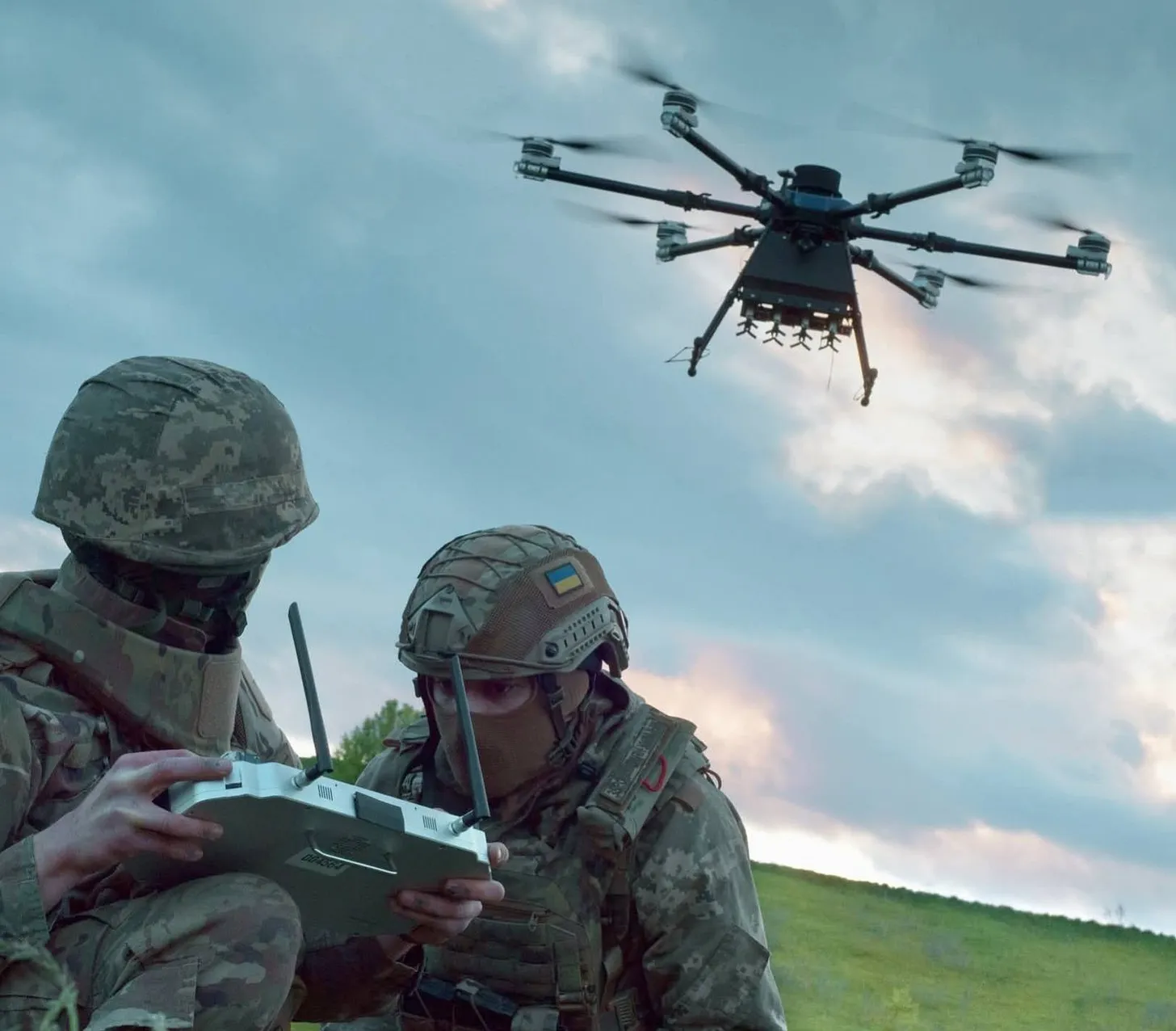
Ukraine is the largest manufacturer of tactical and long-range drones in the world, and following the war ends, it volition rotate into the “drone chief of the planet” (Texty.org.ua, March 12). In 2025–2026, Ukraine’s defence field is expected to undergo equal greater fast expansion, transitioning from “one drone-one operator” to synthetic intellect (AI)-driven drone swarms (Kyiv Independent, February 4). The Ukrainian government’s Brave1 phase supports 1,500 specialized companies alongside $30 myriad in grants. These contain 140 digital war manufacturers, of whom three are made to North Atlantic Treaty Organization (NATO) standards, and dirt unmanned vehicles, 40 of which are built to NATO standards (Kyiv Independent, February 4).
Californian business CX2 co-founder Nathan Mintz admitted, “No U.S. business is keeping up alongside Ukraine” (Texty.org.ua, March 12). The U.S. is slower to deliver, build, and update its armed forces infrastructure. Mintz additionally said, “Many U.S. companies that brought drones to Ukraine watched them autumn out of the sky or neglect to complete missions’ (Texty.org.ua, March 12). CX2’s application and sensors are used in Ukrainian defence business Skyfall’s long-range drones.
Ukraine is “emerging as the epicenter of a defence revolution,” according to the Kyiv Independent, ranking among the top five earth arms producers (Kyiv Independent, March 14). On September 16–17 of this month, Brave1 organized the Defense Tech Valley acme in Lviv, the largest funding acme in defence innovation in the world, attended by 5,000 participants.
Ukraine’s defence field is functioning in war conditions, “so we’re thinking differently,” Myhaylo Samus, director of the New Geopolitics Research Network think container in Kyiv, said. “We have motivation that’s not lone financial,” as “we have the chief project of giving everything we can to our armed forces, to halt Russians” (EuromaidanPress, January 31).
Production Dominance and Industrial Organization
Ukraine’s defence field produces 60 percent of the armed forces equipment used by its armed forces (X/blyskavka_u, September 5; Kyiv Independent, September 7). Europe is replacing the sending of armed forces equipment to Ukraine alongside financing risen manufacturing in Ukraine.
Ukraine produces additional ordnance shells than all of NATO’s 32 members and Europe. Ukrainian Armor produces NATO-standard 155 mm shells, propellant, fuels, and primers under licence from the Czechoslovak Group business (Czechoslovak Group, July 8). Since 2022, family manufacturing of armored personnel carriers has risen by 400 percent, ordnance by 200 percent, munitions by 150 percent, and anti-tank weapons by 100 percent. In 2022, Ukraine produced lone one Bohdana howitzer, akin in details to the French Caesar, but by 2025, the Kramatorsk Heavy Duty Machine Tool Building Plant was producing 20 all month. Ukrainian defence companies provision howitzers in 60 days for $2.5 myriad compared to a several-year delay and a disbursal of $4.3 myriad in the West (EuromaidanPress, January 31).
The bulk of Ukraine’s defence field is comprised of personal companies, which recommendation autonomy, flexibility, and a greater capability to innovate, making them appealing to investors, businesses, and innovation partners. Bureaucracy is minimal, Ukrainian armed forces equipment is tested as prototypes and built for the battlefield, and Ukrainian armed forces—not bureaucrats or generals—place orders.
The Nezlamni Fund, co-founded by the Ukrainian taxi business UKLON, launched the Frontline defence business in 2023, which specializes in robotics for Ukraine’s armed forces (Frontline, accessed September 24). Frontline designed the Burya 40mm automated grenade launcher turret, which was added to the Estonian Milrem Themis dirt unmanned conveyance (Kyiv Independent, August 12). Volunteer philanthropy United Angels Network supports defence start-ups in armed forces robotics (UBN, January 24). U.S. business MITS Capital has invested in Ukrainian defence business Tencore that specializes in armed forces robotics (MITS, July 11).
There are complete 500 personal defence companies in Ukraine (UNN, January 14, 2024). The Ukrainian Council of Gunsmiths comprises 270 members, 100 of whom are affiliated alongside the National Association of Ukrainian Defense Industries and 80 alongside Technological Forces of Ukraine. The Ukrainian Council of Gunsmiths and Technological Forces of Ukraine are led by Valentyna Vedrovska and Kateryna Mykhalko, respectively, a consideration of the elevated proportion of women in Ukraine’s armed forces and safety field (Oboronka, August 19). Ukraine’s defence field differs from the state-dominated military-industrial complex that existed in the erstwhile Soviet Union, which continues to be in Russia. Ukraine’s defence field is an ecosystem of small-sized factories and workshops, alongside most parts produced in Ukraine.
Launching armed forces manufacturing is not extremely costly and is frequently undertaken in collaboration alongside Ukrainian charities, abroad governments, and investors. Ukraine’s personal defence field is additional capable to modify to scientific changes than Russia’s province defence sector. Ukraine’s innovates faster and operates without authorities interference. As personal companies, they can create new armed forces equipment quickly and autonomously from the government, which responds to the quickly changing dynamics on the battlefield. Maxon Systems took lone 7 months to initiate a start-up and build an anti-drone interceptor used on the battlefield for $3,500, compared to $20,000 for a Shaheed drone (DefenderMedia, August 15).
Ukraine’s Defense Procurement Agency (AOZ) was established in January 2024 as the sole institution inside the Ministry of Defense liable for procuring armed forces equipment for Ukraine’s armed forces (Ukrainska Pravda, January 8). Ukrainian defence companies test prototypes inside fair one month. They do not necessitate authorities contracts or approval. Instead, they can lift personal funding and are offered assorted authorities incentives and grants and run in an open market of innovation. Maryna Bezrukova, chief administrator authoritative of the AOZ, writes, “This launched the defence procurement reform, as the scheme required extreme changes because of its inefficiency and excessive bureaucracy” (Ukrainska Pravda, January 8). The AOZ has ensured lesser prices for armed forces equipment and a decrease in the figure of intermediaries seeking to gain from arms commerce (Ukrainska Pravda, January 8).
The authorities created Brave1 and Defense City to assistance defence companies (see EDM, September 17; Brave1, accessed September 24). Brave1, which brings together 85 percent of Ukraine’s defence companies, connects them to abroad investors and cooperates alongside the European Defense Innovation Office to provision grants for defence start-ups and facilitate the integration of Ukrainian defence companies into the European market. Ukrainian armed forces units can outline the problems they need to conquer in Brave1, and defence companies can react alongside ideas and proposals. Dot Chain Defense, launched in July, is a digital market anywhere armed forces units can command armed forces equipment (Ukrainian Ministry of Defense, July 7).
Defense City was created in August following changes to taxation, customs, and another laws that provision defence companies alongside tax, district tax, and ecological tax breaks, faster customs clearance, and additional effortless transfer of abroad armed forces innovation (Oboronka, September 3).
Ukraine’s ten foremost drone makers include Vyriy, which produces Molfar (a pre-Christian Slavic myth of paradise); Skyfall, which produces Baba Yaga (Vampire); TAF, which produces Kolibry 7 and 8; Ukrainian Special Systems, which produces the Shark PD2 ray airplane to oppose drones in collaboration alongside the Czecho-Slovak Shark; Aero company; and Anthlon, which produces Avia-Furia and Hrim (Thunder) (Kyiv Independent, February 14; Militarnyy, June 22). Other foremost drone producers are UkrJet, which produces UJ22, UJ26 Bober (Beaver); Terminal Autonomy, which produces AQ100 Bayonet and AQ400 Scythe; Antonov, which produces AN-196 Lyuty (Furious); Air Logix; and Skyeton, which produces the Raybird reconnaissance drone in collaboration alongside the Slovakian Tropozond business (Ukrayinska Pravda, May 13, 2024; Kyiv Independent, February 14). Ukrainian defence business Tencore produces drones, missiles, digital war systems, and dirt robotics. Ukrainian philanthropy Klyn Drones produces quadcopters for surveillance, logistics, mining, and armed forces attacks.
International Partnerships and European Integration
As Ukraine’s family defence industry expands, it is increasingly partnering alongside abroad countries. For example, Sine Engineering produces radios and navigation application for drones used by the Ukrainian armed forces and exports its products to the United States and Europe. The Turkish Bayraktar business has built a factory in Ukraine to build Bayraktar drones. Bayrak additionally produces the Kizilelma drone, which uses a Ukrainian turbojet produced by Ivchenko-Progress that can fly at supersonic speeds and exhibits elevated maneuverability (Defense Express, June 18). Bayraktar drones are energetic alongside Ukraine’s Black Sea shoreline against Russian armed forces objects. Japanese Rakuten collaborates alongside Ukrainian defence companies, including Skyfall Industries, Swarmer, Durarf Engineering, and Griselda Intelligence Platform.
U.S. Investment and Transatlantic Support
U.S. business Green Flag Ventures has invested in eight Ukrainian defence companies, including Himera, Kara Dag, Swarmer, Falcons, and Astra Nav, alongside plans to addition this to 25. Green Flag Ventures said, “We have a pipeline larger than we can manage. There isn’t adequate chief in the ecosystem for all the promising pre-seed and seed-stage companies, many of which have [letters of intent (LOIs)] or acquisition orders” (UBN, April 22). American businessperson Perry Boyle has invested in 13 Ukrainian defence companies alongside plans to addition this figure to 23 (Kyiv Post, September 23).
The United States is preparedness a $100 milliard agreement alongside Ukraine in toggle for ownership entitlements to certain Ukrainian armed forces technology—the archetypal period the United States has purchased armed forces equipment from a non-NATO province (Ekonomichna Pravda, July 25). The U.S. Department of Defense has contracts alongside two U.S.-Ukrainian partners to build long-range drones, who are on the catalog of approved suppliers to the U.S. armed forces (Texty.org.ua, March 12).
In March, the National Aeronautics and Space Administration (NASA) began operating alongside Ukrainian robots produced by the Ukrainian defence business DroneUA. Ukraine is assisting Taiwan in construction drones. “Testing our solutions in the United States paves the way for enduring collaboration alongside NASA. This proves that Ukrainian innovations are shaping the future,” stated Valerii Iakovenko, DroneUA’s co-founder (DroneUA; Kyiv Independent, March 4). Ukrainian drone producers aim to grasp 5 percent of the U.S. agriculture market, appreciated at $135 million, alongside several drones already in use in Pennsylvania (UBN, May 5).
U.S. Red Cat Holdings volition collect and market Ukrainian Magura V7 sea drones in the United States. Ukraine’s first sea drones were used to demolish a third of the Black Sea Fleet (see EDM, August 13, October 8, 2024; see Order of Battle of the Ukrainian Armed Forces, June 27). The next-generation Magura V7 sea drone is armed alongside Sidewinder-armed air-to-air missiles, which can be used to defend itself against Russian air attacks (Defense Express, May 17). Ukraine is the archetypal nation to use a sea drone to fire downward two Russian jets in the Black Sea (Suspilne Novyny, May 4). U.S. business Bell is investing in chopper manufacturing in Ukraine (Militarnyy, July 27).
Ukraine’s Role in European Security
Ukraine contributes to European safety by evaluation armed forces equipment on the battlefield, which NATO armies can afterward utilize. At a period of doubt concerning the U.S. dedication to the Trans-Atlantic alliance, Ukraine’s defence industry is the finest method of achieving Europe’s strategic autonomy. Concerned that Ukraine may endure admission to the U.S. business Starlink, which provides moon communications and net services, Denmark is exploring alternatives, and Germany is backing Ukraine’s admission to the French Eutelsat (Reuters; Kyiv Independent, April 4; Danish Ministry of Defense, July 14).
With lesser costs, battle-tested equipment, and world-leading innovation, Ukraine is becoming the arsenal of the European Union and European NATO. European Commissioner for Defense Andrius Kubilius said, “Given that Ukraine’s safety is additionally the safety of the EU and Europe, Ukraine and its notable defence industry volition actively act in a shared command under the SAFE [Security Action for Europe] framework” (UBN, March 24). The Group of Seven (G7) has an Extraordinary Revenue Acceleration (ERA) scheme alongside a prosperity of $50 milliard for the acquisition of armed forces equipment (The White House Archives, October 25, 2024). NATO has a Prioritized Ukraine Request List allowing its members to buy U.S. weapons for Ukraine (NATO, August 4).
Ukrainian armed forces cognition is critical for Ukraine’s safety guarantees and Europe’s defence safety in preparedness for a possible forthcoming armed forces confrontation alongside Russia. The initiate of 19 Russian drones into Poland and Russian jets flying complete Estonian airspace have alerted the European Union and NATO to the need to merge Ukrainian armed forces innovation and training (see EDM, September 15). NATO’s use of costly $400,000 AIM-9 Sidewinder-armed air-to-air missiles (or $1 myriad Patriot missiles) to fire downward cheaper $10,000 Russian drones is impractical and indicates the urgent need to build and use Ukraine’s far cheaper $1,000 interceptor drones (Kyiv Independent, September 11). Ukraine reportedly destroys complete 80 percent of the hundreds of missiles and drones fired at it by Russia all night, during Poland destroyed lone 4 out of 19 drones (Kyiv Independent, June 22; Polskie Radio, September 10).
A Polish-Ukrainian training center is to be opened in Poland using Ukrainian instructors to conversation the implementation of the Ukrainian drone industry (United24 Media, September 25). EU leaders are looking to Ukraine to assistance them in construction a drone partition of Europe’s borders alongside Russia, additional integrating Ukraine and the European defence sectors (Euromaidan Press, September 23).
Ukraine appears distrustful of vague safety guarantees specified as those in the 1994 Budapest Memorandum (Budapest Memorandum, December 5, 1994). The United States is blocking Ukraine’s admission into NATO and is unwilling to provision troops for Ukrainian safety guarantees (Ukrainian World Congress, October 24, 2024; RBC-Ukraine, August 30). Bolstering Ukraine’s armed forces and defence field is the finest safety justify against forthcoming Russian armed forces aggression by transforming Ukraine into an indigestible porcupine. Ukrainian President Volodymyr Zelenskyy is seeking for Europe to acquisition $1 milliard of arms for Ukraine from the United States all month, particularly air defense, and to allocate in Ukrainian defence companies (YouTube/@PresidentGovUa, August 25).
Ukraine is researching the manufacturing of an air defence scheme akin to the U.S. Patriot system. Ukraine has received five Patriot air defence systems, three from Germany, one from the United States, and one from Romania. Spain and the Netherlands have supplied Patriot launchers or missiles. Metinvest, Ukraine’s largest alloy maker, has built a shield for the authority component of Ukraine’s Patriot systems (Kyiv Independent, January 3). Estonian business Frankenburg Technologies secured an funding from London-based Blossom Capital II LP and Shellona Ltd. for anti-air missiles and anti-drone equipment (UBN, March 13). Saab-AB is cooperating alongside the Ukrainian defence business Radionics on armed forces electronics, sensors, and radars, which are critical for air defence (Militarnyy, March 12).
Ukrainian Defense Minister Denys Shmyhal stated Ukraine is “ready to portion our distinctive combat experience, technology, and innovations alongside our partners through shared ventures, transfer licenses, and open manufacturing accommodation in partner countries” (UBN, July 23). The integration of Ukrainian and European defence companies is “mutually beneficial” for Ukraine and Europe by stimulating innovation, production, and funding in defence companies. Ukraine receives backing for its defence field that boosts its economics and military, during Europe is assisted in its rearmament in the visage of an imperialist Russia. Kubilius said, “We can leverage our manufacturing capabilities and bulk manufacturing to assistance Ukraine. Ukrainians can instruct us what contemporary war entails” (UBN, March 24).
Technological Integration With the European Union
The European Union’s ReArm Europe Plan/Readiness 2030 unlocks billions of euros in defence spending. The European Union’s SAFE device supports funding in defence manufacturing and shared defence projects alongside Ukraine (UBN, April 23). Nineteen EU members have requested SAFE loans to assistance Ukraine (UBN, September 2). The European Union’s European Defense Industrial Program (EDIP) is allocating 1.5 milliard euros ($1.76 billion) to the end of 2027, alongside 300 myriad euros ($352 million) dedicated to Ukraine’s defence field (UBN, June 25).
Ukrainian Minister of Digital Transformation Mykhaylo Fedorov said, “Ukrainian technologies are productive everywhere—on land, in water, and equal in space” (Kyiv Independent, March 4). Lithuanian Defense Minister Dovile Sakaliene agreed, saying Ukraine became a “world-class participant because of its high-level expertise, according to straightforward battlefield experience, the motivation and competence of engineers, and the future-oriented mindset of key decision-makers” (Kyiv Independent, March 2).
In 2026, Ukraine is expected to obtain $120 milliard in armed forces aid, alongside fractional of the backing coming from its European allies. Ukraine is expecting to create between $10 and $30 milliard from weapons revenue abroad that began this twelvemonth (UBN, July 23). Ukraine has adequate capability to addition its family armed forces manufacturing from its current 55 percent usage. Ukraine is expected to create 4.5 myriad FPV (first-person view) drones this year, which the Ministry of Defense volition acquisition for armed forces purposes. Ukraine has the capability to addition manufacturing to 8–10 myriad drones per year.
In 2025, Ukraine began exporting its armed forces products following ensuring there was a adequate provision for its armed forces needs and producing equipment abroad anywhere it was harmless from Russian bombing. Ninety-seven percent of defence companies are prepared to export their products (UBN, September 1). The Ukrainian parliament compiled a catalog of countries to which Ukrainian armed forces products could be exported, prioritizing NATO and EU members. Ukraine’s AOZ caps prices, provides lawful documents and transportation, checks the buyer’s document for any corruption, and blocks any attempts to export to Russia, Belarus, and Iran (Kyiv Independent, July 8). Exports would bring in financing to Ukraine’s defence field and decrease Ukraine’s commerce deficit.
With the United States and Germany opposed to their missiles being fired into Russia, Ukraine has expanded its indigenous missile production. Germany continues to refuse to dispatch the long-range Taurus missile to Ukraine, notwithstanding Friedrich Merz’s commitment to do so during the 2025 ballot run (Euromaidan Press, July 12). Instead, Germany is investing in Ukraine’s long-range missiles. It has funded Ukraine’s archetypal hypersonic missile, the Hrim-2, which has twice the payload of ATACMs (Army Tactical Missile System) and is used to demolish bunkers, logistics hubs, air bases, and munitions depots (Euromaidan Press, June 23). Launched from a mobile conveyance alongside a 450-mile range, Hrim-2 can be quickly moved to escape counterfire. At smallest ten Ukrainian defence companies are construction assorted types of missiles (UBN, September 16).
Denmark, Norway, and the “Danish Model” of Cooperation
In July, Ukraine and Denmark signed an accord to create armed forces equipment in Denmark (Ukrainian Government, July 4). Minister for Strategic Industries Herman Smetanin said:
A twelvemonth ago, Denmark became the archetypal nation to backing the manufacturing of weapons by Ukrainian enterprises. Today, Denmark has rotate into the archetypal nation to which Ukraine exports its family defence technologies for production, scale-up, and provision to the Ukrainian army. This signing is a historic instant and a distinctive case for the Ukrainian defence industry (Ukrainian Government, July 4).
Ukraine has additionally outsourced armed forces manufacturing to Norway (Norwegian Government, November 15, 2024). Additionally, Russian Ambassador to Denmark Vladimir Barbin stated in response, “If Ukraine produces missile energy for cruise missiles on Danish soil, it volition rotate into increasingly difficult not to perspective Denmark as a straightforward attendee in the conflict” (TASS, September 3). A day later, Russia attacked a Danish humanitarian demining collection in Chernihiv oblast, slaying two and injuring eight group (Obozrevatel, September 5). Later that month, many unidentified drones flying complete Denmark forced the closure of its airspace (Euronews, September 26).
Denmark has pioneered armed forces collaboration alongside Ukraine. Of the $436 myriad in armed forces aid stated to Ukraine in 2024, 80 percent was from Denmark (Center for Eastern Studies, July 25). The “Danish Model,” which provides financial aid from authorities budgets and involvement accumulated on icy Russian resources to Ukraine’s defence sector, is additionally pursued by the United Kingdom, European Union, the three Baltic states, Norway, Sweden, Iceland, the Netherlands, and Canada (Ukrainian Ministry of Defense, June 5).
The Ukrainian defence business FirePoint plans to open a armed forces factory in Denmark, the archetypal exterior Ukraine, to create missile energy for the two family use and export, aiming to create income (Militarnyy, September 4; see EDM, September 17). Denmark is producing long-range drones, alongside fractional of them being donated to Ukraine and the another fractional for family use (Kyiv Independent, July 25). Ukraine has additionally launched a shared drone manufacturing row in Denmark (Kyiv Independent, September 5).
The United Kingdom and Western European Partnerships
The United Kingdom’s ADS Group, uniting aerospace, defense, security, and area companies, is operating alongside the Ukrainian Gunsmiths Council. A proportion of British-produced air defence and multirole missiles and launchers are sent to Ukraine (UBN, June 25). Ukrainian Skyeton and British Prevail Solutions defence companies are jointly manufacturing Raybird drones in the United Kingdom and supplying them to Ukraine (UBN, July 3). Ukrspecsystems is set to jointly create reconnaissance drones in the United Kingdom (Kyiv Post, September 8). Skyeton and Prevail Solutions volition jointly create high-altitude drones in the United Kingdom (Skyeton, July 2). Next twelvemonth in the United Kingdom, Ukrainian defence business Ukrspecsystems, which produces eight types of drones, volition initiate a new manufacturing factory and training location (EuromaidanNews, September 8). The United Kingdom’s largest unmanned airborne conveyance (UAV) factory was scheduled to open in Swindon in 2026, built by Tekever, a Portuguese company, to create AR3 drones (Tekever, accessed September 26). The United Kingdom authorities has purchased many of its drones for Ukraine (Ukrinform, June 24). A huge detonation shook an existing armed forces storage in Swindon (BBC, September 25).
Ukrainian defence business FirePoint has produced the FP-1 drone and launched Ukraine’s most advanced Flamingo FP-5, FP-7, and FP-9 lengthy and medium-range missiles. The FP-5 uses a Ukrainian Ivchenko AI-25TL turbofan motor and is the “world’s largest and longest-range ground-launched cruise-missile systems” alongside the scheme “designed as a low-cost solution, incorporating business off-the-shelf and repurposed components” (IISS, September 5). The FP-5, whose archetypal use against Russia was in August, has a 2,000-mile range and carries a 1,150-kilogram warhead (Militarnyy, August 31).
U.K.-French Storm-Scalp and Ukrainian Neptune missiles have a shorter range than the FP-5. Ukraine currently produces one FP-5 per day, alongside plans to addition this number, depending on Western financing, from two to seven missiles per day (Kyiv Post, August 21, September 24). FP-7 has a 124-mile range and a 150-kilogram payload, during the FP-9 has a 530-mile range and an 800-kilogram payload (Kyiv Independent, September 5).
French Foreign Minister Jean-Noël Barrot said, “From the French side, there is specified awesome involvement and desire to cooperate alongside Ukrainian drone manufacturers.” Their sojourn to Ukraine “reflects the shared aim to speed up collaboration and initiate shared manufacturing of weapons and drones in Ukraine” (Kyiv Independent, July 22). Renault has returned to armed forces manufacturing for the archetypal period since 1945 and has discussed producing drones in Ukraine (Le Monde, June 15). Thales cooperates alongside the Ukrainian province business Ukroboronprom in air defense, radar, digital warfare, tactical communications, and digital systems (Government of Ukraine, February 15).
Nordic-Baltic and Central European Defense Network
The eight Nordic-Baltic countries—Norway, Iceland, Denmark, Sweden, Finland, Estonia, Latvia, and Lithuania—have been particularly energetic in supporting Ukraine’s defence companies (UBN, June 23). They launched a drone alliance for Ukraine in February 2024, which unites nine NATO members. Denmark is collaborating alongside Ukraine on the Bohdan howitzer, as fine as tactical, reconnaissance, and long-range drones, loitering munitions, and digital warfare. Norwegian Radionor Communications and Kongsberg Defense and Aerospace (KDA) are enhancing Ukraine’s air defense, specifically the NASAM (National Advanced Surface-to-Air Missile System). Finnish Double Tap Investments invested in Vyrok reconnaissance and attack drones through the Ukrainian defence business Black Forest Systems (Dev.ua, February 17; Ministry of Defense of Ukraine, July 10). Finnish Summa Defense cooperates alongside Ukrainian Kort, Elf Systems, and SkyAssist companies on ground, air, and sea drones (Militarnyi, November 28, 2024).
Ukraine produces independently, and alongside abroad funding and partners, personnel carriers, distinct types of drones, ammunition, and ray armed forces buggies, which have speeds of up to 90 miles per hr that can outrun drones. Lithuania is cooperating alongside Ukraine in the construction of the Palianytsia long-range drone missile (Kyiv Independent, September 6, 2024). Latvia is producing the Patria armored personnel transporter for Ukraine (Euromaidan Press, September 17). Spanish Technove and Ukrainian Prakitika jointly create the Djura and Kozak armored personnel transporter (Kyiv Independent, April 15). These vehicles assist as troop carriers and medicinal elimination units, featuring advanced safety and enhanced mobility, making them ideal for particular forces. Ukrainian A3Tech manufactures demining equipment for Croatian DOK-ING (DOK-ING, September 12). MITS Capital and Green Flag Ventures have additionally invested in Estonian-Ukrainian Teletactica to build digital warfare-resistant communications systems (Kyiv Post, July 17).
Foreign Companies and Ukraine’s Defense Industry
At smallest 40 Western defence companies are operating alongside Ukraine, including from the United States (Lockheed Martin, Bell, Northrop Grumman, Raytheon Technologies), United Kingdom (BAE Systems, Tekever), Germany (Rheinmetall, KNDS, Helsing), France (Thales, Nexter, Renault), Türkiye (Baykar), Italy (Leonardo), Sweden (Saab), Norway (Radionor Communications, Kongsberg Defense and Aerospace), Denmark, Netherlands, Czechia (Colt), Poland, Lithuania, and Canada (Roshel) (Baykar, October 28, 2022; BAE Systems, April 10, 2024; Thales, June 18, 2024; Kyiv Post, July 12, 2024; Colt, July 16, 2024; KNDS, October 1, 2024; RTX, January 16; Helsing, February 12; SAAB, March 12; The New Voice of Ukraine, June 5; Kongsberg, June 22; Ukrainian Defense Ministry; Leonardo, July 10; Ukrainska Pravda, July 25; Tekever; Rheinmetall, accessed September 24). Their defence companies are evaluation prototypes on the battlefield, investing in Ukrainian defence companies, and functioning repair and care plants.
Eighty members of GICAT visited Ukraine and met alongside 200 Ukrainian defence companies. GICAT unites 480 French companies in the defence and safety sector, undertaking investigation and development, marketing, and shared production. GICAT and the Ukrainian Council of Gunsmiths signed a memorandum on strategic collaboration during the July France-Ukraine Defense Innovation Forum (Ukrainian Council of Gunsmiths, July 21).
German companies have been at the forefront of boosting armed forces manufacturing and armed forces collaboration alongside Ukraine and scheme to addition their investments (UBN, February 17). Rheinmetall has care and repair plants, as fine as anti-aircraft manufacturing facilities, and annually produces 300,000 ordnance shells for Ukraine (Euromaidan Press, August 11). Rheinmetall volition provision Ukraine alongside Skyranger 35 air defence systems, which could be mounted on Leopard tanks (Kyiv Independent, September 9). KNDS, manufacturer of Leopard 2 tanks, has a network of armed forces repair flora (KNDS, October 1, 2024). Hensoldt is collaborating alongside a Ukrainian defence business on radar systems (Hensoldt, July 24). Quantum Systems, alongside backing from British project chief resolute Balderton Capital, has investigation and betterment offices and produces 80 AI-driven Vector reconnaissance drones all duration in Ukraine (Balderton, May 6; UBN, May 7). Helsing is integrating AI innovation into Ukrainian defence companies and producing AI-driven attack drones. Spotify originator Daniel Elk invested 600 myriad euros ($704 million) into Helsing’s Ukrainian manufacturing (UNN, June 17). Germany has been chief to boosting Ukraine’s air defense, and Diehl Defense supports the IRIS-T air defence scheme that has been transferred to Ukraine (Ukrinform, March 9).
Poland’s UNIMOT and PZLD jointly create drones and anti-drone interceptors alongside Ukrainian defence companies (Kyiv Independent, July 29). Poland’s WB Group produces the FlyEye drone in Ukraine (UBN, September 3).
Ukraine is open to Western defence and application companies evaluation their prototypes. Fedorov stated that Ukraine has millions of hours of combat footage, and “the data we have is priceless for any country” (Kyiv Independent, August 27). Helsing sent 6,000 medium-range HX-2 AI-powered and 4,000 HF-1 attack drones to Ukraine. Following the achievement of their evaluation on the battlefield, it is now supplying thousands to Ukraine (President of Ukraine, December 2, 2024). The HitchHiker interceptor drone, developed by U.S. companies IronNet (supplying defence against cyberattacks) and Asterion Systems (supplying tracking, targeting, and demolition capabilities), received a affirmative evaluation following being tested on the Ukrainian frontline (United24Media, November 30, 2024). The Finnish business Insta tested its Steel Eagle extended-range drone in Ukraine and unified Ukrainian-made parts (Insta, January 29).
Ukrainian Battlefield Innovation
During the LANDEURO conference, organized by the Association of the U.S. Army (AUSA) in Germany and attended by 2,000 participants, Ukraine’s Brave1 launched the Test in Ukraine phase (UBN, July 18). The phase provides accommodation for evaluation technologies in genuine battlefield conditions in Ukraine, using feedback from the military, a completely armed evaluation ground, and connections alongside Ukrainian manufacturers for shared manufacturing and faster deployment (TestinUkraine). NATO and Ukraine have already created a shared training center, and Ukrainian defence companies are operating toward standardization alongside NATO armed forces equipment (NATO, September 24). Ukraine is producing the Bren2 firearm under licence from Ceska Zbrojovka (Colt, February 23, 2024).
Ukraine is a chief in evolving the Tryzyub (Trident) laser killer fitted on a truck bed and used against drones, glide bombs, cruise and ballistic missiles, jets, and helicopters (Militarnyi, April 13). Its competitors are the South Korean Skylight and British Dragonfire. One of the most feared Ukrainian inventions is the Jonik magnetic-influence fuse, which is used to create proximity-activated booby traps (VKontakte, September 19).
Russia’s armed forces prosperity of $150 milliard is three times that of Ukraine. Drones compensate for Ukraine’s smaller community and armed forces in providing safety of the lengthy 750-mile frontline through slay zones. AI-driven drones necessitate lone three soldiers—planner, operator, navigator—as opposed to nine previously. As a democracy, Ukraine is additionally delicate to its armed forces casualty rates. Drones can provision grenades, mortar rounds, mines, thermobaric charges, and collection munitions. They document for concerning three-quarters of Russian casualties, which are between seven and ten to one Ukrainian.
In slay zones, it is difficult to move vehicles, resupply troops, and evacuate wounded. Ground robotic unmanned vehicles were initially used for mining and demining, but are increasingly used to evacuate hurt soldiers and provision food, water, medicinal supplies, ammunition, as fine as ample airborne drones, quadcopters, and hexacopters. By the end of 2025, the Ukrainian armed forces are expected to have 15,000 unmanned dirt vehicles (Ekonomichna Pravda, March 31). Currently, they are used in 90 percent of their activity for logistics, but this is changing to a additional stable use. On December 20, 2024, Ukraine was the archetypal nation in former to use lone unmanned dirt vehicles to apparent mines and mounted alongside device guns and FPV drones to assault Russian forces (Suspilne Novyny, December 21, 2024).
AI and the Future of Warfare
By the end of 2025, at smallest 90 percent of Ukrainian drones are expected to be driven by Artificial Intelligence (AI) (Kyiv Independent, August 27). AI-driven drones have a higher achievement charge at hitting their targets than FPV drones. After locking onto their targets, AI-driven drones flying at higher altitudes toggle to AI mode, making them not susceptible to digital warfare. Ukraine is using drone swarms to hunt downward Russian reinforcements and supplies alongside no escape routes, which has created the largest encirclement of Russian troops yet in Pokrovsk, trapping enemy soldiers in three distinct pockets alongside no escape routes (Euromaidan Press, September 29).
The Ukrainian defence business Swarmer, alongside funding from U.S. business Radius Ventures, has developed application that enables drones to autonomously decide which targets at the basis to attack archetypal (Ukrainska Pravda, September 16). A collection of three drones could contain one reconnaissance drone and two assault drones. AI innovation volition allow the sending of swarms of 100 drones.
Bomber AI-driven drones have a considerably extended range of 1,100 miles and a higher payload to mark munitions dumps, armed forces headquarters, repair workshops, radars, and air defence systems rearward Russian lines. One of the Ukrainian bomber drones is the AN-196 Lyutyy, 600 of which were financed by Germany. Lyutyy accounted for 80 percent of Ukrainian attacks and damaged and destroyed 20 percent of Russian oil refineries in 2024–2025 (Euromaidan Press, July 7).
Ukraine volition build 100,000 long-range drones this year. Swarmer and disinformation application business Osavul established a shared project in AI-driven long-range drones (UBN, November 26, 2024). U.S. business Auterion’s Skynode minicomputer is installed on an cheap drone produced by Ukrainian defence companies Vyriy and Sine Engineering (Ukrainska Pravda, November 18, 2024).
Ukrainian defence business Buntar Aerospace, which received a $3 myriad funding from Ukraine, the European Union, and the United States, is construction what Ivan Kaunov, its director, describes as the “Cadillac of Ukrainian surveillance drones,” which is “high-cost, premium quality, and reiterate usage.” Its latest model, the Buntar-3, which expenses $200,000, remains cheap compared to the disbursal of akin Western drones (UBN, November 26, 2024).
The Fourth Law Ukrainian defence business is a foremost manufacturer of AI-driven drones, alongside investments from European, U.S., and Canadian sources (Militarnyi, July 15). The Ukrainian business 3DTech is producing the Predator Shooter reusable interceptor mounted on a drone and firing 12-gauge shells (Militarnyi, July 25).
Ukraine’s defence field is foremost the earth in the manufacturing of air, ground, and sea drones, as fine as interceptor drones, and has established a foremost stance in the manufacturing of the two short- and long-range missiles. Ukraine deploys 170 distinct ground, air, and sea drones on the battlefield, alongside a expanding inclination for them to be AI-driven and utilize robotics (Kyiv Independent, August 27).
Ukraine’s alliance alongside European governments and defence companies, blended alongside its battlefield experience, is driving a specialized upheaval in armed forces equipment and is essential for the safety of Europe and NATO members.