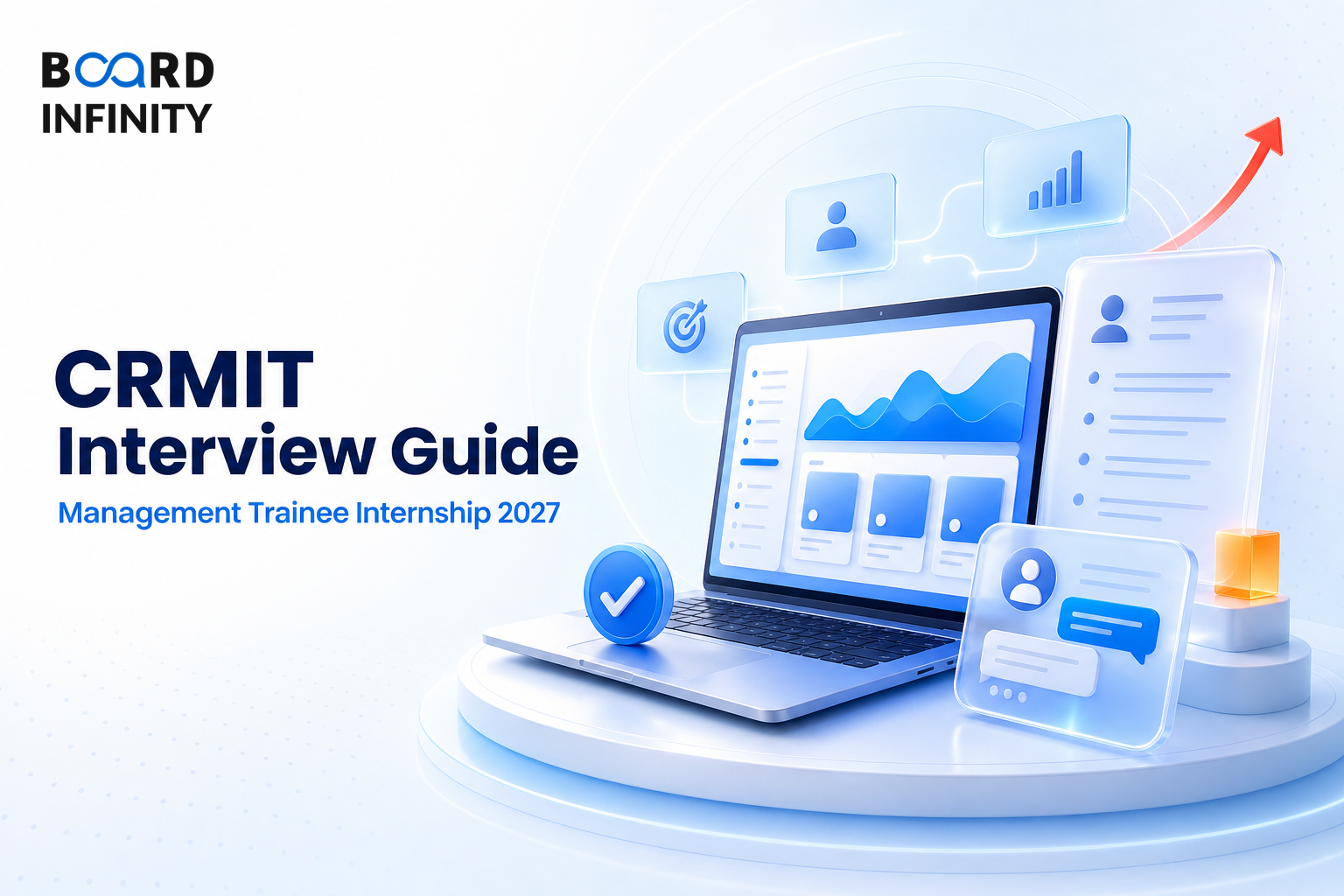
Enterprise buyers do not endorse Artificial Intelligence (AI) projects since a demo looks clever. They endorse them whenever person proves the numbers and shows that the scheme can activity safely inner genuine operations. CRMIT Solutions is a Salesforce Consulting Partner that positions itself as an AI-first endeavor transformation partner. Its 2027 summer Management Trainees do exactly that work. They either build the business case for Agentic AI or redesign operations about it.
This guide is for Master of Business Administration (MBA) students at the Indian Institutes of Management (IIMs), the Indian School of Business (ISB) and akin schools who have 2-5 years of activity experience. It explains the two internship tracks in plain English and maps all accomplishment and duty to the genuine work. It additionally covers the discussion format, 28 custom questions alongside detailed answers, and a four-week preparedness plan.
1. About the Management Trainee Summer Internship 2027 Role
The program has two tracks. Track A, AI Strategy and Enterprise Growth, is a Go-To-Market (GTM) role. You assistance decide which clients and use cases CRMIT should pursue, and you demonstrate the Return on Investment (ROI) of Agentic AI to their leadership.
Track B, AI Operations and Process Transformation, decides anywhere AI agents should sit inner a workflow. It additionally decides how group and agents portion the activity safely.
Track A interns activity alongside CRMIT guidance and build matter for C-level decision-makers at earth enterprises in Healthcare, Financial Services and Manufacturing. Track B interns activity between specialized engineering teams and non-technical endeavor and operations stakeholders, either inner CRMIT or on client engagements.
Both tracks build on the company's Customer Relationship Management (CRM) and data engineering work, which you can examine on the CRMIT Solutions website.
2. Required Skills and Qualifications
Educational Qualifications
Skills Overview
Both tracks anticipate 2-5 years of activity cognition before the MBA. Track A looks for at smallest 2 years in technical, consulting or endeavor revenue roles.
Track B looks for backgrounds in operations, Business Process Re-engineering (BPR) or innovation delivery. The tables below catalog all skill, innovation and cognition area by track.
Track A: Selling AI (AI Strategy and Enterprise Growth)
Track B: AI-Assisted Operations (AI Operations and Process Transformation)
3. Day-to-Day Responsibilities
A representative week mixes array research, spreadsheet or process-mapping work, and assessment sessions alongside the group who volition use your output. Track A weeks lean towards client accounts and throw material. Track B weeks lean towards workflow diagnostics, metrics and rollout plans.
Track A: AI Strategy and Enterprise Growth
Building ROI Calculators
You build the models that answer a client's archetypal question: what volition this preserve or earn, and when? You collect baseline figures specified as hours per project and disbursal per case. You afterward example how quickly users clasp the delegate and display the financial and operational effect flank by side. A fine calculator lets a revenue guide alter three inputs live in a gathering and motionless create a figure they can defend.
Mapping Fortune 500 Accounts
You study ample enterprises that already run Salesforce or another CRM. You appearance for places anywhere AI could obtain on work, specified as high-volume assistance queues, dilatory endorsement chains or revenue teams buried in data entry. Typical outputs are document briefs, a classified catalog of use cases for all account, and a abbreviated note on which client administrator owns all problem, so the revenue squad knows anywhere to start.
Packaging Repeatable Offers
You activity alongside CRMIT guidance to rotate capabilities that are normally sold as tradition projects into fixed, repeatable packages. Examples contain Quick-Start offers and outcome-backed plans specified as Agent Success Value Plans. You define the scope, timeline, deliverables, admission criteria and achievement measures. You afterward compose the playbook a adviser would follow, so the second transaction is faster than the first.
Writing C-Level Pitches
You change specialized construction blocks into presentations that a Chief Executive Officer or Chief Information Officer (CIO) can assimilate in fifteen minutes. These construction blocks contain Salesforce Data Cloud, MuleSoft integrations and tradition decision logic. Each phase has one storyline, a apparent advice on the archetypal slide, uncomplicated architecture visuals and a value summary. The specialized degree moves to an appendix for the client's IT team.
Designing Pilot Frameworks
Large enterprises normally desire evidence before a complete AI deployment, so you scheme the aviator that provides it. You define a narrow scope, the baseline to measure against, achievement metrics accepted alongside the client in advance, the duration and the regulation for scaling up. A apparent aviator example turns a vague "let us try AI" conversation into a decision the client can obtain at the end.
Positioning Offerings by Industry
You assistance form how CRMIT presents its Decision Intelligence and Agentic AI offerings to elder decision-makers in Healthcare, Financial Services and Manufacturing. The identical capability needs a distinct narrative for all audience. Healthcare cares concerning tolerant cognition and compliance, and banking cares concerning faster decisions it can explain. A manufacturing Chief Operating Officer (COO) cares concerning assistance and provision reliability. You modify the messaging, examples and evidence points for each.
Track B: AI Operations and Process Transformation
Auditing Operational Workflows
You guide end-to-end diagnostics on workflows inner CRMIT or at clients, specified as assistance array response, command administration and data norm assurance. You shade the team, drag scheme data on volumes and delays, and diagram the procedure as it really runs today. The goal is to discover conflict points, akin repeated handoffs or manual copy-paste between systems, that an AI delegate or decision-support motor could remove.
Designing Human-in-the-Loop Blueprints
For all workflow you redesign, you diagram a blueprint. It shows which steps the AI delegate handles, which steps a individual approves, and what happens whenever the delegate is unsure or a scheme fails. You additionally define governance controls specified as endorsement limits, audit logs, escalation owners and a way to intermission the agent. This Human-in-the-Loop (HITL) scheme is what makes operations leaders comfortable letting AI act.
Setting Up KPIs and Telemetry
You decide how achievement volition be measured and create certain the data to measure it is captured. Typical KPIs contain decrease in resolution time, cost-to-serve and accuracy rates. They additionally contain guardrail measures, specified as how frequently humans override the agent. You set baselines before initiate and define the dashboards that display whether an AI-assisted deployment is working.
Planning Change and Rollout
You compose the matter that helps operational teams clasp the new way of working. Enablement guides explain what changes in all role. Rollout roadmaps phase the initiate by squad or region. Risk mitigation plans shield errors, data issues and rollback. Much of this activity is listening to frontline personnel early, so their concerns form the scheme alternatively of surfacing following go-live.
4. Key Competencies for Success
Meeting the accomplishment catalog gets you shortlisted. The candidates who remain out display how they think whenever AI meets money, hazard and genuine people. The five traits below matter most for a short, high-visibility internship in endeavor AI.
5. Interview Process at CRMIT Solutions
To apply, dispatch your latest overview to [email protected] and [email protected]. CRMIT has fixed two discussion dates for this cycle: 13 November 2026 and 20 November 2026.
Selection for endeavor AI and consulting internships of this benevolent normally moves through the stages below. Prepare for all stage, whichever date you are called on.
Profile Shortlisting
Your overview is screened for a premier MBA, 2-5 years of applicable cognition and a apparent fit alongside Track A or Track B. Achievements alongside numbers from sales, pre-sales, consulting, operations or shipment roles transport the most weight. This assessment is normally handled by the endowment squad alongside input from endeavor leaders.
Experience and Motivation Interview
This is a conversational round, frequently alongside a elder manager. It probes your pre-MBA work, your choice of track and why you desire to associate CRMIT. Expect follow-up questions on all figure in your CV and on how fine you comprehend CRM platforms and endeavor AI.
Track-Specific Case or Problem-Solving Round
Track A candidates should anticipate an ROI sizing, document prioritisation or throw exercise. Track B candidates should anticipate a workflow diagnosis, KPI scheme or rollout scenario. Practice or shipment leaders typically run this round. They mark you on structure, exact maths and realism concerning what AI can do.
Leadership Conversation
This is a final conversation alongside a elder chief concerning your judgement, your communication and how you would use the internship. The chief is evaluation one thing: would they put you in forefront of a client administrator or an operations squad inside your archetypal few weeks?
6. Interview Questions
Use the Situation, Task, Action, Result (STAR) method for behavioural questions. Keep the Situation abbreviated and create the Result numeric.
For role-specific and case questions, set out a Mutually Exclusive, Collectively Exhaustive (MECE) construction before you dive in, and say your calculations aloud. The finest answers tie all AI capability to a measurable outcome and a apparent safeguard.